
Metric system
A decimal, coherent system of measurement that originated in France and evolved into the International System of Units (SI); used worldwide in science, industry and commerce.
Overview
The metric system is a family of measurement systems built on decimal multiples and a small set of base quantities. Its most familiar base measures are length (the metre), mass (the kilogram), and volume (the litre). The system is designed so that units scale by powers of ten, which simplifies calculations and conversions compared with non‑decimal systems.
Image gallery
6 Images




Core characteristics
Metric units are coherent and decimal: multiplying or dividing by 10, 100, 1,000 and so on produces related units using standard prefixes such as kilo-, centi-, and milli-. Modern practice centers on the International System of Units (SI), which defines seven base quantities and provides rules for notation, prefixes, and derived units. SI emphasizes stability by linking certain units to invariant constants of nature rather than physical artifacts.
Units and prefixes
The contemporary SI base units are the metre (length), kilogram (mass), second (time), ampere (electric current), kelvin (thermodynamic temperature), mole (amount of substance), and candela (luminous intensity). Common metric multiples and submultiples employ prefixes like kilo- (103), centi- (10−2) and milli- (10−3). Practical everyday units often include the litre for volume and the tonne for large masses; the gram remains a convenient smaller mass unit.
History and development
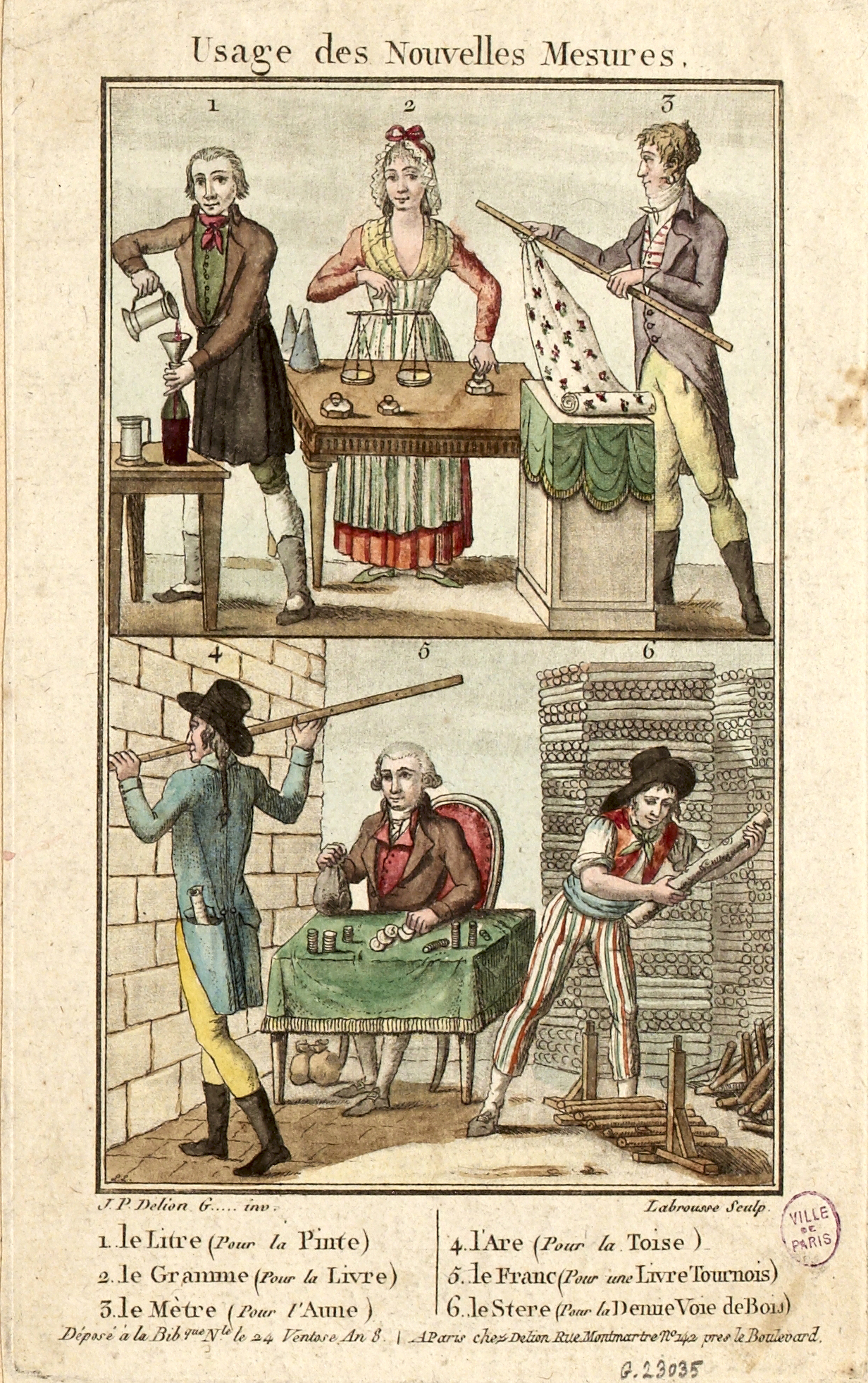
The metric system originated in late 18th‑century France as part of a reform to standardize measures. Early metric law fixed the metre and gram as reference units. Over the 19th and 20th centuries international agreements and institutions were established to coordinate standards, culminating in the creation of the International System of Units (SI) in 1960. In recent decades SI definitions have moved away from physical prototypes toward constants of nature, improving long‑term reproducibility.
Adoption and global use
Most countries now use the metric system for official and everyday measurement. The United States, while having legal recognition of metric units since the 19th century, continues to use customary units extensively in daily life; however metric units dominate in science, medicine, and many industries worldwide. The United Kingdom and several Commonwealth countries transitioned progressively to metric units for trade and manufacturing during the 20th century.
Applications and importance
Metrication facilitates international trade, engineering design, scientific research and public health by providing a common language of measurement. Its decimal structure eases arithmetic and education. Because SI is internationally maintained, measurements reported in metric units are interoperable across laboratories, manufacturers and governments.
Distinctions and common points of confusion
"Metric system" is a broad term; the SI is the internationally accepted modern form with formal rules and definitions. People sometimes confuse the gram and kilogram (the kilogram is the SI base unit of mass), or expect unit names to be interchangeable with non‑metric terms. Conversions between metric and imperial/US customary units require attention, but the systematic nature of metric prefixes makes intra‑metric conversion straightforward.
References and official bodies
- Overview and definitions
- Metre: length unit
- Gram and kilogram: mass units
- Litre: common volume unit
- Origins in France
- Decimal and prefix system
- Multiples of ten
- Quantity and unit rules
- Metric usage in the United States
- European adoption history
- Latin America and metrication
- Metre Convention (1875)
- International Bureau of Weights and Measures (BIPM)
- International System of Units (SI)
- International rules for quantities
- United Kingdom metric changes
- Commonwealth and metrication
- Workplace and industry adoption
Note: For authoritative technical definitions and the most recent revisions to unit definitions consult the publications of the international standards bodies listed above. The metric system’s practical strengths are its simplicity, coherence and global acceptance in science and commerce.
Questions and answers
Q: What is the metric system?
A: The metric system is a number of different systems of measurement with length based on the metre, mass on the gram, and volume on the litre. This system is used around the world.
Q: When was it first introduced?
A: It was first introduced in France in 1795, two years after the execution of Louis XVI.
Q: What are its basic units?
A: The basic units of the metric system are called the metre and gramme.
Q: When did other countries start to use it?
A: The United States started to use it in 1866 and by 1875 many countries in Europe and Latin America had changed to using it.
Q: What organization was set up for managing this system?
A: An organization called International Bureau of Weights and Measures (BIPM) was set up for managing this system.
Q: How were SI quantities written according to rules defined by this revised version? A: According to rules defined by this revised version, SI quantities were written using same rules for all countries.
Q: When did people in UK start using it?
A: People in UK started using it in 1970s.
Tags
Related articles
Author
AlegsaOnline.com Metric system Leandro Alegsa
URL: https://en.alegsaonline.com/art/64233
Sources
- oxforddictionaries.com : "Oxford Dictionaries"
- ebsinstitute.com : "The Metric System in the U.S."
- bipm.org : The International System of Units (SI)
- eur-lex.europa.eu : "Directive 1999/94/EC relating to the availability of consumer information on fuel economy and CO2 emissions in respect of the marketing of new passenger cars"
- smdsi.quartier-rural.org : "Decree on weights and measures"
- bipm.org : "Draft Chapter 2 for SI Brochure, following redefinitions of the base units"
- uhra.herts.ac.uk : "Determination of the Complex Permittivity of Textiles and Leather in the 14-40 GHz, mm wave band using a Free-W ave Transmittance Only Method"
- halls.md : "Men's Weight Chart"
- halls.md : "Child Growth Charts of height weight and body mass index"
- ecb.int : "€ - our money - Common sides"
- ars.usda.gov : "Resveratrol Content in Seeds of Peanut Germplasm Quantified by HPLC" · archive.org