
Meteor: definition, origins, composition, observation, and impacts
A meteor is the luminous phenomenon produced when a meteoroid enters an atmosphere. This article explains terminology, composition, origins, observation methods, historical significance and hazards.
A meteor is the bright streak or flash you see when a small body from space heats and glows as it moves through a planet's atmosphere. Observers commonly call this a shooting star or simply a meteor, though the luminous trail is distinct from the solid material that created it. If fragments survive passage and reach the surface they are called meteoroids before entry and meteorites after landing. Large impacts that excavate significant depressions are responsible for craters.
Image gallery
10 Images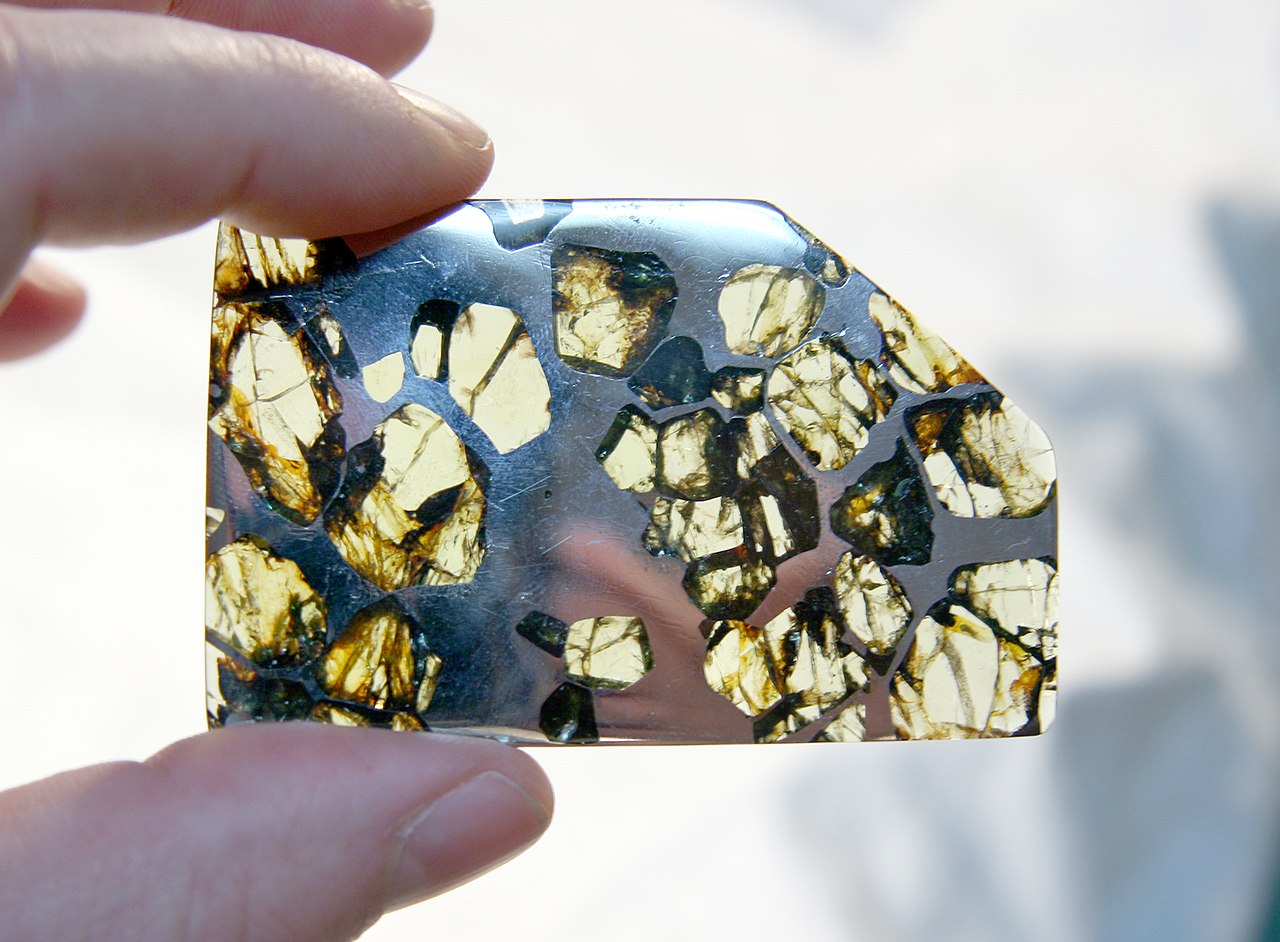


Terminology and distinctions
Scientists use specific words to avoid confusion: a meteoroid is the small rock or particle in space; a meteor is the atmospheric light phenomenon produced when that object vaporizes; and a meteorite is any portion that survives to the ground. Strong, exploding events are often labeled fireballs or bolides when they reach high brightness or fragment violently. Speeds vary widely and are often much greater than typical surface speeds; relative entry velocities relate to orbital motion and can approach several tens of kilometers per second, far exceeding ordinary surface velocities referenced by escape velocity or other measures of speed discussed in popular accounts (see high-speed entries).
Composition and classifications
Meteorites fall into major groups determined by mineralogy and structure. Common classes include stony chondrites (which contain small spherical chondrules), carbonaceous chondrites (rich in organic compounds and water-bearing minerals), stony-iron mixtures, and iron-nickel specimens that are dominated by metal. These types record different formation processes and parent bodies; carbon-bearing meteorites are especially valuable for studies of prebiotic chemistry.
Origins and meteor showers
Most meteoroids originate from the Solar System's small-body populations. Fragments from the asteroid belt and debris released by comets account for many individual meteors. Bodies associated with comets often produce streams that create regular meteor showers when Earth crosses the debris trail. Distinct source regions include main-belt asteroids and cometary reservoirs such as those that supply material from comets.
Observation, records and effects
Meteors are studied visually, photographically, by radar, and by specialized satellite sensors that record bright bolides. Networks of cameras and recovered meteorites help reconstruct entry trajectories and pre-atmospheric orbits. Impacts have shaped planetary surfaces and influenced biological history: high flux periods such as the Late Heavy Bombardment left many craters, and very large strikes have been linked to mass extinctions and global environmental change (see mass extinctions and their role in evolution); lists of significant events and candidate causes are compiled in geological records (extinction event lists), and the Chicxulub impact remains a well-studied example (Chicxulub crater).
Practical importance and safety
Most meteors are tiny and harmless, but larger entries can damage property and injure people when they explode or produce ground impacts. Notable modern events have demonstrated this hazard and spurred efforts to detect and track near-Earth objects. Meteorites are also prized by scientists and collectors because they provide direct samples of other Solar System bodies and preserve information about planetary formation and early chemical processes.
- Key distinctions: meteoroid (in space), meteor (in atmosphere), meteorite (on ground).
- Common study methods: optical networks, radar, satellite monitoring, and laboratory analysis of recovered samples.
- Scientific value: insights into Solar System origins, delivery of volatiles and organics, and records of impact history.
For more details on observational programs, classification schemes and historical events, consult specialized surveys and databases maintained by observatories and planetary science organizations.
Questions and answers
Q: What is a meteor?
A: A meteor is what you see when a space rock falls to Earth. It is often known as a shooting star or falling star and can be a bright light in the night sky, though most are faint.
Q: What happens when a meteor enters Earth's atmosphere?
A: When the meteoroids enter Earth's atmosphere they are usually going faster than the Earth's escape velocity of 13 km/sec or Mach 40. This makes them heat up and usually break apart, causing them to glow and become known as meteors.
Q: What is the difference between meteors, comets, and asteroids?
A: Meteors are distinct from comets or asteroids, but some, especially those associated with meteor showers, are dust particles that came out of comets.
Q: What types of meteorites exist?
A: There are several types of meteorites including stony, carbonaceous chondrites, and iron-nickel. Stony meteorites are named because they are largely made up of stone-like mineral material. Carbonaceous chondrites have a high carbon content. Iron-nickel meteorites are mostly iron often with significant nickel as well.
Q: When did most Meteorite strikes occur?
A: Meteorites were often during the Late Heavy Bombardment period which occurred around 4 billion years ago.
Q: How much damage has been caused by Meteorite strikes in recent times?
A: Nowadays they sometimes hurt people and property; The 2013 Russian meteor event did the most damage in recent times. Large Meteorite strikes may have played a part in several mass extinctions over time as well.
Related articles
Author
AlegsaOnline.com Meteor: definition, origins, composition, observation, and impacts Leandro Alegsa
URL: https://en.alegsaonline.com/art/64187
Sources
- ui.adsabs.harvard.edu : 1995Metic..30..113B
- doi.org : 10.1111/j.1945-5100.1995.tb01219.x
- worldcat.org : 0026-1114
- haroldconnolly.com : Meteorites and the early Solar System II