
Mercury(I) chloride (calomel)
Mercury(I) chloride, commonly called calomel, is Hg2Cl2 — a sparingly soluble mercurous salt with historical medicinal use and modern applications as a reference electrode; it is highly toxic.
Overview
Mercury(I) chloride, also known as calomel or mercurous chloride, is an inorganic compound with the formula Hg2Cl2. It contains the diatomic mercurous ion Hg2(2+) in which two mercury atoms form a bonded pair, paired with chloride anions. In its pure form it is a pale, crystalline solid that darkens on exposure to light or reducing conditions.
Image gallery
6 Images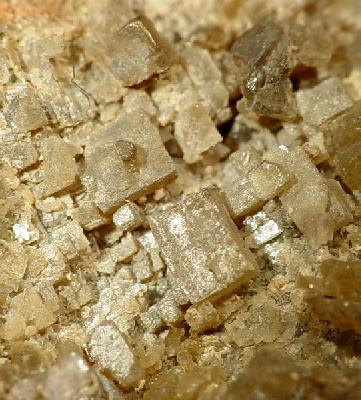


Chemical structure and properties
The defining feature of this salt is the Hg–Hg interaction that gives the mercurous ion its identity; each mercury atom is formally in the +1 oxidation state. The compound is only sparingly soluble in water and reacts slowly with light and certain reagents to yield elemental mercury or mercuric derivatives. It is less soluble and less corrosive than mercuric chloride (HgCl2), which contains mercury in the +2 oxidation state.
Preparation and reactions
Calomel can be prepared by partial reduction of mercuric chloride or by direct combination of metallic mercury with chlorine under controlled conditions. It undergoes redox transformations: for example, it can be oxidized to mercuric species or reduced to elemental mercury. These chemical behaviors are important in its laboratory handling and disposal.
Uses and historical significance
Historically, calomel was widely used in medicine as a purgative and topical antiseptic, practices now discontinued because of mercury toxicity. Today its most notable application is in electrochemistry: the saturated calomel electrode (SCE) serves as a stable reference electrode in potentiometry and corrosion studies (reference). It has also been used as a reagent in some analytical and synthetic procedures, though safer alternatives are preferred.
Safety, toxicity and regulation
All mercury compounds are toxic; calomel can cause mercury poisoning if ingested, inhaled, or absorbed through skin. Chronic exposure affects the nervous system, kidneys, and other organs. Because of health and environmental risks, the use of calomel is now restricted or phased out in many applications and laboratories follow strict waste-handling rules (guidance). Protective equipment and appropriate disposal are essential when it is handled.
Distinctions and notable facts
- Calomel contains the mercurous ion Hg2(2+), distinct from mercuric salts with Hg(2+).
- It darkens when exposed to light due to partial reduction to elemental mercury.
- The saturated calomel electrode remains a common laboratory standard despite the availability of mercury-free alternatives (more).
Questions and answers
Q: What is Mercury(I) chloride?
A: Mercury(I) chloride, also known as calomel and mercurous chloride, is a chemical compound.
Q: What is the chemical formula of Mercury(I) chloride?
A: The chemical formula of Mercury(I) chloride is Hg2Cl2.
Q: What ions are present in Mercury(I) chloride?
A: The ions present in Mercury(I) chloride are mercury and chloride ions.
Q: What is the oxidation state of mercury in Mercury(I) chloride?
A: The oxidation state of mercury in Mercury(I) chloride is +1.
Q: Is Mercury(I) chloride safe for human consumption?
A: No, Mercury(I) chloride is not safe for human consumption as it is a poisonous compound.
Q: What are the common names of Mercury(I) chloride?
A: The common names of Mercury(I) chloride are calomel and mercurous chloride.
Q: What is the molecular weight of Mercury(I) chloride?
A: The molecular weight of Mercury(I) chloride is 472.09 g/mol.
Related articles
Author
AlegsaOnline.com Mercury(I) chloride (calomel) Leandro Alegsa
URL: https://en.alegsaonline.com/art/63929