
Mercalli (Modified Mercalli) intensity scale
A descriptive scale that rates earthquake shaking by observed effects on people, buildings and the landscape. It ranges from I (instrumental, not felt) to XII (catastrophic), distinct from magnitude measures.
Overview
The Mercalli intensity scale (commonly encountered as the Modified Mercalli Intensity, or MMI, scale) categorizes the effects and human perception of an earthquake at particular locations. Rather than measuring the energy released by a quake, the scale records what people felt, how buildings and structures responded, and how the ground and landscape were altered. Because effects vary with distance from the epicenter, local geology and construction quality, one earthquake typically produces a range of Mercalli intensities across different sites.
Image gallery
1 Image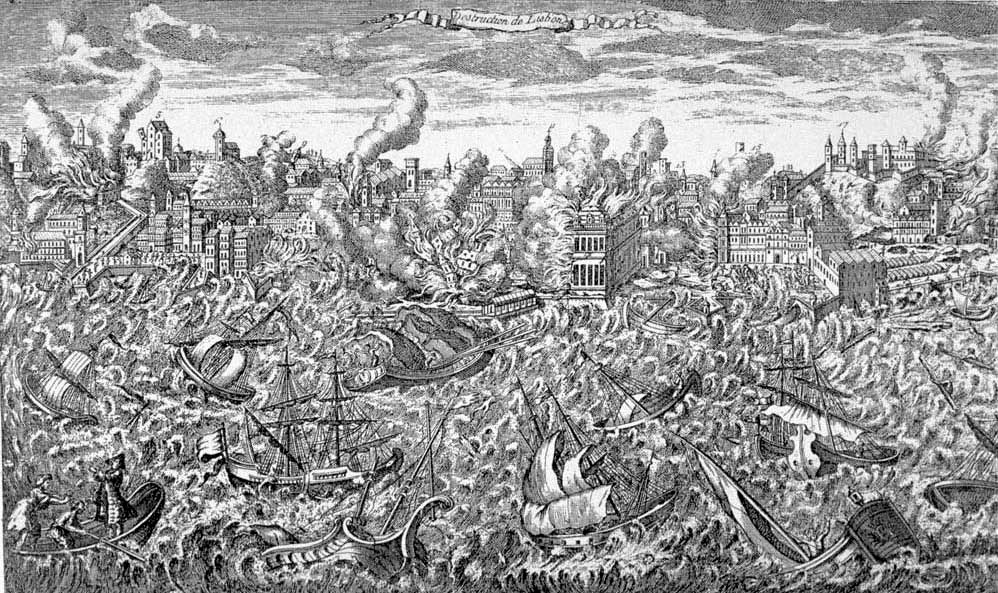
Scale and typical effects
The scale uses Roman numerals I through XII. Brief, generalized descriptions for each level help observers and investigators assign an intensity rating to a place:
- I. Instrumental: Recorded by seismographs but not felt by people indoors.
- II. Weak: Barely felt by a few people at rest, especially on upper floors; hanging objects may sway slightly.
- III. Weak to light: Felt indoors by many; stable objects do not move appreciably; vibration like passing trucks.
- IV. Light: Felt by most indoors, some outdoors; windows, dishes and doors rattle; noticeable but little or no damage.
- V. Moderate: Felt by nearly everyone; sleepers awakened; dishes and books may fall; light nonstructural damage possible.
- VI. Strong: Many frightened; furniture moves; some plaster or masonry cracking; slight structural damage to vulnerable buildings.
- VII. Very strong: Considerable damage to poorly built structures; chimneys and parts of buildings fall; ground may crack.
- VIII. Severe: Partial collapse of ordinary buildings; heavy furniture overturned; serious damage to substantial structures with partial failures.
- IX. Violent: General panic; substantial buildings shifted off foundations; ground conspicuously cracked; underground pipes broken.
- X. Extreme: Many well-built structures destroyed; ground badly fissured; rails bent; large landslides.
- XI. Very extreme: Few structures remain standing; bridges and broad infrastructures heavily damaged; large ground displacements.
- XII. Catastrophic: Near total destruction; objects thrown into the air; landscape altered; visible waves on ground surface in some materials.
History and variants
The original scale was developed by the Italian volcanologist Giuseppe Mercalli in the late 19th century as a ten-degree, descriptive scale. Later extensions and revisions by other scientists increased the range to twelve degrees and refined the descriptions; historical names for versions include the Mercalli–Cancani–Sieberg (MCS) scale. An English translation and adaptation by Harry O. Wood and Frank Neumann produced what became widely known as the Modified Mercalli scale. Further regional adaptations, such as the European Macroseismic Scale (EMS), have updated descriptions to reflect modern building types and engineering knowledge.
Assigning intensities
Intensity assignments result from field surveys, eyewitness and community reports, and study of structural damage. Investigators collect observations, photographs and damage assessments and compare them with standard descriptions to assign an intensity level for each locality. Modern practice often supplements traditional surveys with crowdsourced reports, online questionnaires and instrumental shaking measurements to improve spatial coverage. Those compiled local intensities can be contoured to produce isoseismal maps that show the distribution of shaking around an event.
Uses and limitations
The Mercalli approach is particularly valuable for mapping shaking patterns, assessing historical earthquakes that predate seismographs, guiding emergency response to damaged areas, and informing building vulnerability studies. However, it has intrinsic limitations: intensity is subjective and depends on population density, time of day, local construction practices and site amplification of seismic waves. The same earthquake will often produce different intensity ratings within short distances where ground conditions change. Intensity does not directly quantify the energy of an earthquake; magnitude scales such as the Richter scale or modern magnitude measures estimate size and energy release, and they complement intensity-based assessments. For discussion of the physical energy involved in earthquakes, see material on seismic energy.
Practical notes
In practice, seismologists and emergency planners use both magnitude and intensity information to form a fuller picture: magnitude provides a single measure of source size, while intensity maps localize damage and human impact. There is no simple universal conversion between magnitude and Mercalli intensity because local site effects and distance strongly influence observed damage. Nevertheless, intensity records remain an indispensable resource for historical research, post‑event response, and efforts to improve resilience of buildings and infrastructure.
Questions and answers
Q: What is the Mercalli intensity scale used for?
A: The Mercalli intensity scale is used to measure the intensity of earthquakes.
Q: How is the Mercalli scale different from the Richter scale?
A: Unlike the Richter scale, the Mercalli scale does not measure the energy of an earthquake directly. It classifies earthquakes by the effects they have and the destruction they cause.
Q: What does the Mercalli scale describe when there is little damage?
A: When there is little damage, the Mercalli scale describes how people felt the earthquake or how many people felt it.
Q: Why do non-geologists often use the Mercalli scale?
A: Non-geologists often use the Mercalli scale because it is easier for people to describe what damage an earthquake caused than to perform calculations for the Richter scale.
Q: Who originally developed the Mercalli scale and how many levels did it have?
A: Giuseppe Mercalli originally developed the Mercalli scale with ten levels.
Q: Who extended the Mercalli scale to twelve levels?
A: Adolfo Cancani extended the Mercalli scale to twelve levels.
Q: What is the Mercalli-Cancani-Sieberg scale and the Mercalli-Wood-Neumann scale?
A: The Mercalli-Cancani-Sieberg scale is another name for the Mercalli intensity scale, while the Mercalli-Wood-Neumann scale refers to the English translation of the Mercalli scale by Harry O. Wood and Frank Neumann. Charles Francis Richter also edited the Mercalli scale and later developed the Richter scale.
Related articles
Author
AlegsaOnline.com Mercalli (Modified Mercalli) intensity scale Leandro Alegsa
URL: https://en.alegsaonline.com/art/63863
Sources
- earthquake.usgs.gov : "Magnitude / Intensity Comparison"
- earthquake.usgs.gov : USGS: Did you feel it? for 20 May 2011
- abag.ca.gov : "Modified Mercalli Intensity Scale"