
Meow: the cat vocalization used to communicate with humans and other cats
An overview of the meow: types, meaning, development, and cultural and linguistic variations of the vocalization cats use to signal needs and emotions.
The word meow (also spelled miaow, miau, miaou and other variants) names the familiar vocalization produced by domestic cats. In everyday speech and in studies of animal behavior, a meow denotes a short, often pitched sound that kittens and adult cats use in varied situations. Although kittens meow to elicit care from their mother, adult cats direct most of their meowing toward humans rather than toward other cats, where it functions as a tool of interspecies communication.
Image gallery
3 Images
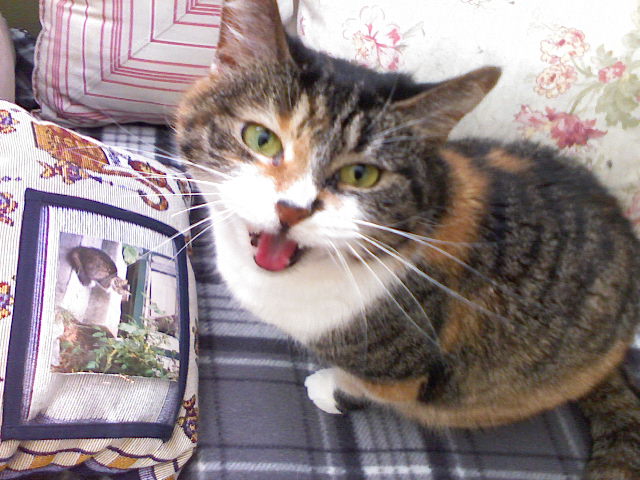

What a meow can convey
Cats do not have a single universal meaning encoded in one meow. Instead, owners and observers distinguish multiple categories that differ in tone, duration and context. Common communicative types include:
- Greeting meows: brief, friendly sounds used when a person or another animal appears, similar to saying "hello"; see greeting.
- Solicitation or demand meows: drawn-out or insistent calls requesting food, attention or access; these are often directed at people and can indicate hunger (food).
- Complaint or annoyance: harsher, short bursts that signal displeasure or a desire for something to stop.
- Distress or pain: unusual, urgent calls that may prompt veterinary attention.
- Kitten calls: high-pitched mews used by young cats to attract maternal care.
How meows develop and function
Young kittens instinctively vocalize to attract their mother's attention; this survival-related crying is a primary context for the meow early in life. As cats mature, many reduce calls directed at other adult cats and reserve vocalizations for interactions with people. Domestic cats have adapted to exploit human responsiveness: pet cats learn that particular pitches and rhythms tend to produce food, petting or opening doors, and they frequently repeat successful signals. Some researchers and cat caretakers report that cats adjust the acoustic qualities of their meows to be especially effective at eliciting a human response.
History and cultural notes
Cats and humans have a long shared history, and the way people represent cat sounds in writing varies widely by language and culture. Ancient civilizations recognized the cat's voice; for example, the Egyptian word for cat, "Mau," reflects both the animal itself and the onomatopoeic impression of its sound, and cats held particular religious and domestic importance in ancient Egyptian society (Ancient Egypt). Modern written forms of the sound differ: in English and some other languages it appears as "meow" or older forms like "miaow," while Spanish and German often use "miau," and French favours "miaou" (English, Spanish, German, French).
Communication beyond the sound
Meowing rarely acts alone; it is typically accompanied by body language—ear orientation, tail position, blinking, posture—that helps receivers interpret intent. Cats combine vocal signals with visible cues when seeking attention or expressing mood. While some breeds are notably more vocal than others, individual personality and early social experience shape how often and in what circumstances a cat will meow. Adult cats generally do not use meows toward one another, relying instead on scent, posture and other feline signals, but meows remain an effective way to communicate with humans (cats).
Practical importance and care
For caretakers, learning to distinguish types of meows can improve welfare and responsiveness. Persistent or changing vocal behavior sometimes signals medical problems, stress, cognitive decline in older animals, or unmet needs. Training, predictable feeding schedules and attention to environmental enrichment can reduce attention-seeking meowing, while veterinary assessment is advisable if vocalizations become excessive or are associated with other worrying signs. For language and onomatopoeia enthusiasts, the study of how different tongues render the cat sound provides a small window into cross-cultural perception of animal voices—see general resources on animal sounds for more detail (sound).
Notable facts and distinctions
- Although commonly associated with domestic pets, the act of meowing is mainly a form of communication between cats and humans rather than a frequent adult-to-adult feline signal.
- Some well-known breeds, such as the Siamese, are often described as more talkative, producing distinctive, frequent calls.
- Recorded spellings and representations of the meow have varied historically; English print sources began standardizing the "meow" form in the 19th century, alongside older variants like "miaow" and "meaw".
For further reading, consult sources that cover cat behavior, ethology and the cultural history of domesticated animals. Useful starting points include breed guides, animal behavior textbooks and linguistics treatments of onomatopoeia.
Related links: Acoustic studies, Cat behavior, Greetings, Feeding cues, English usage, Spanish form, German form, French form, Ancient Egypt and the cat.
Questions and answers
Q: What is a meow?
A: A meow is a noise made by cats.
Q: What are some different types of meows?
A: Different types of meows include ones that mean "hello," ones that ask for food, and ones that signify annoyance, among other things.
Q: Why do kittens meow to their mother?
A: Kittens meow to their mother as a plea for attention.
Q: Why do pet cats use meows?
A: Experts think that pet cats use meows because they often require their owners to do things for them.
Q: Do adult cats meow to other cats?
A: No, adult cats do not meow to other cats.
Q: How do different languages spell meow?
A: Different languages spell meow differently. English uses the "meow" spelling, while Spanish and German use "miau," and French uses "miaou."
Q: What were cats called in Ancient Egypt?
A: Cats in Ancient Egypt were called "Mau."
Related articles
Author
AlegsaOnline.com Meow: the cat vocalization used to communicate with humans and other cats Leandro Alegsa
URL: https://en.alegsaonline.com/art/63853
Sources
- commons.wikimedia.org : Audio files of cats meowing
- aspca.org : "Meowing and yowling"
- etymonline.com : "Meow"
- books.google.com : Language Arts 1, Volume 1