
Accipitriformes — the diurnal birds of prey: hawks, eagles and vultures
Accipitriformes are an order of diurnal raptors including hawks, eagles, kites, harriers, the osprey and many vultures. This article covers their traits, taxonomy, ecology and conservation.
Overview
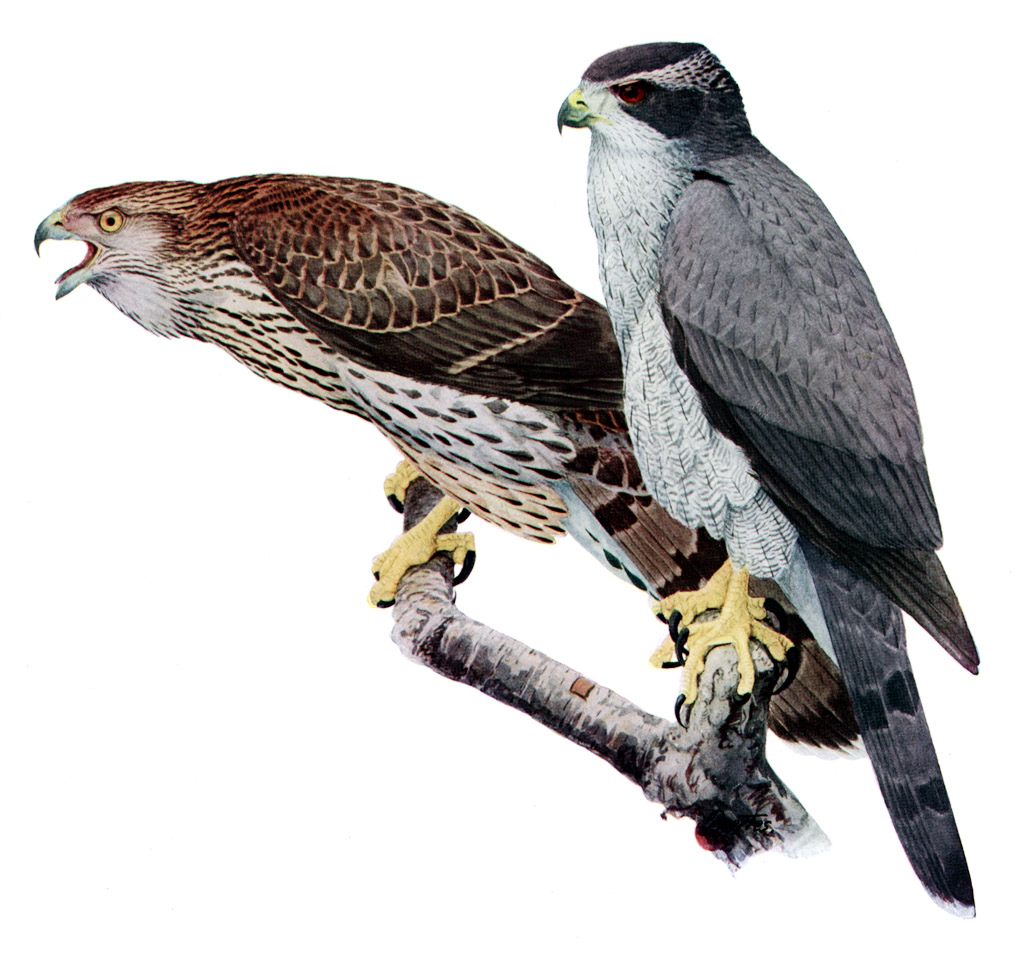
Accipitriformes is the avian order that contains most of the daytime hunting birds of prey. These birds are typically diurnal predators and scavengers and include familiar groups such as hawks, eagles and many vultures. Depending on how groups are counted, the order comprises roughly about 225 species distributed across much of the world. Members vary greatly in size and ecology but share a suite of adaptations for detecting, seizing and processing animal prey.
Image gallery
8 Images



Key characteristics
- Raptorial anatomy: strong, hooked beaks and powerful feet with curved talons for grasping and killing prey.
- Vision and flight: well-developed eyesight and wing shapes adapted to soaring, gliding or agile pursuit.
- Dietary variety: many are active hunters (small mammals, birds, reptiles), while some species, particularly vultures, specialize in scavenging.
- Nesting and reproduction: most build large stick or platform nests and invest heavily in a small number of young each year.
Taxonomy and historical context
The composition of Accipitriformes has changed as molecular methods improved. For many years most diurnal raptors were grouped together with falcons in a single assemblage sometimes called Falconiformes. Subsequent genetic and genome-scale DNA studies revealed that falcons are not close relatives of accipitrids; instead they appear more closely allied to groups like parrots and some passerines. As a result, many modern classifications separate falcons and place accipitrids, osprey and related lineages together. The status of the New World vultures (family Cathartidae) has been debated: some phylogenies include them within Accipitriformes while other authorities treat them as a distinct order, often labelled Cathartiformes.
Ecology, behavior and importance
Accipitriform birds play key ecological roles as predators and scavengers. They regulate populations of rodents and other prey, and vultures contribute to nutrient cycling by consuming carrion. Many species are migratory, traveling long distances between breeding and wintering areas. Their conspicuous presence in landscapes also makes them important indicators of environmental health; declines in raptor populations have historically signalled broader ecological problems.
Conservation and notable facts
Several accipitriform species face threats from habitat loss, persecution, and toxic contaminants. Historical pesticide use caused dramatic declines in some large raptors, prompting conservation measures and bans that aided recoveries in places. Conservation approaches include habitat protection, legal safeguards, reintroduction programs and mitigation of hazards such as power-line collisions. Notable distinctions within the group include differences in sensory abilities and social behavior: for example, many Old World vultures are in accipitrid lineages and locate carrion visually, whereas some New World vultures rely more on olfaction. The order remains a focus of active research in systematics, ecology and conservation biology.
For further reading on classification, ecology and species accounts see specialist resources and field guides (order, molecular studies, species lists).
Questions and answers
Q: What is Accipitriformes?
A: Accipitriformes is an order that consists of diurnal birds of prey, such as hawks, eagles, vultures, and many others.
Q: What was the majority view about Accipitriformes and falcons previously?
A: Previously, the majority view was to include Accipitriformes with the falcons in the Falconiformes.
Q: What did the recent DNA study reveal about the relationship between falcons and Accipitriformes?
A: The recent DNA study showed that falcons are not closely related to Accipitriformes.
Q: What are falcons related to according to the DNA study?
A: According to the DNA study, falcons are related to parrots and passerines.
Q: How do most ornithologists currently classify falcons in taxonomic order?
A: Most ornithologists currently classify falcons next to the parrots in taxonomic order based on the DNA study.
Q: What do the New World vultures belong to according to the DNA-based proposal and the American Ornithologists' Union?
A: According to the DNA-based proposal, the New World vultures belong to the Accipitriformes, but the American Ornithologists' Union (AOU) classifies them as a separate order, the Cathartiformes.
Q: How many species are there in Accipitriformes?
A: There are about 225 species in Accipitriformes.
Author
AlegsaOnline.com Accipitriformes — the diurnal birds of prey: hawks, eagles and vultures Leandro Alegsa
URL: https://en.alegsaonline.com/art/638
Sources
- sciencemag.org : sciencemag.org/content/320/5884/1763.abstract
- museum.lsu.edu : museum.lsu.edu/~Remsen/SACCBaseline02.html