
Menai Suspension Bridge
Early 19th-century suspension bridge across the Menai Strait, connecting the island of Anglesey to mainland Wales. Designed by Thomas Telford, notable for its pioneering engineering and historic significance.
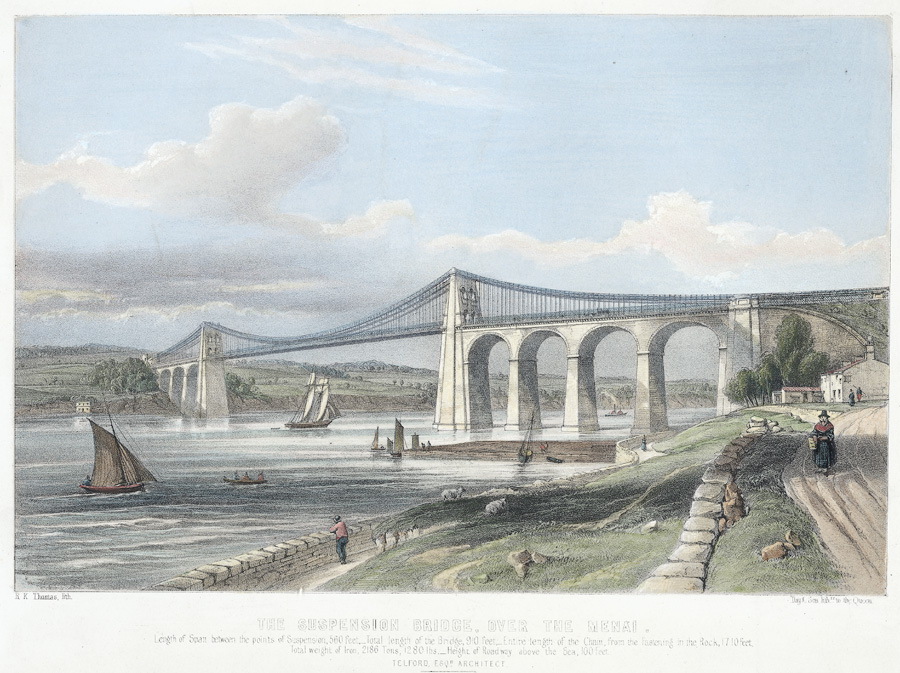
The Menai Suspension Bridge is a landmark crossing of the Menai Strait that links the island of Anglesey to the mainland of Wales. Its Welsh name is Pont Grog y Borth. Built in the early 19th century to carry a main road across a fast-moving tidal channel, the structure is one of the earliest examples of a large-scale suspension bridge used for regular land traffic.
Image gallery
8 Images


Design and characteristics
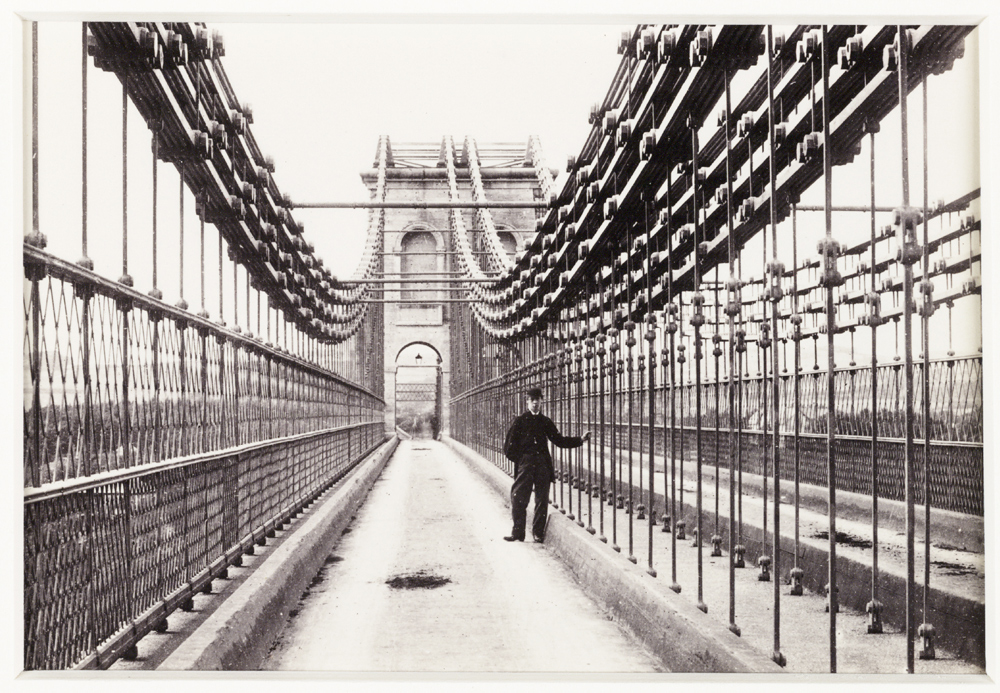
The bridge combines masonry towers with long iron suspension chains that support the deck. The towers rise from rock foundations on each shore and anchor the chains that hold the roadway at a height high enough for ships to pass beneath. The original deck was designed for horse-drawn carriages; later alterations and strengthening have allowed it to carry modern vehicular traffic while retaining its historic appearance.
Construction and history
Commissioned to improve communication between Anglesey and the mainland, the project was led by the civil engineer Thomas Telford. Work began in the 1810s and the crossing was completed in the 1820s. The bridge transformed travel to the island, which includes the port town of Holyhead, by removing the delays and hazards of ferry transit across the strait.
Importance and uses
Beyond its practical role as a road link, the Menai Suspension Bridge is important as an early demonstration of suspension technology on a major public route. It served as a model for later suspension crossings and remains an active thoroughfare and tourist attraction. Conservation work over time has focused on preserving original materials where possible while updating structural components for safety.
Notable facts and preservation
- The bridge is widely recognized for its pioneering engineering and cultural value.
- It has been repaired and strengthened several times to accommodate changing traffic and regulations.
- Today it is both a functional piece of transport infrastructure and a protected historic structure, visited for its views of the Menai Strait and its example of early suspension-bridge design.
For further reading about its engineering and conservation, consult detailed sources and local heritage organizations that document the bridge's continuing role in Welsh transport history.
Questions and answers
Q: Where is the Menai Suspension Bridge located?
A: The Menai Suspension Bridge is located in Wales and runs from the island of Anglesey to Holyhead.
Q: Who designed the Menai Suspension Bridge?
A: The Menai Suspension Bridge was designed by Thomas Telford.
Q: When was construction of the Menai Suspension Bridge started?
A: Construction of the Menai Suspension Bridge started in 1819.
Q: When was the Menai Suspension Bridge completed?
A: The Menai Suspension Bridge was completed in 1826.
Q: What is the Menai Suspension Bridge made of?
A: The Menai Suspension Bridge is a suspension bridge.
Q: What is the Welsh name for the Menai Suspension Bridge?
A: The Welsh name for the Menai Suspension Bridge is "Pont Grog y Borth".
Q: How long did it take to build the Menai Suspension Bridge?
A: It took seven years to build the Menai Suspension Bridge, from 1819 to 1826.
Related articles
Author
AlegsaOnline.com Menai Suspension Bridge Leandro Alegsa
URL: https://en.alegsaonline.com/art/63772
Sources
- books.google.com : The Ports Harbours Watering Places
- books.google.com : A Memoir of Suspension Bridges: Comprising The History Of Their Origin And Progress
- books.google.com : Plates
- anglesey-history.co.uk : "Menai Strait Bridges"
- asce.org : "Menai Suspension Bridge"