
Megazostrodon: early mammaliaform from southern Africa
Small, shrew-sized early mammaliaform from about 200 million years ago found in Lesotho. Shows transitional features between late cynodonts and early mammals: differentiated teeth, jaw-to-ear changes, bigger brain.
Overview
Megazostrodon is an early mammaliaform known from fossil remains discovered in Lesotho and other parts of southern Africa. It lived close to the Triassic–Jurassic boundary, roughly around 200 million years ago. Megazostrodon is important in studies of mammal origins because it combines several advanced mammalian traits with more primitive features inherited from cynodont ancestors.
Image gallery
10 Images
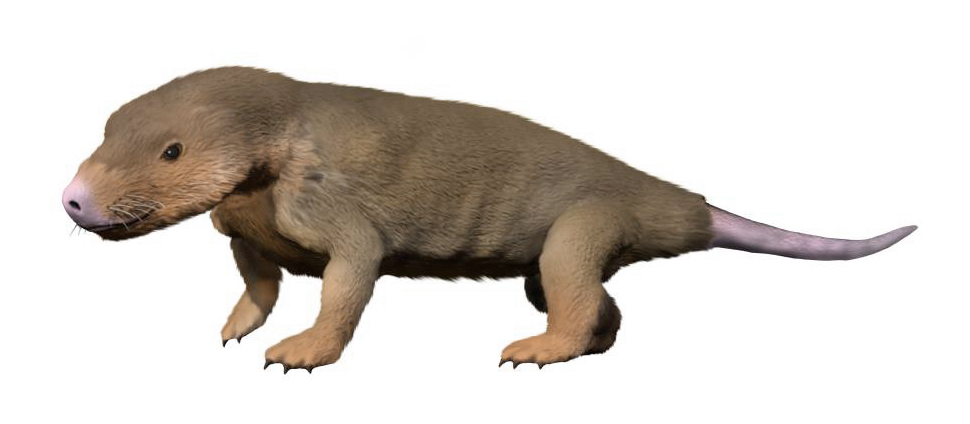

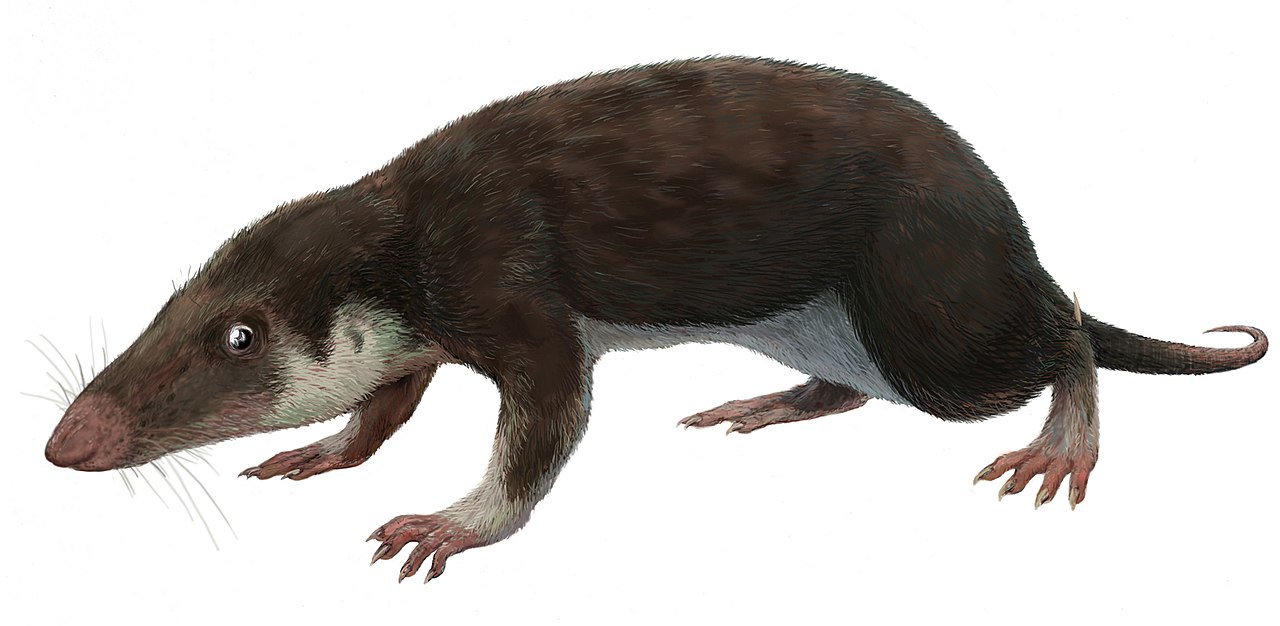


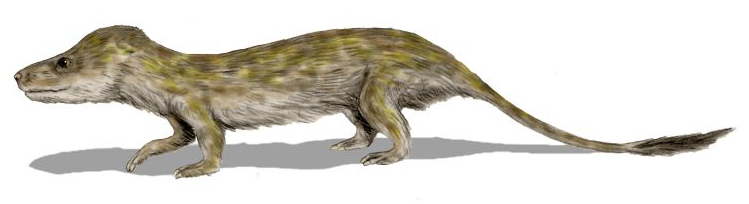
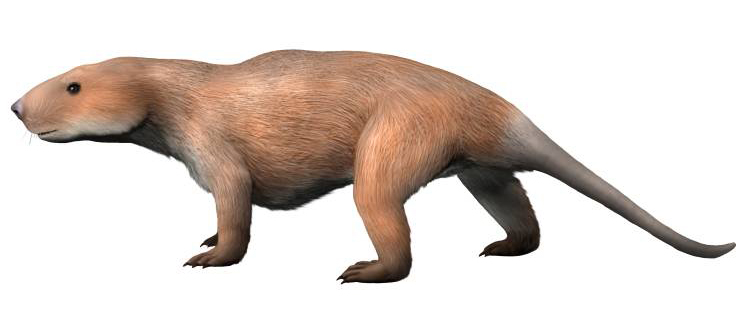
Anatomy and dentition
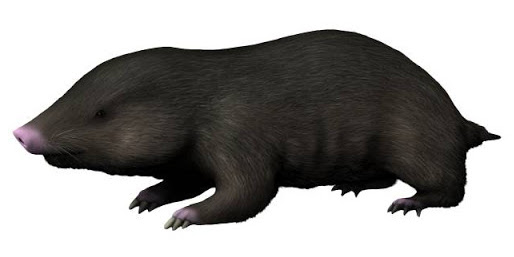
Megazostrodon was small and likely insectivorous, comparable in size to a shrew. Its skeleton shows a dominant dentary (the single lower jaw bone typical of mammals) and differentiated teeth: incisors, canine-like teeth, and more complex cheek teeth adapted for processing food. These dental specializations permitted more effective food handling and occlusion than in earlier synapsids.
Jaw and ear evolution
The arrangement of post-dentary bones in Megazostrodon provides evidence for the evolutionary transition in which some former jaw bones became part of the middle ear. Although not all modern mammal features were present, the reduction and repositioning of these bones foreshadow the sensitive auditory apparatus of later mammals.
Senses, behavior and physiology
Skull proportions and inner ear anatomy imply relatively enlarged brain regions associated with hearing and balance, suggesting improved sensory acuity. Many authors infer nocturnal activity for animals like Megazostrodon because heightened hearing and smell would aid night-time insectivory. Its small body size and inferred high metabolic rate would be consistent with an active, endothermic lifestyle compared with earlier reptile-like synapsids.
Locomotion and ecology
Limbs and vertebral features indicate an agile, terrestrial animal capable of rapid movement, and possibly climbing or burrowing. Megazostrodon probably occupied a niche as a small predator of insects and other invertebrates, living alongside early dinosaurs and other vertebrates during a period of faunal turnover.
Fossil record and discovery
Specimens were recovered from Late Triassic to Early Jurassic deposits in Lesotho and adjacent regions of southern Africa. The fossils are fragmentary but sufficiently preserved to show key skull and tooth characters. Research on these remains has contributed to understanding the timing and sequence of traits that mark the origin of mammals.
Classification and significance
Megazostrodon is often treated as a basal mammaliaform rather than a crown-group mammal. It is frequently compared with Morganucodon and other early mammaliaforms when reconstructing the mosaic pattern of mammalian evolution. For general context see summaries on the nature of mammals and studies of advanced synapsids such as the cynodonts.
Research and further reading
Megazostrodon remains a subject of study in paleontology and evolutionary biology because it illustrates stepwise acquisition of mammalian traits. Regional geology and continued fossil prospecting in Lesotho and neighboring areas provide important insights into early mammaliform diversity and paleoecology. For overviews consult specialist literature and accessible summaries on mammal origins and early Mesozoic ecosystems.
Questions and answers
Q: What is Megazostrodon?
A: Megazostrodon is an early proto-mammal.
Q: Where was Megazostrodon discovered?
A: Megazostrodon was discovered in Lesotho, southern Africa.
Q: When did Megazostrodon appear in the fossil record?
A: Megazostrodon appeared in the fossil record about 200/205 million years ago (mya).
Q: Did Megazostrodon have some non-mammalian characteristics?
A: Yes, Megazostrodon did have some non-mammalian characteristics.
Q: What other animal shows the final stage of the transition between the cynodonts and true mammals?
A: Morganucodon also shows the final stage of the transition between the cynodonts and true mammals.
Q: How long ago did Megazostrodon appear in the fossil record?
A: Megazostrodon appeared in the fossil record about 200/205 million years ago (mya).
Q: What is the significance of Megazostrodon and Morganucodon?
A: Megazostrodon and Morganucodon show the final stage of the transition between the cynodonts and true mammals.
Related articles
Author
AlegsaOnline.com Megazostrodon: early mammaliaform from southern Africa Leandro Alegsa
URL: https://en.alegsaonline.com/art/63528
Sources
- dml.cmnh.org : Dinosaur Mailing List
- palaeo.gly.bris.ac.uk : Fur and Fangs: Mammal Origins
- tandf.co.uk : Historical Biology. 1992, vol. 6 p.186
- adsabs.harvard.edu : Smithsonian Science Abstract
- stellar.co.nz : First Mammals Appear
- shsu.edu : Mammalian Characteristics