
Megaraptor — a large late Cretaceous theropod
Megaraptor is a genus of large, lightly built theropod from the Late Cretaceous of South America, known for unusually large manual claws and an uncertain position among carnivorous dinosaurs.
Overview
Megaraptor was a sizeable predatory dinosaur from the Late Cretaceous period that reached lengths of roughly eight metres. It walked on two legs, was relatively lightly built compared with some giant carnosaurs, and combined grasping forelimbs with a large skull and serrated teeth. Its remains were recovered from South America and have been interpreted as evidence for an active, muscular hunter adapted to subduing sizeable prey.
Image gallery
10 Images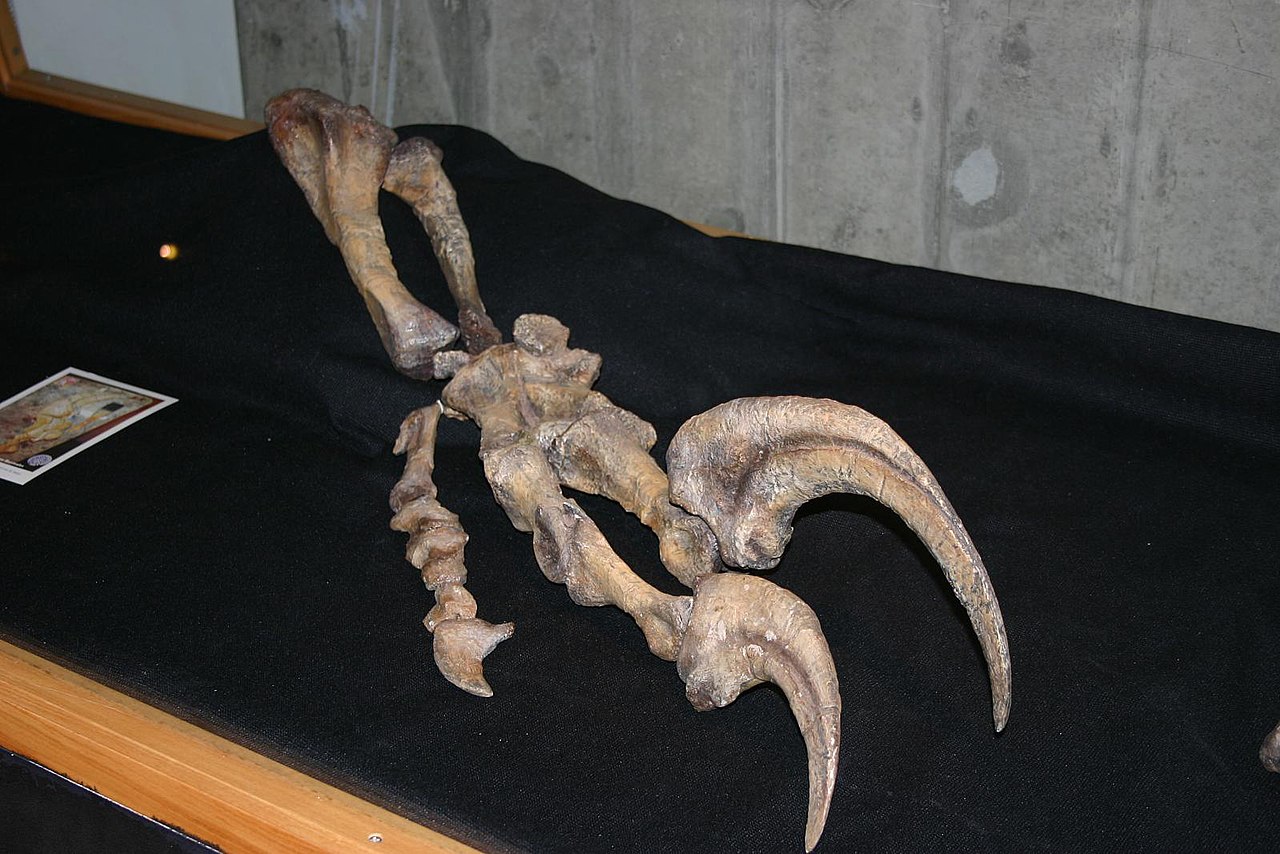


Physical characteristics
The most distinctive feature of Megaraptor is the presence of one very large, recurved claw on each hand. When the first specimens were found the claws were so striking that they dominated early reconstructions. The animal had long, powerful forelimbs, a long tail for balance and a head bearing sharp, blade-like teeth suited for cutting flesh. Overall its build suggests agility rather than the bulk and power of the largest carnosaurs.
- Large manual claw on each hand, originally compared to dromaeosaur "sickle claws" (claws).
- Bipedal posture with a long tail and relatively lightweight skeleton.
- Teeth and jaws suitable for slicing meat (jaws).
Discovery and naming
The earliest remains of this animal were fragmentary, with the first notable discovery being a large claw that drew attention because of its size and shape. That initial find was followed by more complete hand material and other bones, which clarified the anatomy. Most fossils come from Cretaceous deposits in Patagonia, and the genus was named and described based on these South American specimens. Early reports emphasized the claw as a diagnostic element of the genus (fossil).
Classification and scientific debate
Megaraptor's exact position within Theropoda has been debated. Two main interpretations have gained traction: one places it among allosauroid carnosaurs related to forms such as Neovenator, while another treats it as a member of the coelurosaur lineage closer to tyrannosauroids. The disagreement stems from the combination of primitive and derived traits in its skeleton and from the fragmentary nature of some material. Some researchers favor an allosauroid affinity (carnosaur), whereas others argue for a placement on the coelurosaur side of the theropod family tree.
Paleobiology and significance
Because of its long forelimbs and large manual claws, Megaraptor is often reconstructed as a predator that used its hands to grasp or slash at prey, working in concert with its teeth and jaws. Its ecology likely overlapped with other large theropods of the Late Cretaceous, and it contributes to our understanding of predator diversity in southern continents. The genus is an example of how incomplete fossils can produce competing, changing interpretations as new specimens are discovered and analyzed.
Further reading and resources
For general context about the time and group in which Megaraptor lived see materials on the Late Cretaceous and reviews of theropod anatomy and evolution (theropod). Scholarly descriptions and revisions discuss the hand morphology and the taxonomic arguments in detail; these works interpret the claw-bearing hand differently from earlier comparisons to dromaeosaurs. The debate over Megaraptor's relationships highlights broader challenges in reconstructing dinosaur evolution from partial remains.
Readers seeking primary literature or museum records can follow specialist databases and published papers indexed in major collections and repositories (jaws, fossil, carnosaur, Neovenator).
Questions and answers
Q: How long was Megaraptor?
A: Megaraptor was 26 feet (8 m) long.
Q: What kind of claws did Megaraptor have?
A: Megaraptor had two large sickle-like claws on each hand.
Q: Was Megaraptor a biped or a quadruped?
A: Megaraptor was a lightly built biped.
Q: What did Megaraptor have in its large head?
A: Megaraptor had sharp, serrated teeth in powerful jaws in its large head.
Q: How was Megaraptor initially classified?
A: Megaraptor was initially classified as a large member of the Dromeosaur family, as its claws strongly resembled theirs.
Q: What was discovered that changed Megaraptor's classification?
A: A complete hand was discovered, revealing that the main claw was on its thumb. This changed Megaraptor's classification.
Q: What is Megaraptor now classified as?
A: Megaraptor is now classified either as an allosauroid carnosaur, related to Neovenator, or a tyrannosauroid coelurosaur.
Related articles
Author
AlegsaOnline.com Megaraptor — a large late Cretaceous theropod Leandro Alegsa
URL: https://en.alegsaonline.com/art/63520
Sources
- doi.org : 10.1080/02724634.1998.10011030
- ui.adsabs.harvard.edu : 2010NW.....97...71B
- doi.org : 10.1007/s00114-009-0614-x
- pubmed.ncbi.nlm.nih.gov : 19826771