
Articles of Confederation: America's First Constitution and Its Legacy
The Articles of Confederation (adopted 1781) established a loose confederation of the thirteen states, defining central powers and limits that led to reforms and the U.S. Constitution in 1789.
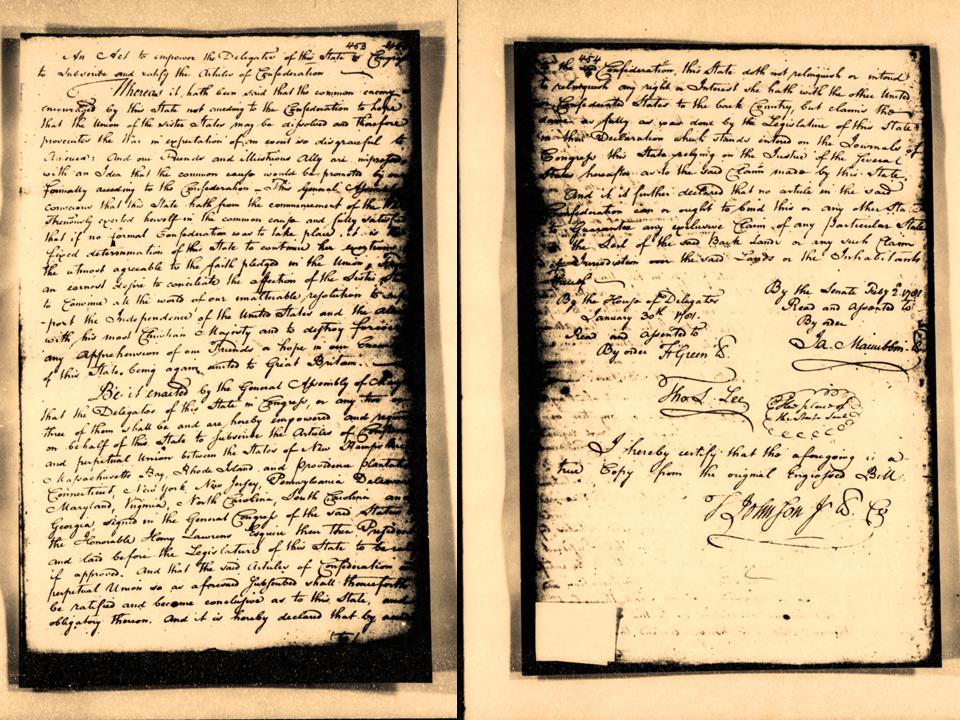
The Articles of Confederation, formally the Articles of Confederation and Perpetual Union, were the first governing document adopted by the thirteen American states during and after the Revolutionary War. Conceived as a compact among sovereign states, the Articles created a central body known as the Confederation Congress but preserved broad autonomy for each state. All thirteen states completed ratification by early 1781, allowing the national government to operate under this framework; the ratification process itself is described in historical sources and commentary by scholars and institutions about ratification.
Image gallery
10 Images


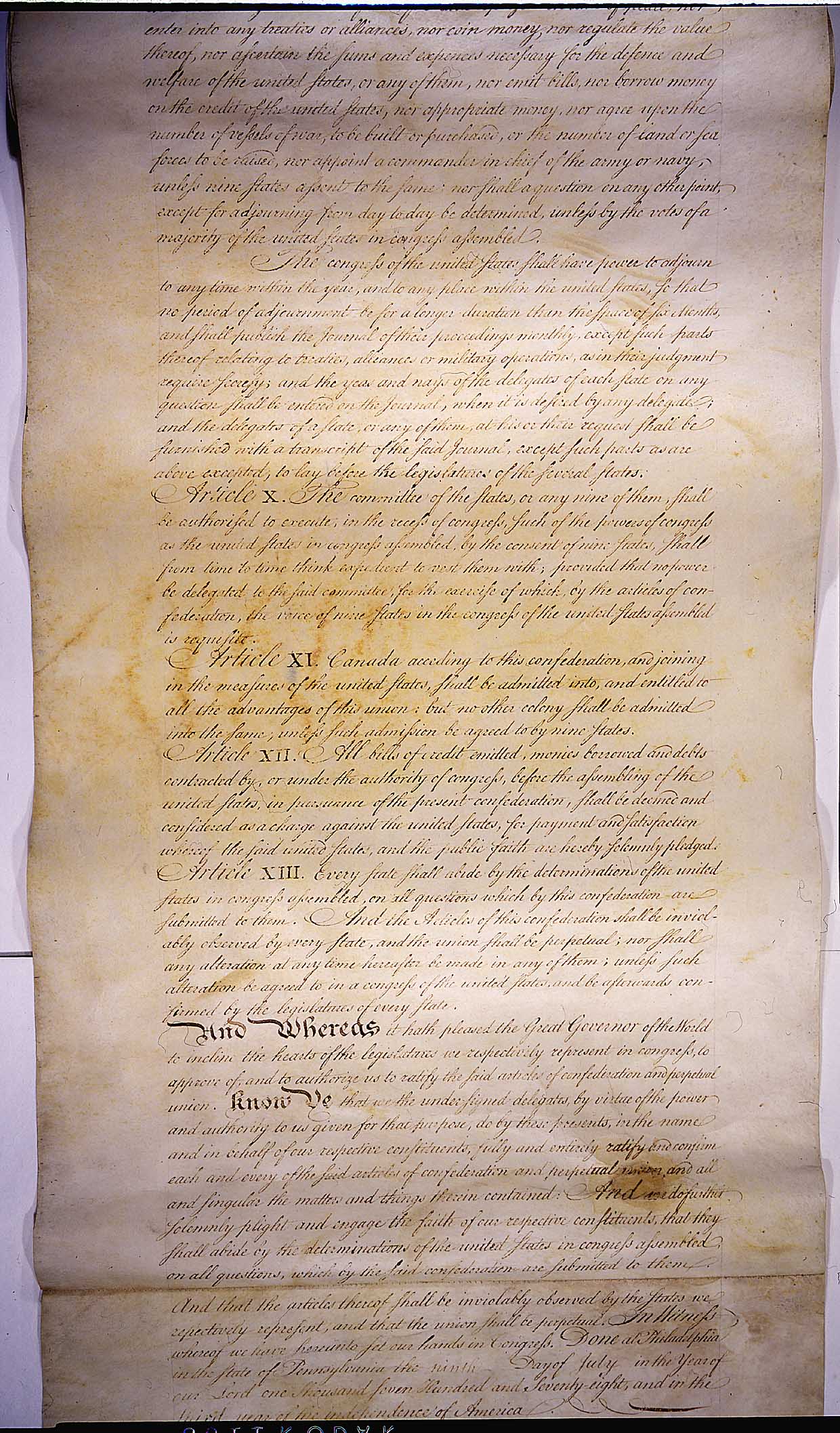



Structure and powers
Under the Articles the national government was intentionally limited. Congress could declare war, negotiate with foreign powers, maintain armed forces, coin money, and manage relations among states. It lacked a separate executive branch and a national judiciary. Decisions on many important matters required the assent of multiple states, and amendments demanded unanimous consent. These arrangements reflected a prevailing concern to protect state sovereignty and to prevent a distant or powerful central authority.
Strengths and weaknesses
Some practical strengths of the Articles included the ability to conduct diplomacy and to pass landmark ordinances that organized western lands. However, the system struggled with chronic financial and enforcement problems: Congress had no direct power to levy taxes, could not compel states to contribute funds, and lacked authority to enforce treaty obligations or interstate commerce rules. Events and pressures in the mid‑1780s—ranging from international challenges to domestic unrest—highlighted these limits and stimulated debate among leaders, including the generation often called the Founding Fathers.
Notable acts and developments
- Land Ordinance of 1785: a program for surveying and selling western lands.
- Northwest Ordinance of 1787: established a process for admitting new states and included protections for civil liberties in the Northwest Territory.
- Responses to fiscal crises and internal disturbances underscored the need for a stronger central authority.
Replacement and legacy
By the mid‑1780s debates intensified over reforming the national government. Delegates met in Philadelphia in 1787 to revise the Articles but instead drafted a new Constitution that established a stronger national government with separated executive, legislative, and judicial branches. The Constitution created a federal system of government that balanced national and state powers and addressed many functional weaknesses of the Confederation. When the new framework took effect in 1789, the Articles were superseded.
Significance and distinctions
The Articles of Confederation are historically significant for shaping early American political practice and for producing policies—such as western land management—that influenced expansion. Their deliberate limitation of central power and emphasis on state sovereignty also framed the debates that produced the later federal Constitution. Scholars and civic resources continue to study the period to understand how the Confederation experience informed ideas about union, governance, and federalism.
Questions and answers
Q: What were the Articles of Confederation?
A: The Articles of Confederation was the first constitution of the United States of America.
Q: Who ratified the Articles of Confederation?
A: All thirteen original states in the United States of America ratified the Articles of Confederation in early 1781.
Q: What was the purpose of the Articles of Confederation?
A: The purpose of the Articles of Confederation was to establish a framework for a unified government among the thirteen original states.
Q: When were the Articles of Confederation replaced?
A: The Articles of Confederation were replaced in 1789, when the founding fathers replaced it with the United States Constitution.
Q: What form of government was established with the Articles of Confederation?
A: The Articles of Confederation established a confederal form of government in which states had more power than a central government.
Q: What was the difference between the Articles of Confederation and the United States Constitution?
A: The Articles of Confederation established a confederal form of government, while the United States Constitution established a federal form of government.
Q: Why were the Articles of Confederation replaced?
A: The Articles of Confederation were replaced because it was believed that the confederal form of government under the Articles was not effective in solving the problems faced by the United States at the time.
Related articles
Author
AlegsaOnline.com Articles of Confederation: America's First Constitution and Its Legacy Leandro Alegsa
URL: https://en.alegsaonline.com/art/6340