
Article Three of the United States Constitution
Summary of Article III, which establishes the federal judiciary, defines judicial power and jurisdiction, sets tenure and salary protections, and addresses treason and related procedures.
Article Three of the United States Constitution establishes the judicial branch of the federal government and defines the basic powers and limits of federal courts. It names the Supreme Court and authorizes Congress to create inferior courts. The text addresses the scope of judicial power, the forms of trials for federal crimes, and a narrow definition of treason.
Image gallery
7 Images


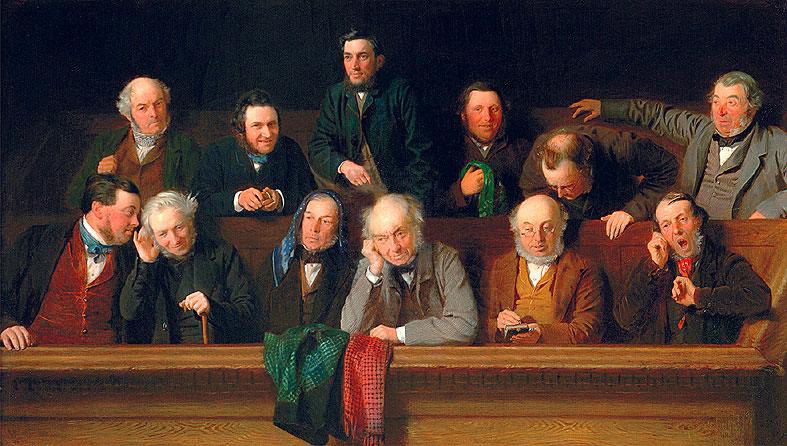


Structure and main provisions
- Judicial power: vests judicial authority in one Supreme Court and such lower courts as Congress may ordain and establish. See the role of the Supreme Court.
- Jurisdiction: federal courts hear cases arising under the Constitution, federal laws, treaties, controversies involving the United States, controversies between states or citizens of different states, and related matters.
- Trials: criminal trials require jury trials except in impeachment cases; trials are generally held in the state where the alleged crime occurred.
- Treason: treason is specifically defined and conviction requires stringent proof: either a confession in open court or testimony from two witnesses to the same overt act.
Powers, limits, and personnel
Article III sets several important protections for federal judges. Judges hold office during "good Behaviour," commonly interpreted as life tenure unless removed through impeachment. Their compensation cannot be reduced while in office, a safeguard intended to protect judicial independence. Congress retains the authority to create and organize lower federal courts and to regulate their jurisdiction within constitutional bounds; consult Congressional powers and the statutes that establish the federal judiciary via inferior courts.
Historical development and significance
The constitutional clauses in Article Three are concise but foundational. Over time, practices and judicial doctrines—most notably the establishment of judicial review by the early Supreme Court—have clarified the practical scope of judicial authority. Article Three’s provisions on treason and jury trial reflect 18th‑century concerns about preventing political prosecutions and preserving local adjudication of crimes.
Notable distinctions and role today
Article Three differs from Articles One and Two by focusing on adjudication rather than lawmaking or execution. It provides structural protections intended to balance independence and accountability. Contemporary questions about the size and jurisdiction of federal courts, the appointment process, and the contours of judicial review all trace back to the framework Article Three supplies.
Questions and answers
Q: What does Article Three of the United States Constitution create?
A: Article Three of the United States Constitution creates the judicial branch of the United States government.
Q: What is the highest court created by this article?
A: The Supreme Court of the United States is created by Article Three.
Q: Can Congress create other courts under this article?
A: Yes, Congress is allowed to create less powerful federal courts under Article Three.
Q: What powers are given to these courts?
A: Article Three sets out the powers that these courts have.
Q: Does Article Three only apply to federal courts?
A: Yes, Article Three applies solely to federal courts.
Q: Is there a limit on how many lower-level federal courts can be created under this article?
A: No, there is no limit set on how many lower-level federal courts can be created under this article.
Q: Are state or local governments affected by this article in any way?
A: No, state and local governments are not affected by this article in any way.
Related articles
Author
AlegsaOnline.com Article Three of the United States Constitution Leandro Alegsa
URL: https://en.alegsaonline.com/art/6337
Sources
- law.cornell.edu : "U.S. Constitution: Article III"
- heritage.org : "Good Behavior Clause"
- thomas.loc.gov : "The Judiciary Department [The Federalist Papers No. 78]"
- archives.gov : "The Declaration of Independence"
- fjc.gov : "How the Federal Courts are Organized: Federal Judges and How they Get Appointed"
- crf-usa.org : "High Crimes and Misdemeanors"
- fjc.gov : "Impeachments of Federal Judges"
- law.cornell.edu : "U.S. Constitution: Article II"
- law.cornell.edu : "28 U.S. Code 1 – Number of justices; quorum"
- law.cornell.edu : "U.S. Constitution: Article I, Section 8"
- catea.gatech.edu : "Other Federal Courts"
- fjc.gov : "Federal Question Jurisdiction in the Federal Courts"
- avalon.law.yale.edu : "The Judiciary Act"
- law.cornell.edu : "Erie Railroad Co. v. Tompkins, 304 U.S. 64, 90 F.2d 603, reversed"