
McDonnell Douglas F-4 Phantom II
Twin‑seat, twin‑engine supersonic fighter-bomber introduced in 1960; notable for Vietnam service, heavy weapons load, multiple variants including the F-4E gun version and G Wild Weasel SEAD role.
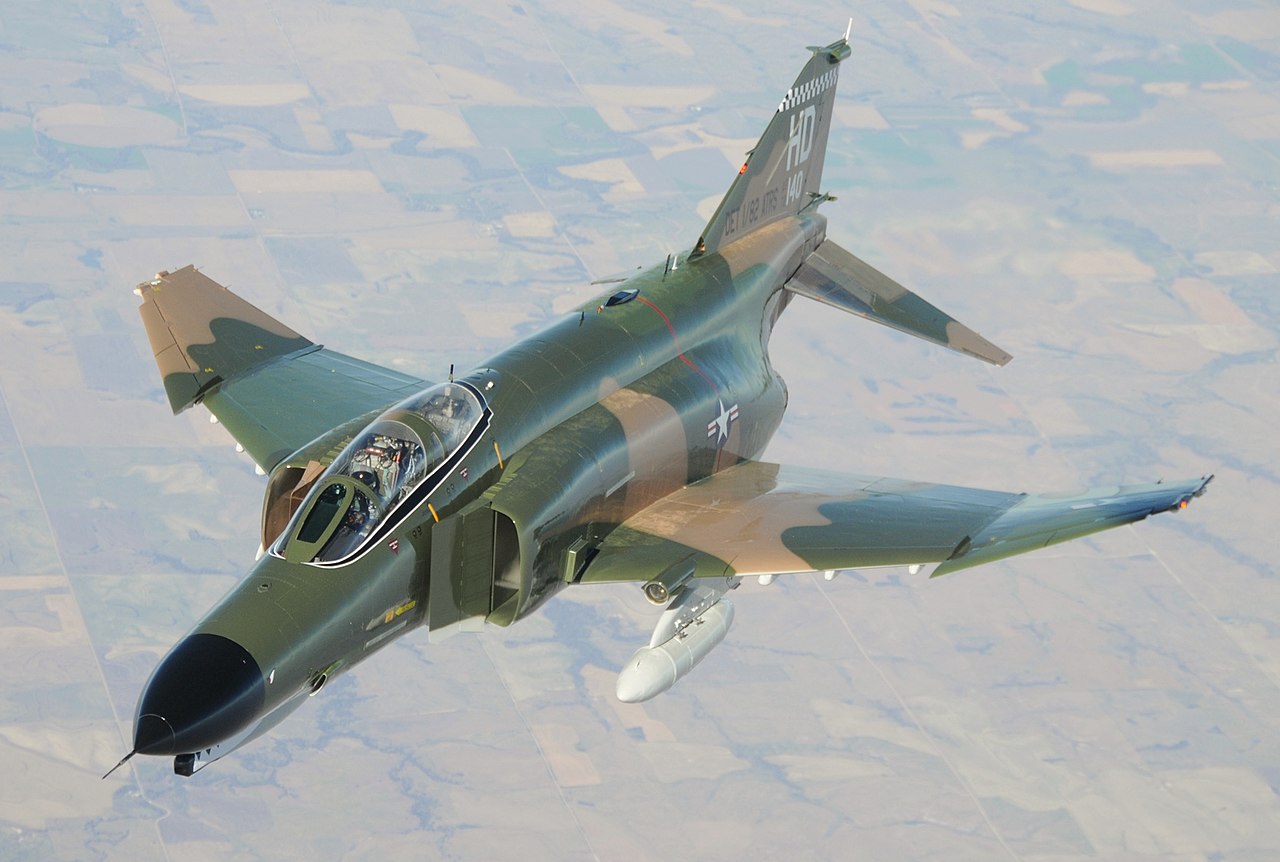
Overview: The McDonnell Douglas F-4 Phantom II is a two‑seat, twin‑engine supersonic fighter-bomber developed in the United States in the late 1950s. Designed for both air‑to‑air and air‑to‑ground missions, it became one of the most widely used combat aircraft of its era and a defining type of Cold War aviation. The Phantom earned a strong reputation for speed, payload capacity and rugged versatility, seeing extensive service during the Vietnam War and with numerous foreign air forces.
Image gallery
10 Images



Design and characteristics
The Phantom combined a powerful radar and avionics suite with a large weapons bay and external pylons. It seated a pilot and a weapons systems officer in tandem. Key characteristics included:
- Twin turbojet engines producing high thrust for sustained supersonic flight.
- Large internal radar enabling long‑range interception and guided‑missile employment.
- High external payload capacity for missiles, rockets and bombs.
- Initial absence of an internal gun on early variants; later models added an internal cannon.
Armament and sensors
The Phantom could carry a mix of air‑to‑air missiles such as the AIM‑9 Sidewinder and long‑range Sparrow types, as well as unguided bombs and rockets for strike missions. Early F‑4s relied heavily on radar‑guided and heat‑seeking missiles for air combat; subsequent versions corrected lessons learned by adding a gun and improved avionics for close‑in fighting and precision strike.
Operational history
Introduced to service around 1960, the F‑4 served with the U.S. Navy, Marine Corps and Air Force and became the primary U.S. fighter-bomber through the 1960s and 1970s. It flew air superiority, interdiction, reconnaissance and diversionary missions. The type gained combat experience and modifications through its extensive use in Southeast Asia and other conflicts, and was progressively replaced in U.S. frontline units by newer fighters while remaining active overseas for many years.
Variants and special roles
Several major variants addressed different needs: fighter-interceptor, ground-attack, reconnaissance and suppression of enemy air defenses (SEAD). The F‑4E introduced an internal cannon to improve dogfight performance, while the F‑4G was adapted for specialized electronic warfare and SEAD tasks and became synonymous with the Wild Weasel mission. Many export customers also operated locally modified versions.
Legacy and notable facts
The Phantom’s combination of speed, payload and adaptability made it influential in jet combat aircraft design. It served with dozens of air forces and remained in some inventories into the 21st century. Its service taught important lessons about missile reliability, close‑range combat tactics and the value of multi‑role flexibility, shaping subsequent generations of fighters.
Questions and answers
Q: What is the McDonnell Douglas F-4 Phantom II?
A: The McDonnell Douglas F-4 Phantom II was an American fighter-bomber.
Q: When was the F-4 Phantom II first flown?
A: The F-4 Phantom II was first flown in 1958.
Q: When was the F-4 Phantom II shown?
A: The F-4 Phantom II was shown in 1960.
Q: What type of missiles could the F-4 Phantom II carry?
A: The F-4 Phantom II could carry four AIM-9 Sidewinder missiles and four long range AIM-7 Sparrow missiles.
Q: Did the F-4 Phantom II have a gun?
A: The F-4 Phantom II did not have a gun originally, but later models had a cannon mounted on them.
Q: What happened to the F-4 Phantom II after it was replaced by the F-15 Eagle?
A: After the F-15 Eagle replaced it, the F-4 Phantom II was used as a bomber and the G model was used as a Wild Weasel.
Q: During which war was the F-4 Phantom II mainly used?
A: The F-4 Phantom II was mainly used during the Vietnam War.
Related articles
Author
AlegsaOnline.com McDonnell Douglas F-4 Phantom II Leandro Alegsa
URL: https://en.alegsaonline.com/art/63233