
Mazon Creek: Carboniferous Lagerstätte of Illinois
Mazon Creek is a famed Carboniferous lagerstätte in northeastern Illinois, known for ironstone-concretions preserving plants, insects (including the oldest known beetle), soft-bodied animals, and rich paleoecological information.
Overview
Mazon Creek is a celebrated fossil locality in northeast Illinois that preserves an unusually broad and detailed record of life from the Late Carboniferous. The deposits formed during the Pennsylvanian subperiod, about 309 million years ago, and are part of the coal-bearing sequence of sediments laid down in ancient coastal and deltaic environments of the Carboniferous.
Image gallery
7 Images




Preservation and setting
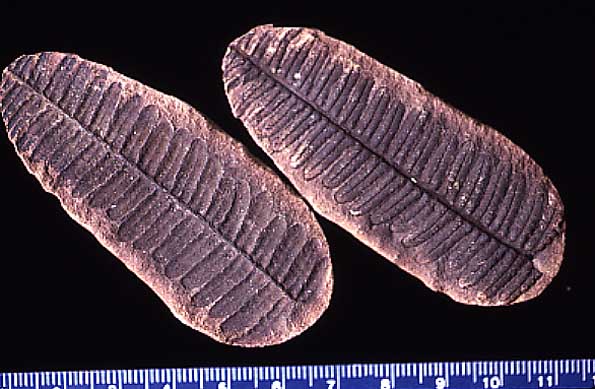
The site is classed as a lagerstätte because the conditions of burial and mineralization produced exceptional preservation, often including delicate soft tissues. Most specimens are found inside rounded ironstone or siderite concretions that formed rapidly around organic remains in fine-grained shale. Those concretions protected plants and animals from decay and physical disturbance, enabling researchers to study features that are rarely preserved in older rocks.
Assemblages and characteristic fossils
Mazon Creek contains a mix of terrestrial, freshwater and shallow-marine organisms that reflect a mosaic of habitats. Two broad assemblages are commonly recognized: a terrestrial flora and fauna associated with coal-swamp forests, and a marine or estuarine assemblage that includes soft-bodied invertebrates.
- Plants: abundant foliage, stems and tree-sized lycopsids and sphenopsids typical of Carboniferous coal swamps.
- Arthropods and insects: a rich insect fauna that includes the site’s most famous discovery—the oldest-known beetle—alongside spiders, centipedes and other arthropods.
- Soft-bodied animals: jellyfish-like forms, worms, shrimp-like crustaceans and other delicate organisms.
- Vertebrates: fish remains and occasional amphibian fragments that illuminate early tetrapod evolution.
Scientific importance and protection
Because of the breadth of taxa and quality of preservation, Mazon Creek is a key reference for studies of Carboniferous ecosystems, taphonomy (how organisms become fossilized), and early insect evolution. The site was recognized for its scientific and historical value when it was designated a National Historic Landmark in 1997. Fossils from Mazon Creek have been collected both by amateurs and by scientists, and many specimens are held in museums and research collections where they continue to inform interpretations of ancient ecological networks and the origin of major animal groups. For further general information see resources linked here: fossil overview and additional readings at Carboniferous references or regional guides via local institutions and chronostratigraphic summaries.
Questions and answers
Q: Where is Mazon Creek located?
A: Mazon Creek is located in northeast Illinois.
Q: What is the geological time period associated with Mazon Creek?
A: The geological time period associated with Mazon Creek is the Pennsylvanian sub-period of the Carboniferous, about 309 million years ago.
Q: What is the significance of the site?
A: The site is a lagerstätte which means it has exceptional fossil preservation. It was also declared a National Historic Landmark in 1997.
Q: What is the oldest-known beetle found at Mazon Creek?
A: The oldest-known beetle found at Mazon Creek is the site's greatest find.
Q: When was Mazon Creek declared a National Historic Landmark?
A: Mazon Creek was declared a National Historic Landmark in 1997.
Q: How old is the geological time period associated with Mazon Creek?
A: The geological time period associated with Mazon Creek is about 309 million years old.
Q: What type of preservation does Mazon Creek have?
A: Mazon Creek has exceptional fossil preservation.
Related articles
Author
AlegsaOnline.com Mazon Creek: Carboniferous Lagerstätte of Illinois Leandro Alegsa
URL: https://en.alegsaonline.com/art/63177
Sources
- pdfhost.focus.nps.gov : National Historic Landmark Nomination: Mazon Creek Fossil Beds
- pdfhost.focus.nps.gov : Accompanying photos, from 1912 and 1991.