
Mausoleum at Halicarnassus: History, Architecture, and Cultural Legacy
An encyclopedic overview of the Mausoleum at Halicarnassus: its patrons, design and decoration, architects and sculptors, later history, excavations, and its enduring influence on funerary architecture.
Overview
The Mausoleum at Halicarnassus was a monumental tomb erected in the mid‑4th century BC in the ancient city of Halicarnassus (the modern town of Bodrum) on the southwestern coast of what is now Turkey. It was commissioned by Artemisia II in memory of her husband and brother Mausolus, a regional governor or satrap of the Persian Empire. Combining Anatolian, Near Eastern and Greek elements, the building became widely celebrated in antiquity and was listed by ancient authors among the Seven Wonders of the World. For a general introduction to the site and its archaeology see a concise site overview.
Image gallery
10 Images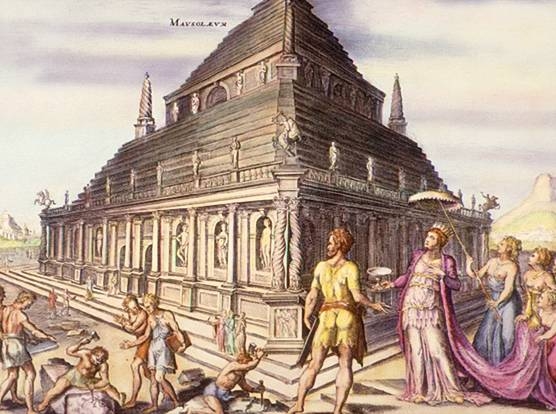




Patrons and Historical Context
Mausolus ruled in Caria, a culturally mixed province of the Persian imperial system where local dynasts often adopted Greek artistic practices while maintaining Persian political ties. Artemisia, his sister and wife who completed the monument after his death, played a central role in its execution and in promoting the ruler’s memory. The tomb must be understood both as a dynastic memorial and as a public statement of status within the cosmopolitan milieu of Hellenistic Anatolia.
Design and Architectural Features
Ancient descriptions and later reconstructions suggest the mausoleum rose to an overall height often estimated at about 45 metres. Its plan combined a high podium or base supporting a colonnaded cella or chamber, surmounted by a stepped or pyramidal roof and finished with an elaborate sculptural group, perhaps a four‑horse chariot (quadriga). Stone and marble were principal materials, chosen for their durability and capacity for fine carving. For summaries of architectural evidence and competing reconstructions see selected architectural accounts.
Architects and Sculptors
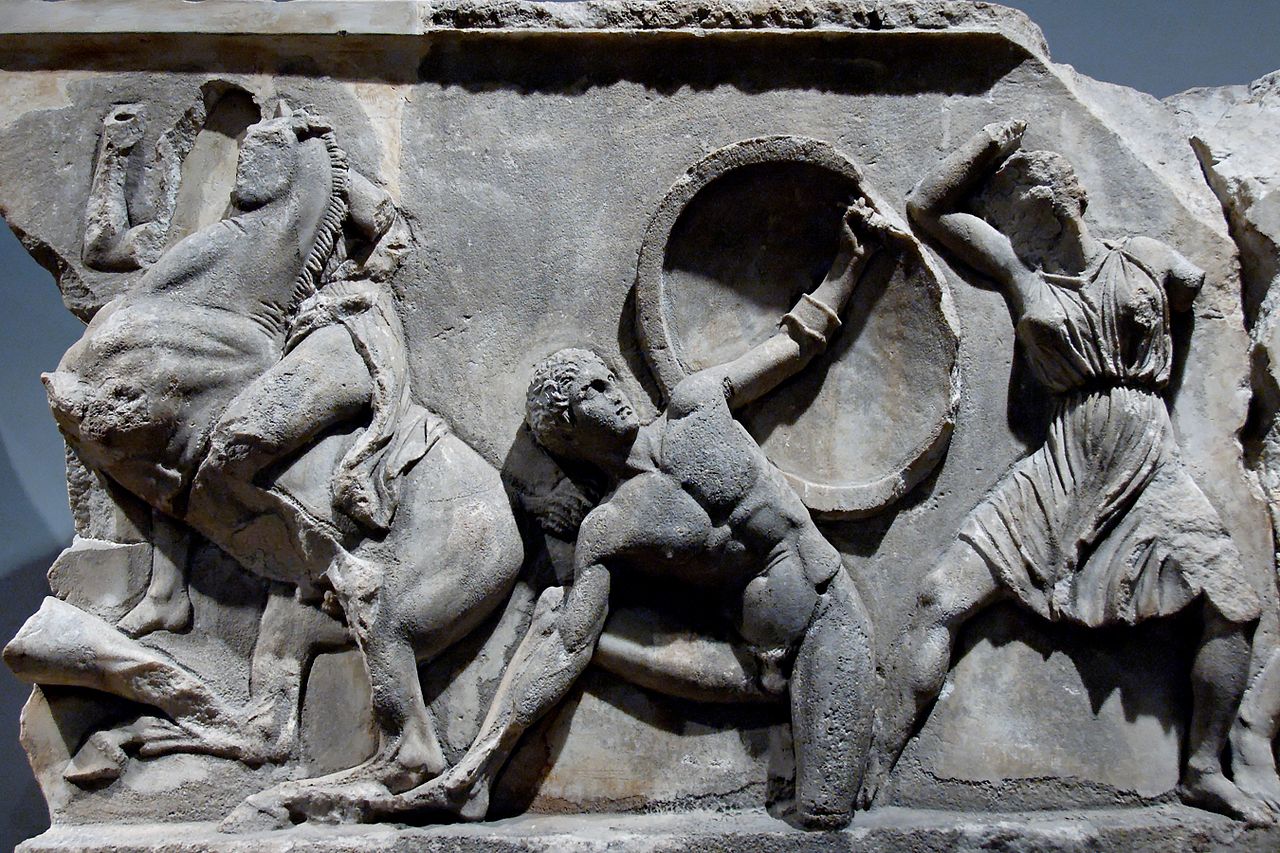
Classical sources name Greek designers and artists in the monument’s creation. The architects Satyros and Pythius of Priene are commonly mentioned as principal planners; surviving literary tradition connects the tomb’s decoration with established Greek sculptural practice. Four major sculptors — traditionally Bryaxis, Leochares, Scopas and Timotheus — are said to have been responsible for the sculptural programs on each façade. While ancient attributions help frame modern discussion, scholars treat them with caution because physical evidence is fragmentary. The decorative scheme included high‑relief friezes and freestanding statuary that emphasized dynastic imagery and procession motifs; see references on sculptural reliefs.
Construction Process and Patronage
Work probably began after Mausolus’s death around 353–350 BC and extended for several years under Artemisia’s direction. The project required skilled masons, carvers and architects drawn from across the eastern Mediterranean, reflecting both local building traditions and imported Hellenic techniques. The combination of monumental scale, richly carved ornament and a carefully composed summit group made the mausoleum a focal point of the city and a lasting symbol of its rulers’ aspirations.
Later History, Damage and Dispersal
Over time the monument suffered from natural disasters, such as earthquakes, and from human activity. By the medieval period much of the structure had been dismantled and reused in other local buildings; historical accounts also record the reuse of stones in later fortifications of the area. From the 19th century onward fragments associated with the mausoleum were recovered by excavators and antiquarians and are now dispersed among museum collections and the local archaeological museum; this dispersal has both preserved pieces of the monument and complicated efforts to reconstruct it in situ.
Reception and Legacy
In antiquity the mausoleum was admired for its scale and artistry; the poet Antipater of Sidon included it in his canonical list of wonders, a tradition that helped cement its reputation. The personal name Mausolus became the root of the modern word mausoleum, used across many languages to denote any grand tomb. Its combination of architectural innovation and sculptural richness influenced later funerary monuments and remains a key case study in the study of Hellenistic art and cultural interaction.
Archaeology and Continuing Research
Archaeological work, historical scholarship and museum research continue to refine understanding of the mausoleum’s appearance and chronology. Reconstructions are based on literary descriptions, surviving sculptural fragments and comparative studies of contemporary monuments. Visitors and scholars can consult museum displays and published site reports for more detail; for practical site information see local resources and summaries at a site overview or entries on the city of Bodrum and regional context in Turkey.
- The mausoleum illustrates the mobility of artists and ideas across the eastern Mediterranean and the blending of artistic traditions.
- Attribution of individual sculptors and architects survives in literary sources but requires careful evaluation against the physical record.
- Fragments related to the tomb have been studied in both local and international collections; archaeological publications and museum catalogues provide primary documentation for ongoing interpretation.
For those seeking further reading, consult overviews of Carian history and the role of satrapal rulers under the Persian imperial framework, architectural studies that survey Hellenistic monumental tombs, and specialist analyses of the sculptural program attributed to the named masters such as Satyros and Pythius and the reports on preserved sculptural reliefs. The long reception of the tomb in literature and travel writing is also central to its modern fame and scholarly study (Antipater of Sidon remains a frequent point of reference).
Questions and answers
Q: Who was the Mausoleum at Halicarnassus built for?
A: The Mausoleum at Halicarnassus was built for Mausolus, a satrap in the Persian Empire, and Artemisia II of Caria, who was both his wife and his sister.
Q: When was the Mausoleum at Halicarnassus built?
A: The Mausoleum at Halicarnassus was built between 353 and 350 BC.
Q: Where is Halicarnassus located?
A: Halicarnassus is present-day Bodrum, Turkey.
Q: Who designed the Mausoleum at Halicarnassus?
A: The Mausoleum at Halicarnassus was designed by the Greek architects Satyros and Pythius of Priene.
Q: How tall was the Mausoleum at Halicarnassus?
A: The Mausoleum at Halicarnassus was about 45 meters (135 feet) tall.
Q: Who created the sculptural reliefs on each side of the Mausoleum at Halicarnassus?
A: Each one of the four sides of the Mausoleum at Halicarnassus was decorated with sculptural reliefs created by one of four Greek sculptors — Bryaxis, Leochares, Scopas, and Timotheus.
Q: What did Antipater of Sidon think of the Mausoleum at Halicarnassus?
A: Antipater of Sidon said that the Mausoleum at Halicarnassus was one of the Seven Wonders of the World because of its impressive design and scale.
Related articles
Author
AlegsaOnline.com Mausoleum at Halicarnassus: History, Architecture, and Cultural Legacy Leandro Alegsa
URL: https://en.alegsaonline.com/art/62987
Sources
- ancientlibrary.com : "Dictionary of Greek and Roman Antiquities, page 744"