
Materialism (philosophy): the view that matter is the fundamental substance
Philosophical doctrine that reality consists fundamentally of matter or physical entities; covers definitions, history, major variants, relation to mind and science, criticisms, and contemporary debates.
Overview
Materialism is the metaphysical view that the most basic constituents of reality are material or physical in nature. On this account, whatever exists is ultimately part of the physical world as described by science: matter, energy, fields, spacetime structure, and the interactions among them. Materialism contrasts with ontologies that posit nonphysical substances or realms; it treats apparently immaterial phenomena such as mind or consciousness as dependent upon or arising from physical processes.
Image gallery
3 Images

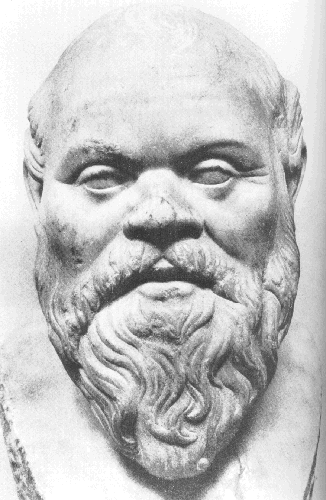
Terminology and relation to physicalism
The term "materialism" is historically older and often associated with the idea that matter is the primary substance. In contemporary analytic philosophy, the closely related label "physicalism" is frequently used to emphasize that whatever exists is part of the physical domain as characterized by current and future scientific theories. Some writers treat the two terms as synonymous, while others draw subtle distinctions about emphasis or scope.
Core commitments and variants
Materialist positions share a commitment to a single category of substance or to a naturalistic ontology, but they differ over how to understand mental phenomena and higher‑level properties. Major variants include reductive materialism (or identity theory), which identifies mental states with physical states; non‑reductive materialism, which holds that mental properties depend on but are not reducible to physical properties; and eliminative materialism, which argues that some common‑sense psychological categories may give way to neuroscientific descriptions.
Mind, consciousness and the so‑called "hard problem"
When applied to the philosophy of mind, materialism raises questions about whether subjective experience, intentionality, qualia, and first‑person perspectives can be fully explained in physical terms. Critics often invoke the "hard problem" of consciousness to argue that explaining why and how physical processes give rise to subjective experience remains deeply challenging. Materialists respond with various strategies including reduction, functional explanation, emergent properties, and proposals that revise folk psychological categories.
Historical roots
The origins of materialist thought can be traced to ancient naturalistic strands of philosophy. In the ancient Mediterranean, some pre‑Socratic and Hellenistic thinkers proposed natural explanations for change and life. Notable figures include Thales as an early natural philosopher, the atomists who influenced later materialist traditions, and writers such as Epicurus and Lucretius who articulated atomistic accounts of nature. Materialist ideas reappeared in different forms in early modern and modern European thought; some thinkers associated with naturalistic metaphysics include Spinoza and Engels, the latter connecting materialist metaphysics to social and historical theory.
Materialism and science
Modern materialists typically incorporate findings from physics and biology into their accounts. They acknowledge entities and structures described by science—such as energy, forces, and the curvature of space in relativity—as central to an adequate ontology. The relation between matter and energy, and the role of spacetime and field theory, complicate older, simplistic ideas of matter as solid lumps. Materialists often argue that scientific explanation, experiment, and empirical confirmation are the primary routes to knowledge about what exists.
Relations to religion and the supernatural
Materialism generally rejects supernatural explanations and nonphysical entities often invoked in religious or metaphysical systems. For this reason many materialists are atheists or agnostics and they typically deny the existence of a supernatural soul or spirit. That said, not every skeptic about the supernatural is a materialist, and historically some figures combined naturalistic metaphysics with religious or pantheistic sensibilities; debates about God, spirituality, and naturalism continue to be complex and varied.
Criticisms and challenges
Critics of materialism raise several kinds of objections. Philosophical objections point to difficulties in accounting for subjective experience, intentionality, moral normativity, and the apparent irreducibility of certain explanatory modes. Empirical or scientific objections sometimes emphasize that future scientific developments could revise current physicalist commitments or reveal novel kinds of phenomena. There are also methodological criticisms: whether materialism commits too readily to reductionist explanations, or whether it underestimates the autonomy of higher‑level sciences.
Responses and alternative strategies
Materialists have developed responses to these criticisms. Some endorse forms of emergence that allow novel properties at higher levels without invoking nonphysical substances. Others refine reductionist accounts and look for stepwise identifications between mental and neural states. Philosophers also explore pluralist or multi‑level frameworks that preserve a naturalistic ontology while recognizing methodological differences across disciplines.
Influence and contemporary debates
Materialism has had a major influence on the development of modern science and secular thought, shaping approaches in biology, neuroscience, and the philosophy of mind. Contemporary debates engage with questions about the metaphysical status of information, the ontological implications of quantum theory and relativity, and the prospects for a unified naturalistic account of reality. Alternative positions—such as various forms of dualism, idealism, or panpsychism—are defended by some philosophers precisely because they consider standard materialist frameworks incomplete.
Further reading and related terms
- Philosophical view — broad category encompassing metaphysical positions.
- World — discussions of what the totality of existence includes.
- Matter — traditional notion contrasted with mind or spirit.
- Consciousness — central topic in debates about materialism.
- Physicalism — modern label related to materialism.
- Supernatural — category of explanations materialism typically rejects.
- Spirit — nonmaterial principle sometimes posited by other traditions.
- Pantheism — an alternative religious or metaphysical outlook sometimes linked to naturalism.
- God — concepts of divinity that interact with materialist thought.
- Spinoza — early modern thinker with a nature‑centered metaphysics.
- Engels — 19th‑century writer connecting materialist philosophy to social theory.
- Science — source of many modern arguments for materialism.
- Energy — a central physical quantity in modern ontology.
- Curvature of space — part of relativistic descriptions of gravity.
- Gravity — example of a physical interaction studied by science.
- Reductionism — explanatory strategy often associated with materialist projects.
- Empiricism — emphasis on experience and observation important to naturalistic views.
- Ancient Greek — cultural source of early naturalistic ideas.
- Thales — early natural philosopher.
- Epicurus — important ancient atomist.
- Lucretius — Roman expositor of atomist doctrine.
Materialism remains a central and contested position in contemporary metaphysics, philosophy of mind, and the philosophy of science. Ongoing work examines whether, and in what form, a thoroughly naturalistic account of reality can accommodate the full range of human experience and scientific discovery.
Questions and answers
Q: What is Materialism?
A: Materialism is the philosophical belief that the world is made of material, and that there are no other types of entity (things). Everything is composed of material. Things that are not made of material, such as consciousness, are the result of actions by material. In other words, matter is the only real substance.
Q: What is Physicalism?
A: Physicalism is a related term to Materialism. It refers to the idea that physical entities exist in reality and can be studied through scientific means.
Q: Do Materialists believe in supernatural entities?
A: No, Materialists do not believe in supernatural entities as they find this idea either meaningless or not scientifically proven.
Q: Are all atheists also Materialists?
A: No, not all atheists are necessarily Materialists as there have been some historically important Materialist thinkers who believed in a Pantheist idea of God (such as Baruch Spinoza and Friedrich Engels).
Q: What does Modern Philosophical Materialism include?
A: Modern Philosophical Materialism includes basic entities proven by science such as energy, forces, and the curvature of space. Matter and energy are known to be interchangeable and much else such as gravity is caused by matter.
Q: What other types of philosophy share some aims with materialism?
A: Examples would include reductionism, logical positivism and empiricism which share some aims with materialism.
Q: Who were early materialist philosophers?
A: Early materialist philosophers included Thales, Epicurus and Lucretius from Ancient Greek philosophy but it also appeared in other ancient cultures too.
Related articles
Author
AlegsaOnline.com Materialism (philosophy): the view that matter is the fundamental substance Leandro Alegsa
URL: https://en.alegsaonline.com/art/62795
Sources
- plato.stanford.edu : Eliminative materialism
- books.google.com : Materialism: an affirmative history and definition