
Masaccio: Early Renaissance Painter and Innovator
Tommaso di Ser Giovanni di Simone (Masaccio), active c.1401–1428, introduced naturalism, linear perspective and sculptural volume to Florentine painting, transforming early Renaissance visual language.
Masaccio (born Tommaso di Ser Giovanni di Simone; 1401–1428) was an Italian painter whose short career profoundly affected the early Italian Renaissance. Working mainly in Florence, he produced relatively few surviving works, but their naturalism, convincing sense of weight and coherent pictorial space marked a decisive break with late medieval conventions. His approach to form, light and perspective helped establish visual principles that governed fifteenth-century painting.
Image gallery
10 Images




Life and career
Masaccio was born in 1401 and took the professional name by which he is now known; the sobriquet suggested a rough or coarse manner, in contrast to more courtly styles of the time. His documented career was brief: he rose to prominence in Florence in the 1420s and died in the summer of 1428 at a young age. During his productive years he collaborated with other painters, most notably Masolino da Panicale on the fresco decoration of the Brancacci Chapel, and worked in the medium of fresco and panel painting. The small number of securely attributed works means that each surviving piece is closely studied for insights into his method.
Artistic innovations and technique
Masaccio is widely credited with applying newly codified methods of linear perspective and with developing a robust system of modeling by light and shadow that gave figures a tangible solidity. He painted with economy of means: simplified compositions, careful observation of human anatomy and clear lighting produced a sense of volumes occupying real space. In large fresco cycles he organized complex narratives so that figures occupy believable positions within an architectural and pictorial grid, often using a single-point perspective to direct the viewer's eye. His fresco technique relied on the buon fresco method common in Florence, where pigments are applied onto wet plaster so that the painting becomes integral with the wall.
Major works
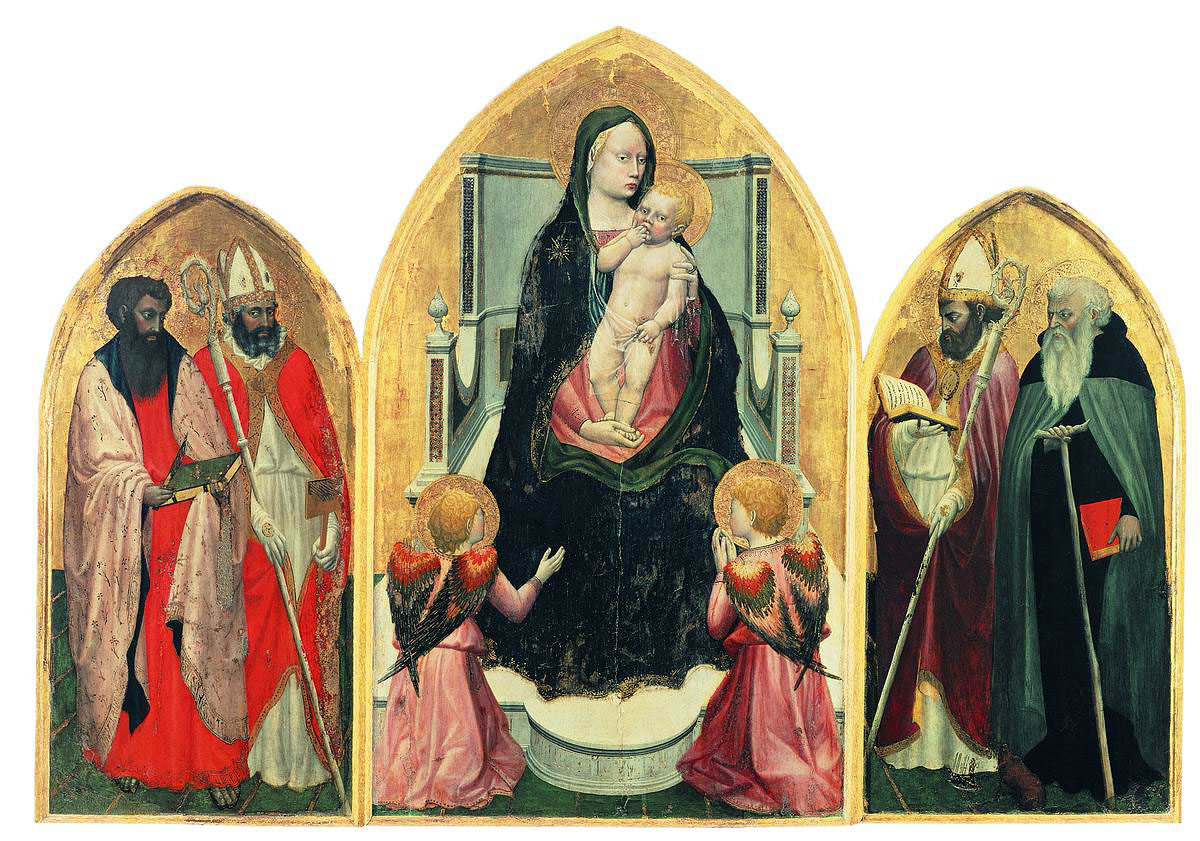
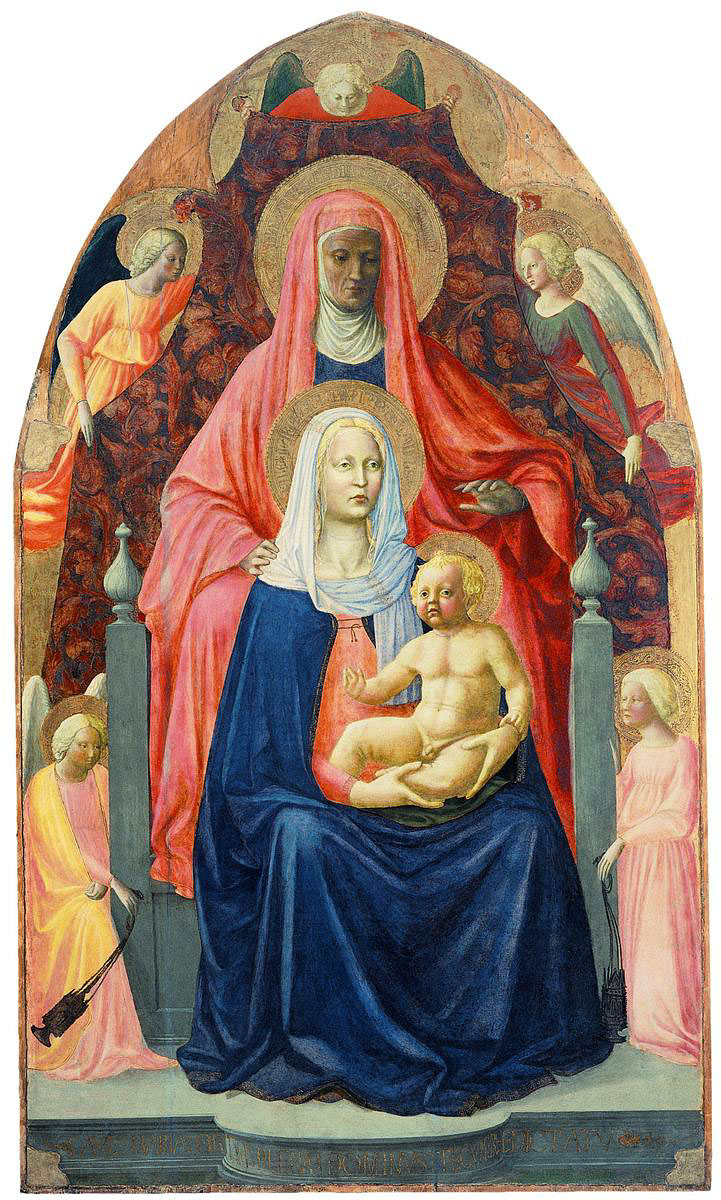
Among Masaccio's best-known achievements are the frescoes in the Brancacci Chapel of Santa Maria del Carmine in Florence, where scenes such as the Tribute Money and the Expulsion of Adam and Eve display expressive emotion, sculptural bodies and coherent spatial logic. His Holy Trinity fresco in Santa Maria Novella is an early and influential demonstration of architectural perspective used to create a convincing illusion of depth. Other works attributed to him include an early triptych from the parish of San Giovenale; because so few pieces survive, attributions are sometimes debated by scholars.
Legacy and influence
Masaccio's innovations were quickly absorbed and adapted by a generation of Florentine painters. Artists such as Filippo Lippi, Fra Filippo Lippi's circle, Piero della Francesca and others found in his handling of space, volume and narrative a model to extend. The Brancacci Chapel in particular became a site of study and pilgrimage for later painters and pupils, its frescoes read as a textbook of new pictorial devices. Although his career was brief, his manner of making figures and space helped to establish the standards of Renaissance pictorial naturalism.
Pronunciation and name
- For modern pronunciation references see the UK form and the US form.
- The Brancacci Chapel frescoes in Santa Maria del Carmine remain a central site for the study of early Renaissance painting; further information is often cited under resources about the Brancacci Chapel.
Questions and answers
Q: Who was Masaccio?
A: Masaccio was a famous painter of the Italian Renaissance.
Q: What does the nickname "Masaccio" mean?
A: The nickname "Masaccio" meant Fat Untidy Tom.
Q: Where did Masaccio work?
A: Masaccio worked in Florence.
Q: Why are Masaccio's paintings significant?
A: Masaccio's paintings were significant because they were so different to the style of other artists around him that they helped other painters to see things in a new way.
Q: How long did Masaccio live?
A: Masaccio lived a very short life, from December 21, 1401 to summer 1428.
Q: How many of Masaccio's paintings exist today?
A: Only a few of Masaccio's paintings exist today.
Q: In which countries are there different pronunciations for Masaccio's name?
A: There are different pronunciations for Masaccio's name in the UK, US, and Italy.
Related articles
Author
AlegsaOnline.com Masaccio: Early Renaissance Painter and Innovator Leandro Alegsa
URL: https://en.alegsaonline.com/art/62537