
Artesian Aquifer: Confined Groundwater Under Natural Pressure
Artesian aquifers are confined, pressurized groundwater layers trapped between impermeable strata; water in wells rises toward the potentiometric surface and may flow naturally to the ground surface.
Overview
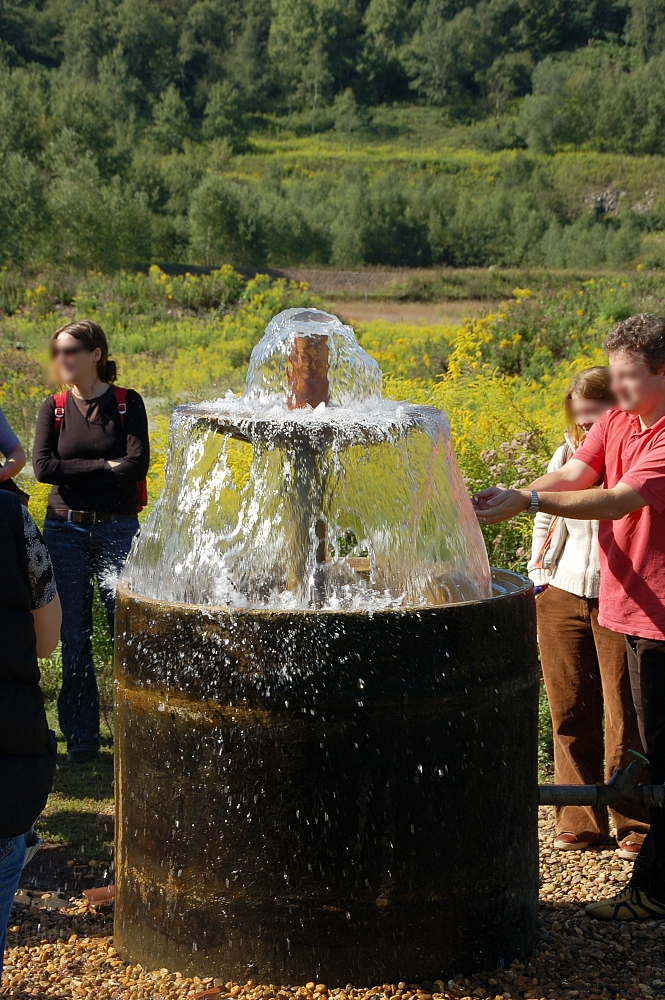
An artesian aquifer is a groundwater-bearing geological layer in which water is confined under pressure between relatively impermeable strata such as clay or dense rock. When a borehole or well penetrates this confined layer, the internal pressure can force water to rise in the well column. The level to which water will rise in such a well is determined by the aquifer's potentiometric surface; if that surface lies above the land surface, the well will flow without pumping and is called a flowing artesian well.
Image gallery
5 Images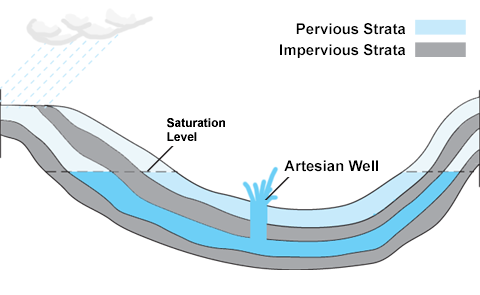


Formation and mechanics
Artesian conditions develop when a permeable unit that stores and transmits water (for example, sand and gravel, limestone or sandstone) is bounded above and below by layers of much lower permeability. Water enters the permeable unit at a recharge area where the land surface or water table lies at a higher elevation. That elevation difference creates hydrostatic pressure within the confined layer so the water is under tension or pressure relative to lower-elevation points.
Potentiometric surface and wells
The potentiometric surface is an imaginary surface defined by the hydraulic head in a confined aquifer; it is the level to which water would rise in tightly cased wells. A well that taps the confined aquifer will show the actual head at the borehole and can indicate the extent of artesian pressure. When the potentiometric surface is higher than the ground at a particular point, wells or natural springs can discharge at the land surface.
Types of artesian systems
Artesian systems vary. Some are actively recharged by recent precipitation and respond to seasonal changes in recharge and extraction. Others are largely isolated and hold very old or so-called fossil water, recharged under different past climate conditions. Large regional systems, such as well-known regional basins, may sustain artesian flow over wide areas where confining conditions and hydraulic gradients permit. The pressurisation mechanism is conceptually similar to the way some oil wells are initially driven by subsurface pressure, though the fluids and engineering considerations differ.
Uses and engineering
Because artesian wells can deliver water without continuous pumping, they have been important for domestic supply, livestock, irrigation and industry. Well design for confined aquifers requires attention to proper casing and seals to prevent cross-contamination between layers and to control flow rates. In some cases valves or caps are fitted to flowing wells to allow controlled yield and to avoid uncontrolled discharge.
Management and environmental concerns
Responsible management is essential. Excessive pumping from a confined aquifer can reduce pressure, lower the potentiometric surface, and convert flowing artesian wells into non-flowing wells. Reduced pressure can also diminish discharge to springs and wetlands that depend on artesian flow. Contamination introduced at recharge areas or through poorly constructed wells may be contained within the confined layer or may migrate along fractures; therefore protection of recharge zones and monitoring of head levels and water quality are standard practices in groundwater management. For general information on subsurface water processes see groundwater summaries and reviews.
Distinctions and further notes
It is important to distinguish an artesian aquifer (a confined, pressurized layer) from an artesian well (a well that taps such a layer) and from a flowing artesian well (one that reaches the land surface). Practical study of artesian systems combines hydrogeology, field measurement of potentiometric surfaces and responsible resource management to balance use and long-term sustainability. Where relevant, local geological studies identify recharge areas and the nature of confining units so that extraction, protection and restoration may be planned with appropriate technical measures and regulatory oversight. For further technical or regional information consult specialized sources and regional groundwater assessments available through technical agencies and research organizations referenced by hydrology texts and databases. Recharge elevation concepts and recharge-area mapping are commonly used tools in such assessments.
Additional technical summaries and historical examples provide context for how artesian systems have been used and managed; consult regional references and hydrogeology texts for detailed guidance on measurement techniques, well construction, and long-term monitoring strategies. See also resources on confined aquifers and related topics for deeper study.
For complementary introductory material on aquifer types and the behavior of confined versus unconfined systems see general groundwater guides and educational pages that explain the basic principles of hydraulic head, transmissivity, and aquifer storage.
Related topics: groundwater, water table, recharge areas, and protection of groundwater resources.
Examples and further reading often mention major artesian resources and case studies used to illustrate long-term management issues and engineering solutions.
For a basic conceptual comparison with other subsurface systems see material on permeable host rocks, confining beds, and the role of hydraulic gradients in driving subsurface flow.
Further technical or legal guidance should be sought from local water authorities or certified hydrogeologists when planning well construction, monitoring, or large-scale groundwater use.
Finally, historical and regional case studies demonstrate how artesian wells have served communities, and how change in land use or climate can alter recharge and pressure regimes.
Key references and educational links are typically provided by geological surveys and water-resource agencies; consult those organizations for maps, measured potentiometric surfaces and management recommendations.
For interdisciplinary comparisons, see treatments that relate artesian principles to engineering, ecology and resource law, particularly where artesian discharge supports springs, wetlands or culturally important water features.
Note: for basic explanations of related terms, see entries on limestone, sandstone, and regional groundwater descriptions as appropriate to local geology.
Questions and answers
Q: What is an artesian aquifer?
A: An artesian aquifer is an underground layer that holds groundwater under pressure.
Q: What causes the water level in the well to rise in an artesian aquifer?
A: The water level in the well rises to a point where the pressure is equal to the weight of water putting it under pressure in an artesian aquifer.
Q: What is a flowing artesian well?
A: A flowing artesian well is a well that reaches the ground surface if the natural pressure is high enough.
Q: What is an aquifer?
A: An aquifer is a geologic layer that can hold water such as sand and gravel, limestone, or sandstone, through which water flows and is stored.
Q: What causes the pressure in an artesian aquifer?
A: An artesian aquifer is trapped between rocks or clay which causes the pressure.
Q: When does water return to an aquifer?
A: Water returns to the aquifers when the water table at its recharge zone is at a higher elevation than the head of the well.
Q: Can fossil water aquifers be artesian?
A: Yes, fossil water aquifers can also be artesian if they are under sufficient pressure from the surrounding rocks.
Related articles
Author
AlegsaOnline.com Artesian Aquifer: Confined Groundwater Under Natural Pressure Leandro Alegsa
URL: https://en.alegsaonline.com/art/6253