
Maryland Campaign (Antietam Campaign), September 1862
Confederate General Robert E. Lee's September 1862 invasion of the North that culminated at Antietam; a campaign of military maneuvers, key battles, and important political consequences.
Overview
The Maryland Campaign, commonly called the Antietam Campaign, was a Confederate invasion of Union territory in early September 1862 during the American Civil War. Led by the senior Confederate commander Robert E. Lee, Confederate forces moved out of Virginia into parts of what was then western Virginia and across the border into Maryland. Lee sought to threaten population and supply centers in the Northern states, relieve pressure on war-ravaged Virginia, and possibly influence Northern public opinion and foreign governments.
Image gallery
10 Images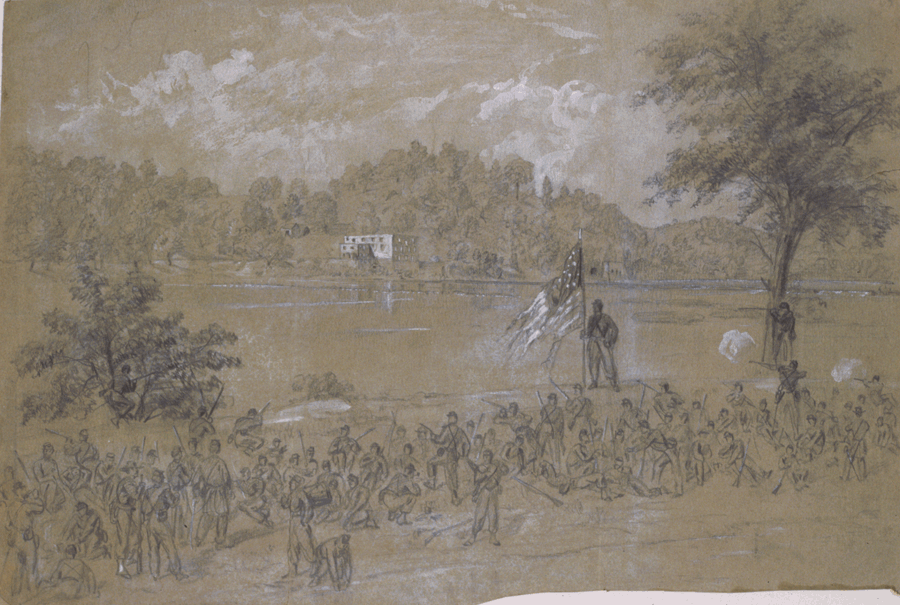




Strategic aims and context
Lee’s strategy combined military and political objectives. On the military side he hoped to gain supplies and secure advantageous ground for his army. Politically he hoped a successful invasion might strengthen Confederate morale and encourage recognition or support from European powers such as England or France. A significant victory on Northern soil might also sap support for the war in the North and complicate the administration of President Abraham Lincoln.
Intelligence and movements
The campaign is well known for an instance of lost Confederate orders that came into Union hands, an event that alerted the Federal commander to Lee’s dispositions and plans. Union general George B. McClellan and his commanders used that intelligence to reposition Union forces and to confront isolated parts of Lee’s army. Lee split portions of his command to capture strategic points such as the garrison at Harpers Ferry in the Shenandoah Valley region, while seeking to move into border states including parts of Pennsylvania to threaten Northern rail and supply lines.
Principal engagements
The campaign involved several major actions and many smaller fights. Historians commonly identify four principal episodes:
- Harpers Ferry: Confederate forces seized the important transportation and supply depot, capturing a Federal garrison and temporarily securing a key position in the valley.
- South Mountain: Union attacks at passes in the mountain range delayed Confederate movements and tested Lee’s ability to defend his flanks while operating in enemy territory.
- Antietam (Sharpsburg): The climactic battle on September 17, 1862, often described as the bloodiest single day of the war, where fierce fighting occurred along creeks, farm lanes, and around a bridge and nearby fields.
- Shepherdstown and subsequent covering actions: Rear-guard engagements and the pursuit phase as Lee withdrew toward and across the Potomac River in the days after Antietam.
Command and conduct
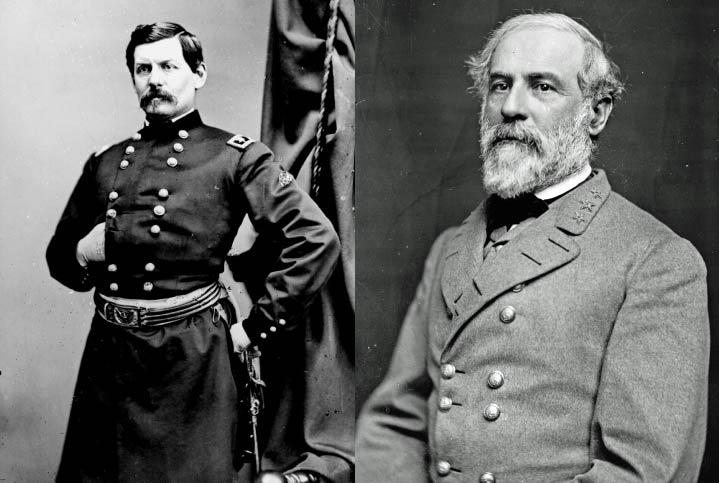
Lee commanded Confederate forces while the Federals were led by Maj. Gen. George B. McClellan. McClellan's cautious approach after receiving the recovered Confederate orders has been the subject of considerable historical debate: critics argued he did not press his advantage aggressively enough, while supporters noted logistical and organizational constraints. The capture of Harpers Ferry involved units under Confederate subordinates whose local success helped Lee consolidate supplies and communications as the campaign unfolded.
Outcome and significance
Militarily the campaign ended without a decisive strategic breakthrough for the Confederacy: Lee withdrew back across the Potomac River after the fighting and his invasion failed to secure lasting control of Northern territory. Politically and diplomatically, however, the outcome had enormous consequences. Union resistance at Antietam provided President Abraham Lincoln with the opportunity he sought to issue a preliminary proclamation reframing the war’s aim toward emancipation. That shift reduced the chances of formal recognition of the Confederacy by European powers and altered the conflict’s moral and diplomatic stakes.
Legacy
The Maryland Campaign demonstrated the importance of intelligence, lines of communication, and the hazards of dividing forces in enemy country. It left Antietam as a prominent symbol in Civil War memory because of the scale of the fighting and its political aftermath. Visitors to the campaign’s battlefield sites and to repositories of primary documents can explore the terrain and records that illuminate the decisions made by commanders on both sides. For regional and biographical resources, see materials relating to western Virginia, Maryland, studies of the Civil War, analyses of Confederate aims for England and France, and accounts of Southern expectations of decisive victories that might alter the conflict’s course.
Further reading and archival sources include battlefield guides, official reports, and contemporary correspondence that discuss the campaign’s logistics, the roles of subordinate commanders, and the political calculations that followed the fighting. For maps, orders, and compiled records consult collections that cover Lee’s command decisions, Union dispositions, and the administrative actions taken by the Lincoln administration after Antietam.
See also regional and institutional resources for more on troop movements, local impacts around Washington, D.C. and Baltimore, and biographical work on leading figures of the campaign including the principal Confederate general and other officers who shaped the operation.
Questions and answers
Q: What was the Maryland Campaign?
A: The Maryland Campaign, also known as the Antietam Campaign, was a series of four battles in West Virginia and Maryland initiated by Confederate General Robert E. Lee during the Civil War.
Q: What were the goals of the campaign?
A: The goal of the campaign was for Lee's army to invade the Northern states of Maryland and Pennsylvania in order to threaten Washington, D.C. and Baltimore. Additionally, it was hoped that if Lee achieved decisive victories he could gain recognition from England and France which would support the Southern cause and possibly lead Abraham Lincoln to sue for peace.
Q: When did this campaign take place?
A: The Maryland Campaign took place between September 4th-20th 1862 during the Civil War.
Q: Who initiated this campaign?
A: This campaign was initiated by Confederate General Robert E. Lee.
Q: Where did this campaign take place?
A: This campaign took place in West Virginia and Maryland in both Northern states as well as near Washington D.C., Baltimore, and other cities in those areas.
Q: Why did General Lee initiate this campaign?
A: General Lee initiated this campaign with hopes that he could gain recognition from England and France which would support the Southern cause and possibly lead Abraham Lincoln to sue for peace if he achieved decisive victories against Union forces during his invasion into Northern states such as Maryland and Pennsylvania .
Q: How did people view this major turning point in history?
A: People viewed this major turning point in history as an important event that could potentially change how things unfolded during the Civil War due to its potential outcomes if successful or unsuccessful for either side involved .
Related articles
Author
AlegsaOnline.com Maryland Campaign (Antietam Campaign), September 1862 Leandro Alegsa
URL: https://en.alegsaonline.com/art/62505
Sources
- legendsofamerica.com : "Maryland Campaign & Battles of the Civil War"
- thomaslegion.net : "Why Lee Invaded Maryland"
- civilwar.org : "The Maryland Campaign of 1862"
- history.com : "Remembering the First Battle of Bull Run (Manassas)"
- historicharpersferry.org : "Welcome"
- historynet.com : "Battle Of Antietam"