
Mary Wollstonecraft: life, writings, and influence
British writer and early advocate for women’s rights whose works argued for equal education and civil participation; author of A Vindication of the Rights of Woman (1792).
Overview
Mary Wollstonecraft (27 April 1759 – 10 September 1797) was an English writer, philosopher and early advocate for women's equal rights. She combined political argument, educational theory and personal experience to challenge prevailing assumptions about gender, virtue and social order. Wollstonecraft's best-known works argued that women should receive the same rational education as men and be treated as full participants in public and economic life rather than confined to domestic roles. Her prose and pamphlets engaged with contemporary debates about the French Revolution, the nature of rights and the duties of citizens, and they drew on intellectual traditions that included empiricism and reformist thought.
Image gallery
10 Images

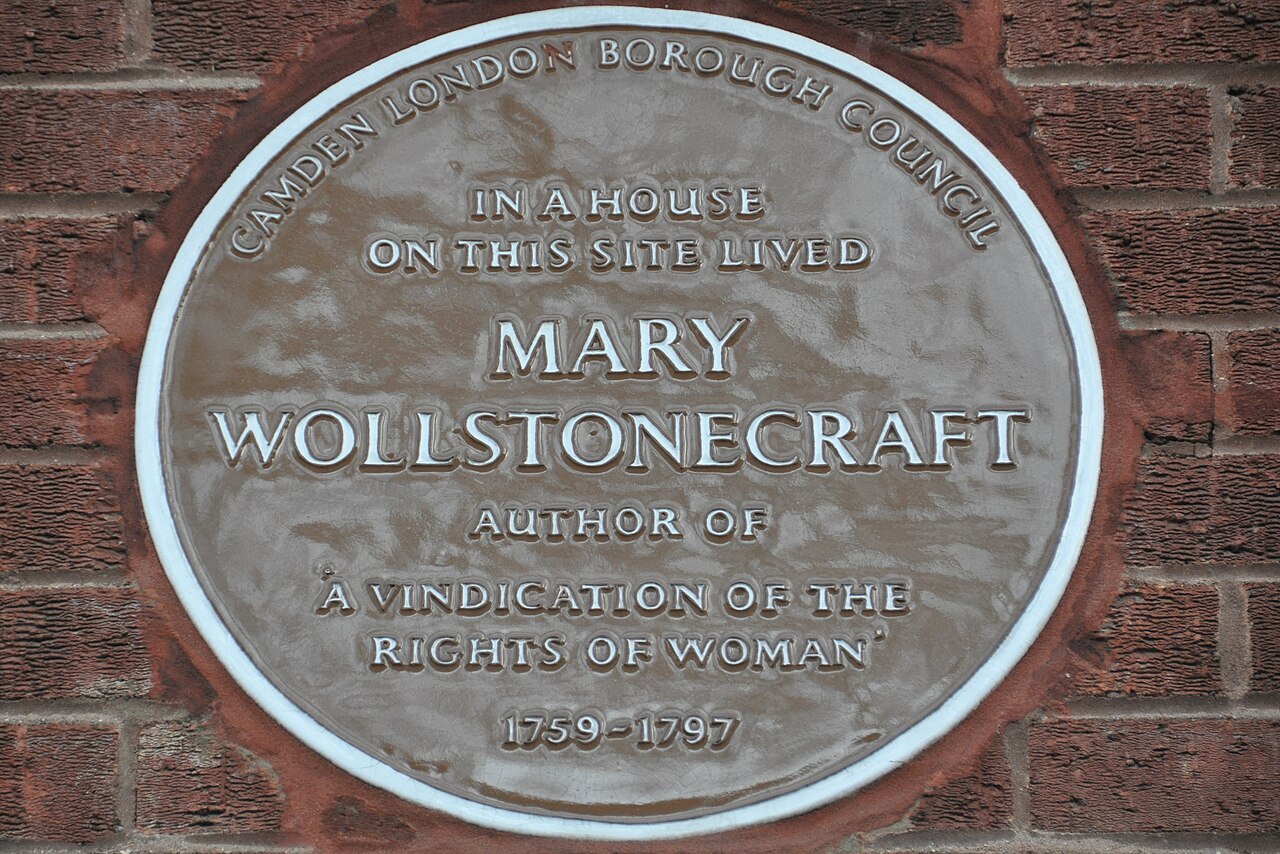


Early life and circumstances
Born in the Spitalfields area of London, Wollstonecraft was the second oldest of several children in a family whose fortunes and stability fluctuated. Her early years were marked by episodes of family tension and financial strain; accounts emphasize her father's occasional harshness and the family's relocations as he struggled with failing enterprises. At nineteen she left home to seek independence and employment, spending time in places such as Bath, where she witnessed social patterns that shaped her views on class and gender. Personal tragedies—relationships strained by domestic abuse, the near death of her sister and the later loss of close friends in childbirth—also influenced her turn to writing and reform.
Main works and central ideas
Wollstonecraft produced both fiction and political writing, but she is best known for two major contributions that articulated her philosophical and practical prescriptions:
- A Vindication of the Rights of Men (1790) — a political pamphlet responding to conservative reaction to the French Revolution and defending principles of civil liberty and republican virtue. It brought her to public attention.
- A Vindication of the Rights of Woman (1792) — an extended critique of educational and social doctrines that kept women subordinate. In it she argued women are not naturally inferior to men but appear so because they lack equal education; she recommended curricula that cultivate reason, moral strength and practical skills.
Other important works include a conduct of travel and observation in continental Europe, collected in Letters Written During a Short Residence in Sweden, Norway, and Denmark, and historical-political commentary such as An Historical and Moral View of the Origin and Progress of the French Revolution. Wollstonecraft engaged with the writings of predecessors and contemporaries—her essays and pamphlets show affinities and arguments with thinkers like Thomas Paine and John Locke—while also reacting against cultural practices that limited women's autonomy and economic independence. She was also known for shorter works aimed at children and novels that explored domestic and social constraints.
Relationships, travel and later life
Her personal life intersected with her politics. Wollstonecraft traveled to Paris and observed revolutionary events firsthand; these experiences shaped published accounts and correspondence. During this period she had an intense relationship with Gilbert Imlay, with whom she had a daughter, Fanny. When that relationship ended, Wollstonecraft suffered a psychological crisis and attempted suicide; she later channeled personal material into published letters and memoir-style writings. A later marriage to the philosopher William Godwin produced one daughter, Mary Wollstonecraft Godwin, who became the novelist Mary Shelley. Godwin edited and posthumously published a memoir of Wollstonecraft that revealed private details of her life and provoked a sharp public reaction.
Influence, reception and notable facts
Wollstonecraft's arguments for equal education and civic recognition were pioneering for their time and have been central to subsequent feminist thought. Her insistence that women be trained in reason and virtue aimed to give them the means to participate in public life and to support themselves economically. While she drew on the reformist currents of the late eighteenth century, she also contributed original analyses of marriage, parenthood and social dependence; her unfinished novel The Wrongs of Woman continued this critique in a fictional form. Her work influenced later generations of reformers and educators and remains a foundational text in gender studies.
Controversies and death
Wollstonecraft was a controversial figure during and after her life. Her political positions, unconventional personal relationships and frank writing provoked both strong support and severe criticism. Following her death from complications after childbirth—commonly described as puerperal fever or sepsis—her husband published recollections that shocked contemporary readers by disclosing intimate details. Despite immediate backlash that diminished her reputation for a time, twentieth- and twenty-first-century scholarship has restored her place as a major thinker on rights and education. Her connections to figures and events of her day—responses to the Revolution, engagement with writers and activists, and friendships with other women confronting abusive marriages—are frequently highlighted in biographies and studies.
Selected themes and further reading
- Education and rationality: the claim that instruction in reason, not ornamental accomplishments, is the path to genuine equality.
- Political citizenship: linking individual rights with responsibilities in the public sphere.
- Autonomy and social reform: critiques of legal and domestic structures that limit women’s independence; calls for economic opportunity and moral development autonomy.
For introductions to Wollstonecraft’s life and work, readers can consult modern biographies and annotated editions of her texts. Her published career began with juvenile and educational titles and moved through political pamphleteering to travel writing and posthumously influential memoirs. Primary texts and contextual essays remain available for those who wish to trace how her ideas responded to thinkers such as Locke and Paine, took shape during her stays in places mentioned in contemporary accounts like Spitalfields and Paris, and intersected with biographical events including the deaths of friends and family and episodes of emotional crisis, one of which led to a rescue from the Thames after a near fatal attempt (suicide attempt). Her circle and the period’s intellectual disputes also involved figures such as Catherine Macaulay and critics who responded unfavourably to her private life after William Godwin’s publications.
Readers interested in specific works can look for editions of A Vindication of the Rights of Woman, collected essays and travel letters, and Godwin’s Memoirs. Scholarly discussions often situate her arguments alongside contemporaneous commentary on social order and the role of women in the wake of the upheavals across Europe during the 1790s, including reporting and commentary she produced on those events (see account). Biographical studies frequently address her legacy through the literary achievements of her daughter Mary Shelley and the continuing relevance of Wollstonecraft’s call for education and equal civil standing in modern debates about gender and rights. Additional references may treat her as a partisan of reform alongside advocates such as other contemporary writers and public intellectuals, or as the subject of literary and historical reassessment prompted by documents and letters from her lifetime.
Other links and references in modern scholarship note the geographical and social settings of her life—places like Bath and the London neighborhoods of her birth—and the people who shaped her career, from early friends who died in childbirth to later companions who played roles in publishing and preserving her writings. For those tracing primary sources, editions and archives often include her correspondence, essays, and the accounts that first brought her wide attention, offering a window into the intellectual and personal world that produced one of the eighteenth century’s most persistent voices for women’s rights.
See also: major critical editions and reading lists for Wollstonecraft’s works and historical commentary, and consult collections that address the reception of her writing after William Godwin released his Memoirs and later critics debated her life and ideas. Her story remains a striking example of how private experience and public argument can combine to shape lasting social critique.
family background | social context | feminist legacy | literary connections | descendants
Questions and answers
Q: Who was Mary Wollstonecraft?
A: Mary Wollstonecraft was a British writer who was born in Spitalfields, the daughter of a rich farmer. She is known for being an early feminist and social campaigner, writing books such as A Vindication of the Rights of Man (1790) and A Vindication of the Rights of Woman (1792).
Q: What did her father do?
A: Her father was sometimes violent towards her, her four siblings, and their mother when his farms failed.
Q: What happened to Mary's sister Eliza?
A: In 1784 Mary experienced the near death of her sister Eliza who had been abused by her husband. She escaped with her sister to London to preserve her life.
Q: Who was Fanny Blood?
A: Fanny Blood was a good friend of Mary's who died from complications in childbirth. This event caused Mary to suffer depression and financial straits which led to the writing of Thoughts on the Education of Daughters, one of her first books.
Q: What did she argue for in A Vindication Of The Rights Of Woman?
A: In A Vindication Of The Rights Of Woman, Wollstonecraft argued that women should have equal rights and education as men, believing that education gives them the tools necessary to compete with men in public and economic life.
Q: Who did she marry?
A: She married William Godwin after meeting him again while travelling to Paris in 1792. They later had a daughter together named Mary Wollstonecraft Godwin who became wife of Percy Shelley and author of Frankenstein.
Q: How did she die?
A: Wollstonecraft died due to complications after giving birth due to a blood clot; this same fate also befell her best friend Fanny Blood whose death inspired much of Wollstonecraft's work advocating for women's rights.
Related articles
Author
AlegsaOnline.com Mary Wollstonecraft: life, writings, and influence Leandro Alegsa
URL: https://en.alegsaonline.com/art/62498