
Martin McGuinness: Irish republican politician and former Deputy First Minister
Overview of Martin McGuinness (1950–2017), his early IRA involvement, role in Sinn Féin and the Northern Ireland peace process, positions held, controversies and his death from amyloidosis.
Overview
James Martin Pacelli McGuinness (23 May 1950 – 21 March 2017) was a leading figure in late 20th- and early 21st-century Northern Irish politics. He rose from republican activism to become a senior member of Sinn Féin and served as Deputy First Minister of Northern Ireland. McGuinness represented the constituency of Mid Ulster in both the Westminster elections and the devolved legislature, the Northern Ireland Assembly. He was widely associated with the movement for Irish reunification and the end of British jurisdiction in Northern Ireland, positions reflected in Sinn Féin's platform advocating closer ties with the Republic of Ireland and, for many members, a withdrawal from the United Kingdom.
Image gallery
10 Images


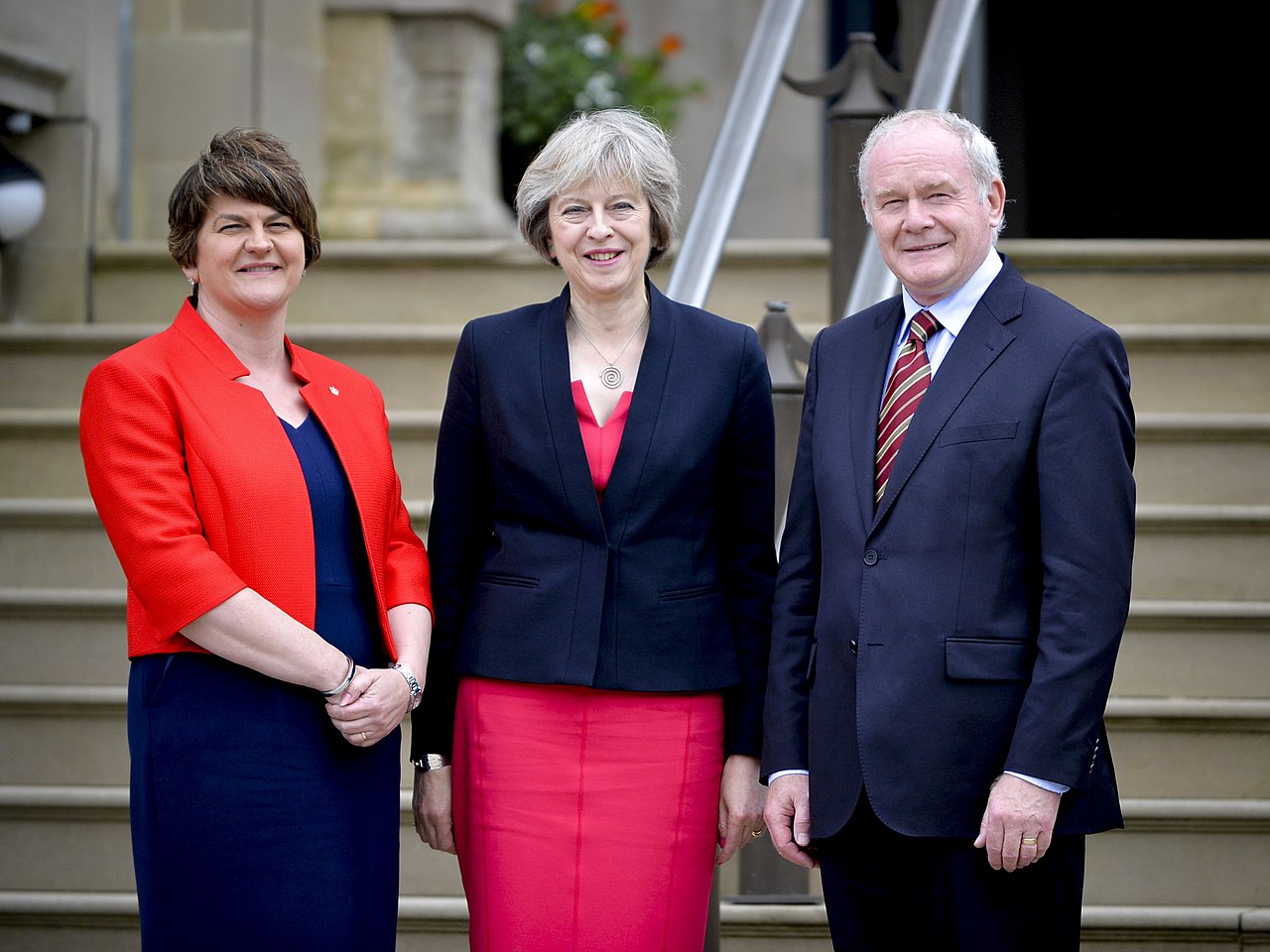
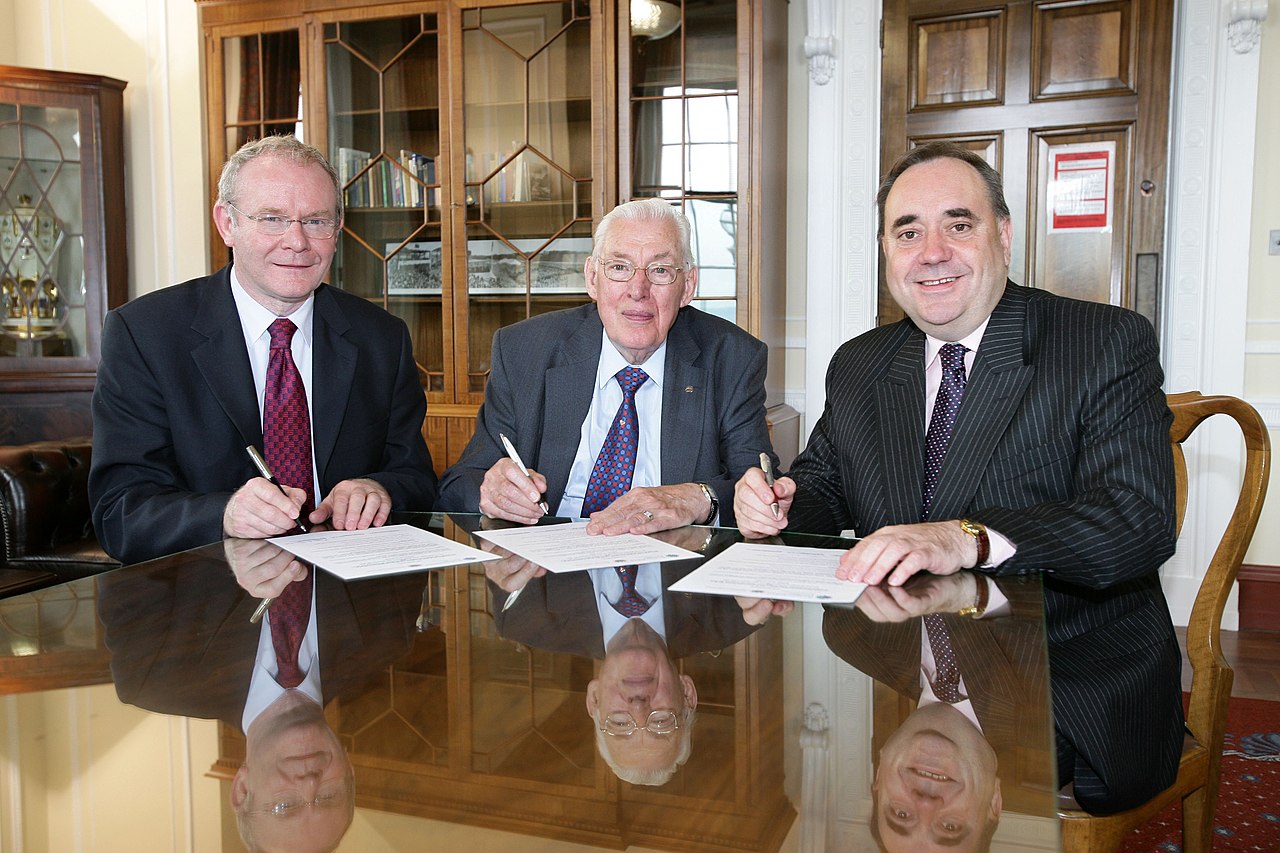

Early life and paramilitary involvement
Born and raised in Derry (Londonderry), McGuinness became active in republican politics as sectarian violence escalated in the late 1960s and early 1970s. He joined the Irish Republican Army (IRA) during that period and was detained for his activities, serving a prison term in 1973. His paramilitary past remained a subject of political debate: to some it marked him as a former combatant whose later embrace of politics represented a personal and strategic transformation; to others it was a source of controversy and unresolved questions about the Troubles.
Political career and the peace process
McGuinness moved into electoral politics and negotiation. He was elected Member of Parliament for Mid Ulster in 1997 but, in keeping with Sinn Féin's long-standing abstentionist policy, did not take his seat in the House of Commons, refusing to swear an oath to the monarch (House of Commons abstentionism and the pledge to the Queen are central to that practice). He played a prominent role in Good Friday Agreement discussions in 1998 and later served as Northern Ireland's Minister of Education from 1999 to 2002, working within the new power-sharing institutions created to end decades of conflict (Minister of Education).
Offices, power-sharing and leadership
Following the agreement-building that included the St Andrews arrangements, McGuinness was appointed Deputy First Minister in May 2007, a joint office that required close cooperation with the First Minister. He initially worked alongside Ian Paisley of the Democratic Unionist Party, and continued under leaders such as Peter Robinson. This partnership between former adversaries became a defining image of the new political era, even as tensions and crises periodically interrupted devolution. McGuinness resigned from the post on 9 January 2017 in protest over political disputes within the executive.
Controversy, legacy and influence
McGuinness's career combined sharp contrasts: a past linked to armed republicanism and a later reputation as a skilled negotiator and state-level minister. Supporters credit him with helping to shift Sinn Féin toward sustained democratic politics and making power-sharing viable. Critics and victims' groups remained critical about unresolved questions from the Troubles, ensuring his legacy is often described as contested. In public life he was known for blunt rhetoric, political discipline within his party and an ability to maintain influence across a broad republican movement.
Illness and death
In January 2017 McGuinness publicly revealed he had been diagnosed with amyloidosis, a rare condition that can affect major organs and is linked to abnormal protein deposits (amyloidosis). He died in hospital in Derry (Londonderry) on 21 March 2017 at the age of 66. His funeral and subsequent reflections highlighted both the strides made toward peace in Northern Ireland and the enduring debates about accountability, history and reconciliation.
- Key roles: Deputy First Minister; Member of the Northern Ireland Assembly; Member of Parliament (abstentionist)
- Notable events: Good Friday Agreement participation; Minister of Education; 2007 power-sharing government
- Ongoing debates: republican past, peace process legacy, victims' concerns
Further reading on institutions and agreements relevant to McGuinness's career is available from primary sources and scholarly treatments of the Troubles and the Northern Ireland peace process. For party positions and constitutional aims see Sinn Féin publications and analyses of reunification strategies and unionist responses.
Questions and answers
Q: When was Martin McGuinness born?
A: Martin McGuinness was born on 23 May 1950 in Derry, Northern Ireland.
Q: What political party did he belong to?
A: Martin McGuinness belonged to the Sinn Fein political party.
Q: What did Sinn Fein want for Northern Ireland?
A: Sinn Fein wanted Northern Ireland to join with the Republic of Ireland and leave the United Kingdom.
Q: How long was he imprisoned for in 1973?
A: In 1973, Martin McGuiness was imprisoned for six months.
Q: Did he ever take his seat in the House of Commons?
A: No, Martin McGuiness never took his seat in the House of Commons because members of Sinn Fein do not swear any oath to the Queen.
Q: When did Ian Paisley become First Minister of Northern Ireland?
A: Ian Paisley became First Minister of Northern Ireland on 8 May 2007 following the St Andrew's Agreement.
Q: What rare genetic disease did he suffer from before his death?
A: Before his death, Martin McGuiness suffered from amyloidosis, a rare genetic disease that affects vital organs.
Related articles
Author
AlegsaOnline.com Martin McGuinness: Irish republican politician and former Deputy First Minister Leandro Alegsa
URL: https://en.alegsaonline.com/art/62377