
Art Ross: player, coach, inventor and early NHL executive
Biography of Art Ross (1885–1964): his playing career, innovations in hockey equipment, role founding the Boston Bruins, coaching and general management, and legacy including the Art Ross Trophy.
Arthur Howey "Art" Ross (January 13, 1885 – August 5, 1964) was a Canadian ice hockey defenceman whose long career as a player, coach, manager and equipment innovator helped shape the early decades of organized professional hockey. Ross combined defensive skill with the then-unusual habit of carrying the puck out of his own end, and he is remembered both for his on-ice achievements — including two early Stanley Cup victories — and for his decades of service as coach and general manager of the Boston Bruins.
Image gallery
5 Images

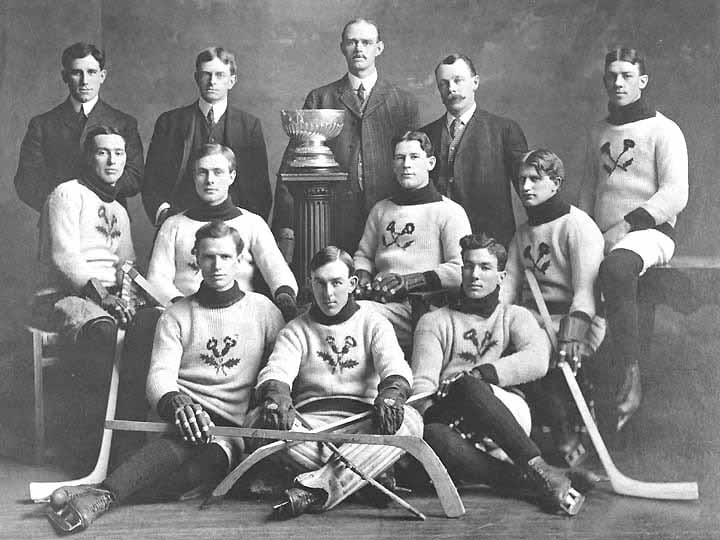


Playing career and style
Ross began playing senior hockey in the first decade of the 20th century and competed in several regional leagues as professional hockey was still developing. He won the Stanley Cup twice as a player: with the Kenora Thistles in 1907 and with the Montreal Wanderers in 1908. Known among teammates and opponents as one of the strongest defencemen of his era, Ross was notable for bringing the puck up the ice himself rather than immediately passing to a forward — a style that presaged the modern offensive defenceman. His career as an active player concluded after the 1917–18 season, when the Montreal Wanderers' home arena burned and the club ceased operations.
Labor action and early officiating
Ross was also involved in early efforts by players to press for better pay and conditions. In 1911 he took part in one of the first organized player walkouts in professional hockey, reflecting tensions that accompanied the sport's gradual professionalization. After retiring from play he worked as an on-ice official for a time, gaining broader experience with the rules and administration of the game.
Coach and executive with the Boston Bruins
When the Boston Bruins franchise was established in 1924, Ross became the club's first coach and general manager. He later returned to coach the Bruins on several occasions and remained their general manager until 1954. Under his direction Boston finished first in the league multiple times and captured the Stanley Cup three times while he was in the organization; Ross personally coached the team to one of those championships. His management tenure helped establish the Bruins as a lasting NHL franchise.
Equipment design and innovations
Beyond coaching and roster decisions, Ross applied his knowledge of the game to equipment design. He worked on improvements to goal nets and on the shape and construction of the puck; elements of his puck design influenced the standard puck used in later decades. His goal net design was adopted widely and remained in use for many years. Ross's practical tinkering with gear reflects a period when former players often led incremental improvements to how hockey was played and officiated.
Honors, namesakes and legacy
In recognition of his contributions to the sport, Ross donated the Art Ross Trophy in 1947. The trophy is awarded annually to the player who leads the National Hockey League in points at the end of the regular season and remains one of the league's most recognizable individual honors. In 1949 Ross was among the early inductees into the Hockey Hall of Fame, reflecting his combined influence as player, innovator and executive. He and his family moved to the Boston area when he joined the Bruins; Ross became a United States citizen in 1938 and lived near Boston until his death in 1964.
Selected achievements and notable facts
- Two Stanley Cup wins as a player (1907, 1908) and three Stanley Cups with the Bruins organization during his management era. Stanley Cup context
- First coach and long-time general manager of the Boston Bruins, helping the club to multiple first-place finishes. Boston Bruins
- Donor of the Art Ross Trophy (scoring leader award). Art Ross Trophy
- Inducted into the Hockey Hall of Fame. Hockey Hall of Fame
- Early defender who advanced the puck and took part in a 1911 player pay action. Canadian roots • player position
Further reading and resources
For accounts of Ross's playing years with the Montreal Wanderers and the organizational changes that led from the NHA to the NHL, consult historical summaries of early professional hockey. NHA history and NHL development pages provide background on the leagues in which Ross competed. Information about the teams he played for or coached can be found through franchise histories including the Montreal Wanderers, the Hamilton Tigers, and material on his time in Kenora and other early hockey communities. Biographical sources and specialized equipment histories describe Ross's inventions and their influence on modern hockey.
See also: institutional histories of the NHL, biographies of early 20th-century players, and collections of Hockey Hall of Fame records for deeper detail on Art Ross's life and career.
Questions and answers
Q: When was Arthur Howey "Art" Ross born?
A: Arthur Howey "Art" Ross was born on January 13, 1885.
Q: What team did he win the Stanley Cup with twice in his playing career?
A: He won the Stanley Cup twice in his playing career; once with the Kenora Thistles in January 1907 and again with the Montreal Wanderers in 1908.
Q: What team did he coach for one season?
A: He coached the Hamilton Tigers for one season.
Q: When did he become an American citizen?
A: After being hired by the Boston Bruins, Ross moved to a city near Boston and became an American citizen in 1938.
Q: What style of hockey puck is still used today that Art Ross created?
A: Art Ross created a style of hockey puck that is still used today.
Q: What invention did Art Ross create for hockey goals?
A: Art Ross created an improved style of goal nets which were used for forty years.
Q: What trophy does the NHL give out each year that was named after Art Ross?
A: The NHL gives out the Art Ross Trophy each year, which is given to the best scorer of the NHL regular season and was named after him.
Related articles
Author
AlegsaOnline.com Art Ross: player, coach, inventor and early NHL executive Leandro Alegsa
URL: https://en.alegsaonline.com/art/6225
Sources
- news.google.com : "Art Ross Given Banquet, To Become A US Citizen"
- news.google.com : "Favor Boston In Hockey"
- news.google.com : "Art Ross Gives Bruins' Side Of Buck Boucher's Dismissal"
- news.google.com : "Art Ross Dies at 79"
- sportshall.ca : "Art Ross Page"
- legendsofhockey.net : "Art Ross Page"
- legendsofhockey.net : "Art Ross Stats Page"