
Marrakesh — historic city in western Morocco
Historic Moroccan city founded in the 11th century, known for its medina, Jemaa el-Fnaa, red walls, bustling souks, palaces and gardens; a regional cultural and tourist center.
Marrakesh (also spelled Marrakech; Berber ⵎⵕⵕⴰⴽⵛ, Arabic مراكش) is an important city in the northwestern part of the African continent and serves as a major hub in Africa. It lies in the interior of the modern country of Morocco and is the capital of the surrounding economic region. It is widely known for its historic medina, distinctive red walls and lively public square.
Image gallery
10 Images



Overview and character
The old city (medina) contains narrow alleys, traditional houses (riads), and a dense pattern of trades and workshops. Streets open into the famed square of Jemaa el-Fnaa, where food stalls, performers and merchants gather. The city mixes medieval urban fabric and later palaces with growing modern neighborhoods.
History
Marrakesh was established in the 11th century by rulers of the Almoravid movement and grew into a political and economic center under successive dynasties. Over centuries it has hosted caravans, royal courts and religious scholars, leaving a layered architectural heritage that includes mosques, tombs and ornate palaces.
Geography and climate
Positioned near the foothills of the High Atlas mountains, Marrakesh sits on semi-arid plains. Summers are hot and dry while winters are typically mild. Its location made it an inland crossroads between mountain, agricultural and desert regions, influencing trade and cuisine.
Major sights and culture
- Jemaa el-Fnaa square — open-air market and performance space
- Koutoubia Mosque — landmark minaret visible across the city
- Bahia Palace and Saadian Tombs — examples of royal architecture
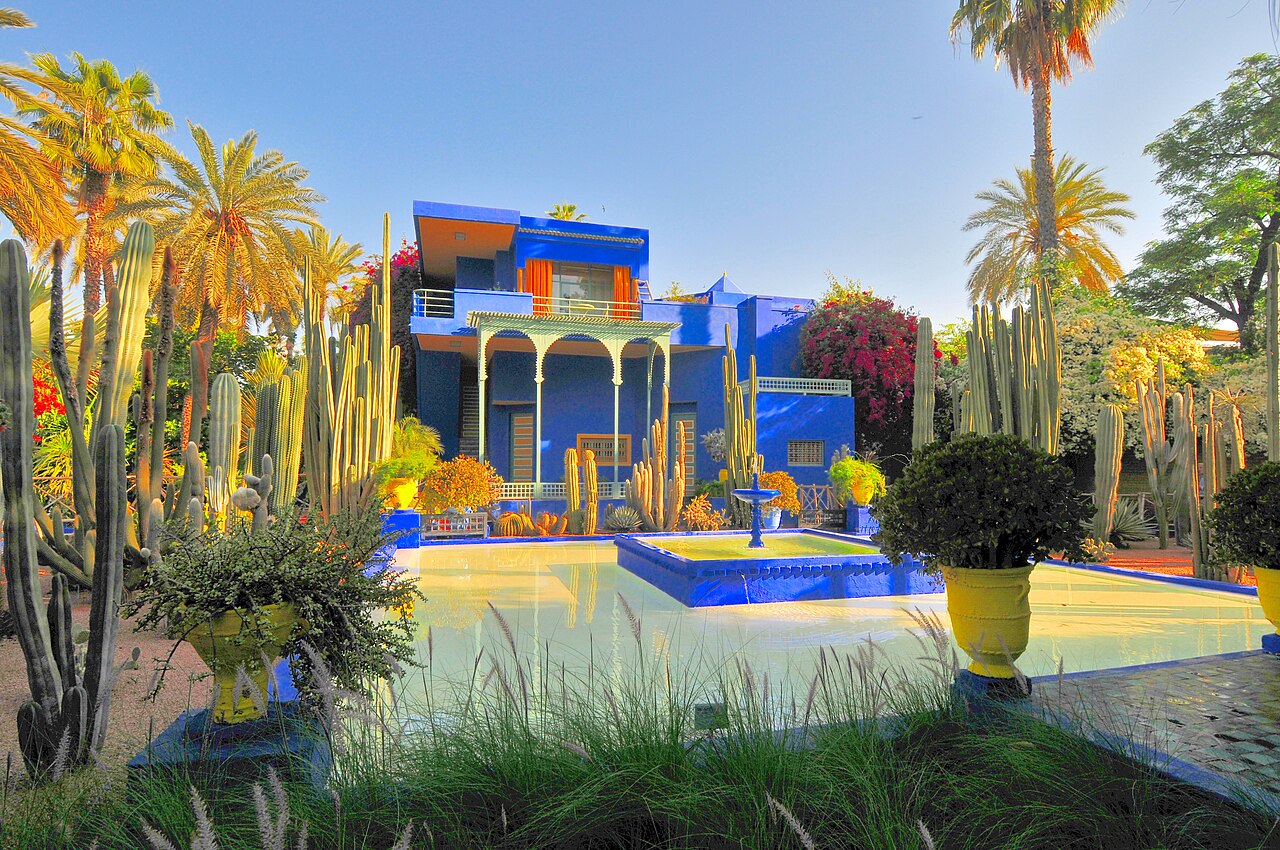
- Majorelle Garden and museums — botanical and artistic attractions
- Traditional souks — textiles, leatherwork, metalwork and spice markets
Economy, tourism and significance
Tourism, handicrafts and services form the backbone of the local economy; Marrakesh is also a regional center for transport and conferences. The medina is a UNESCO World Heritage Site, which highlights both its global cultural value and ongoing challenges in conservation and sustainable development. The city continues to be a focal point for Moroccan cultural identity and international visitors.
Questions and answers
Q: What is the name of the city in Morocco?
A: The city in Morocco is called Marrakesh, or Marrakech.
Q: What language is spoken in Marrakesh?
A: In Marrakesh, Berber and Arabic are both spoken.
Q: What is the population size of Marrakesh?
A: Marrakesh is the fourth largest city in Morocco.
Q: Is Marrakesh a capital city?
A: Yes, Marrakesh is the capital of the economic region of Marrakesh-Tensift-El Haouz.
Q: How do you spell "Marrakech" in Arabic?
A: The spelling for "Marrakech" in Arabic is مراكش, Murrākuš.
Q: How do you spell "Marrakech" in Berber?
A: The spelling for "Marrakech" in Berber is ⵎⵕⵕⴰⴽⵛ.
Q: Where can I find more information about Marrakesh?
A: You can find more information about Marrakesh online or by visiting the city itself.
Related articles
Author
AlegsaOnline.com Marrakesh — historic city in western Morocco Leandro Alegsa
URL: https://en.alegsaonline.com/art/62222
Sources
- arrestedworld.com : "11 Best Beaches in Marrakech"
- wikidata.org : wikidata.org/wiki/Q101625
- catalogue.bnf.fr : cb11933506n
- data.bnf.fr : (data)
- d-nb.info : 4037684-9
- isni.org : 0000 0001 0665 0264
- id.loc.gov : n80162919
- catalog.archives.gov : 10044515
- id.ndl.go.jp : 00629288
- aleph.nkp.cz : ge129969
- viaf.org : 260256435
- worldcat.org : lccn-n80162919