
Art Nouveau: origins, characteristics, and global influence
Art Nouveau, a late 19th‑century international style, emphasized organic lines and applied arts from architecture to jewellery; it bridged academic historicism and later modernism and left a strong architectural legacy.
Art Nouveau was an international movement and decorative style that emerged around the turn of the 20th century. It rejected the rigid historicism of earlier academic traditions and favored sinuous, plant‑inspired forms and an integrated approach to design. The movement manifested across disciplines — from modern art and graphic design to architecture and the applied arts such as jewellery, ceramics and glass. Its aesthetic was widely described at the time as a new international art and a distinctive style built on organic forms and flowing line.
Image gallery
5 Images


Characteristics and visual language
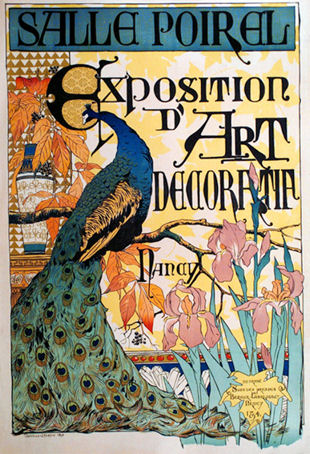
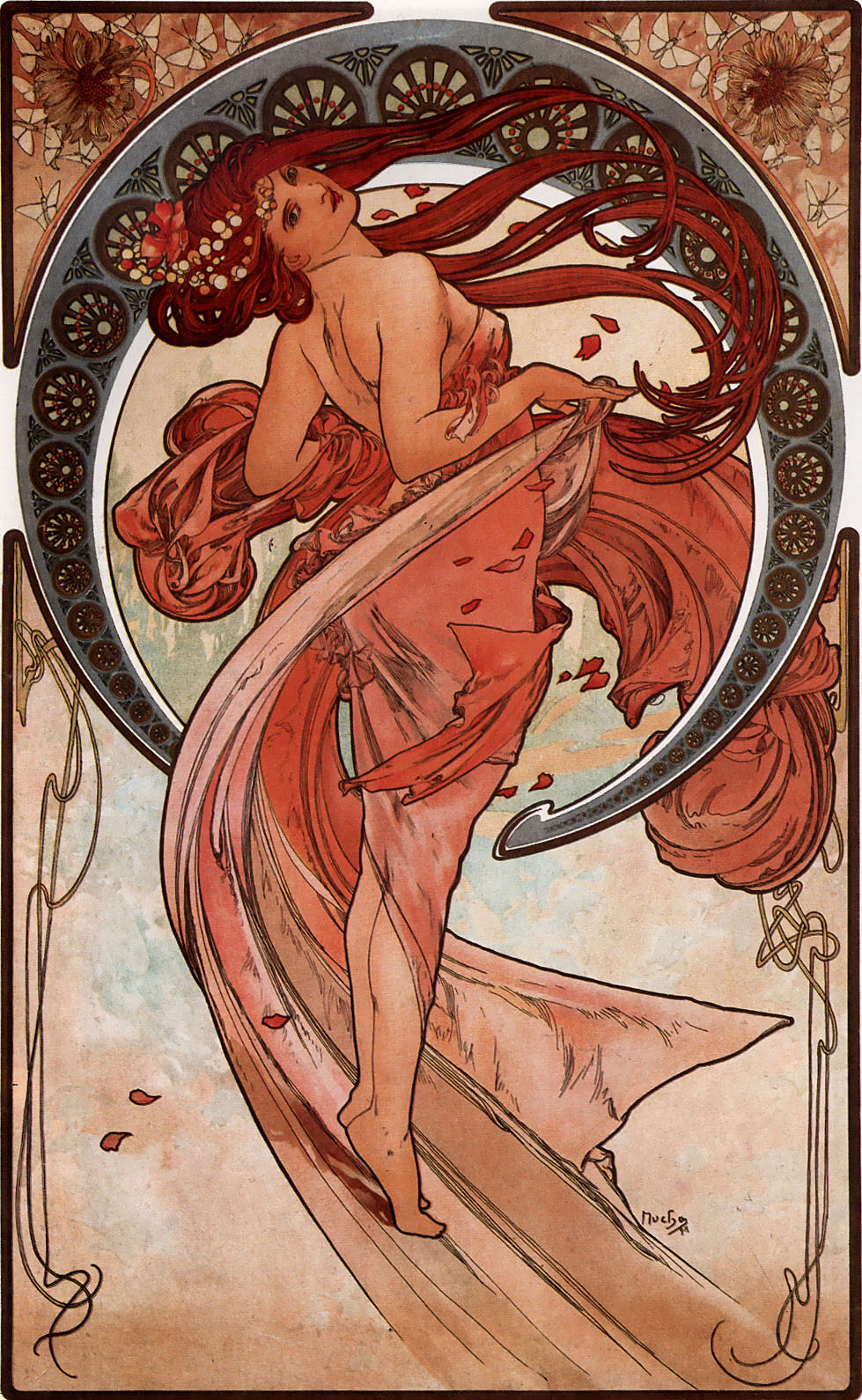
The look of Art Nouveau is recognizable for its use of curvilinear lines, asymmetry, and motifs borrowed from nature: stylized flowers, tendrils, leaves, birds and insects recur in both two‑dimensional and three‑dimensional works. Designers emphasized craftsmanship and the idea that visual creativity should extend to everyday objects, producing unified interiors that combined furniture, metalwork, textiles, stained glass and decorative surface ornament. Posters and prints developed a related graphic vocabulary with flat fields of color, decorative borders and elongated figures; the form of advertising itself was rethought as an artistic medium. This holistic attitude — sometimes expressed as a workshop or atelier approach — aimed to dissolve the boundary between fine art and functional design.
Origins and early development
The movement took shape in the late 1880s and reached wide visibility during the fin de siècle years, roughly between 1890 and the outbreak of the First World War. It grew in part as a reaction against academic art and industrially produced trinkets, advocating instead for original composition and high standards of making. One of the most influential early moments occurred in Paris when the Czech artist Alphonse Mucha — widely associated with the style — produced a celebrated lithographed poster for the play Gismonda starring Sarah Bernhardt. That image helped popularize a distinct visual idiom and brought public attention to artists who sought to fuse ornament and structure.
Geographic spread and local variations
Art Nouveau was not a single, uniform school but a complex of regional interpretations. It appeared in cities and artistic circles across Europe and beyond: from Glasgow to Moscow and Madrid. In Belgium, architects such as Victor Horta transformed dwellings with sweeping ironwork and integrated ornament, influencing design across Belgium. In Germany and central Europe, magazines like Jugend promoted a Jugendstil variant, while the Vienna Secessionists created a related but more geometrically oriented approach in the context of the Austria‑Hungary empire. Each locality adapted the broad ideals of Art Nouveau to its cultural traditions and technical resources.
Notable practitioners and types of work
Individuals interpreted Art Nouveau through their own media and vocabularies. Painters, architects, and designers such as Gustav Klimt, Charles Rennie Mackintosh, Alphonse Mucha, Antoni Gaudí, René Lalique, Louis Comfort Tiffany and others each contributed recognizable bodies of work. Their output included civic buildings, private interiors, stained glass, glassware, metalwork, posters and book illustrations. In addition to high‑profile commissions, Art Nouveau influenced everyday commodities: lamps, clocks, household silver and printed ephemera all carried the same decorative themes. The movement therefore shaped both public space and private life.
Legacy, decline and conservation
By the 1910s the ornamental excesses associated with Art Nouveau had fallen out of favor as more austere modernist aesthetics and new industrial materials became dominant. Nevertheless, Art Nouveau is now widely seen as an important transitional phase linking Neoclassicism and twentieth‑century modernism, because it advanced ideas about total design and the role of artists in shaping built and material culture. The movement’s architectural and decorative achievements have been the subject of preservation efforts: institutions such as UNESCO recognize Art Nouveau sites on lists of World Heritage Sites. Examples include the well‑preserved historic center of Riga in Latvia, celebrated for its large concentration of Art Nouveau façades, and a selection of town houses in Brussels by Victor Horta, which have been cited as outstanding examples of the style.
- Core idea: unify art and daily life through design.
- Distinctive features: flowing line, botanical motifs, integrated interiors.
- Forms: posters, furniture, jewelry, ceramics, glass and architecture.
- Historical role: bridge between historicism and modernism; now the focus of cultural preservation.
Questions and answers
Q: What is Art Nouveau?
A: Art Nouveau is an international art movement and style based on organic forms. It was seen in modern art, graphic design, architecture and applied arts such as decoration, jewellery, ceramics and glass.
Q: When did the popularity of Art Nouveau peak?
A: The popularity of Art Nouveau peaked at the fin de siècle of the late 19th century (1890–1905).
Q: How would you describe the style of Art Nouveau?
A: The style of Art Nouveau is organic with floral and plant-inspired motifs, and stylized, flowing curvilinear forms.
Q: What was the goal behind creating this movement?
A: The goal behind creating this movement was to make art part of everyday life by having artists work on everything from architecture to furniture.
Q: Who had a major influence on this movement?
A: Czech artist Alphonse Mucha had a major influence on this movement when he created a lithographed poster for a play starring Sarah Bernhardt which announced the new artistic style to Parisians.
Q: Where did it spread throughout Europe?
A: Art Nouveau spread throughout Europe from Glasgow to Moscow to Madrid.
Q: Are there any examples that have been recognized by UNESCO as significant contributions to cultural heritage? A: Yes, UNESCO has recognized certain monuments related to Art Nouveau as significant contributions to cultural heritage including four Brussels town houses by Victor Horta and Riga's historic center with "the finest collection of art nouveau buildings in Europe".
Related articles
Author
AlegsaOnline.com Art Nouveau: origins, characteristics, and global influence Leandro Alegsa
URL: https://en.alegsaonline.com/art/6219
Sources
- huntfor.com : Art Nouveau - Art Nouveau Art
- trueartworks.com : Trueartworks
- blog.cheapwallarts.com : "An Introduction to the work of Alphonse Mucha and Art Nouveau"
- whc.unesco.org : World Heritage List - Works of Antoni Gaudí · webcitation.org
- whc.unesco.org : UNESCO World Heritage List - Historic Centre of Riga
- whc.unesco.org : UNESCO World Heritage List – Major Town Houses of the Architect Victor Horta (Brussels)