
Mariano José de Larra: Spanish Romantic satirist and master of 19th‑century prose
Biography and appraisal of Mariano José de Larra (1809–1837), Spanish Romantic essayist and journalist known for his satirical articles, political engagement, plays, and lasting influence on modern Spanish prose.
Overview
Mariano José de Larra (24 March 1809 – 13 February 1837) was a leading Spanish writer of the early 19th century whose short but intense career left a durable mark on Spanish letters. Associated with Romanticism, he is best remembered for a sequence of sharp, witty and often bitter newspaper pieces that combined social satire with political commentary. Contemporary critics and later historians frequently rank him among the finest prose stylists of that century in Spain.
Image gallery
1 Image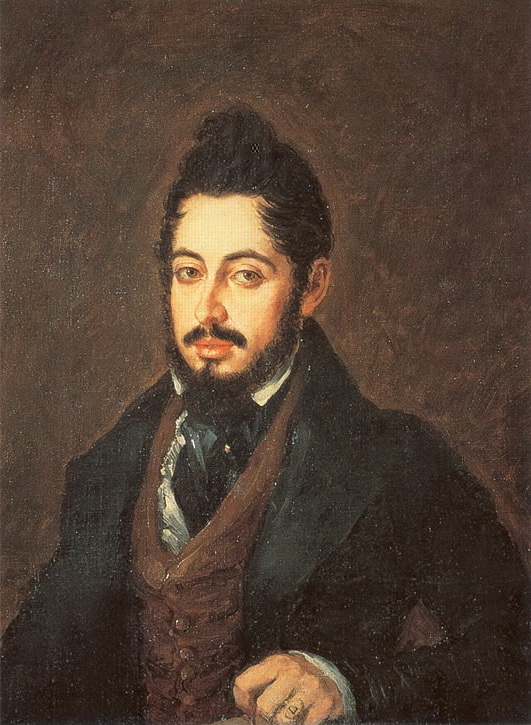
Life and early influences
Born in Madrid to a father who served as a doctor for the French forces, Larra’s childhood was disrupted by the political turmoil of the Peninsular War. His family went into exile on the continent when his father—identified with the French—was obliged to leave the Iberian Peninsula. Young Mariano spent formative years in France and returned to Spain in 1817, at which point his competence in French could exceed his command of Spanish. His schooling was irregular and his temperament restless; he began studies in medicine and later law but abandoned both. An imprudent marriage in his early twenties separated him from family support and helped push him toward a career in the press.
Career and published work
Larra made an early attempt at the theatre and wrote the comedy No más mostrador (1831), a piece that owed some structure to French models such as Scribe and Dieulafoy and enjoyed stage life for several seasons. He also published the historical novel El doncel de don Enrique el Doliente, which provided material for the tragedy Macías (1834). Despite these experiments in dramatic and fictional forms, his enduring legacy rests in journalism: regular essays, feuilletons and newspaper columns that exposed social follies and political hypocrisy.
- Plays and fiction: No más mostrador, Macías, the novel El doncel de don Enrique el Doliente (influences).
- Periodical writing: essays and articles collected under several headings and gathered posthumously in volumes that shaped modern Spanish journalistic prose (press career).
Style, themes and political stance
Larra’s pieces are concise, elegantly constructed and often venomous in tone. He combined irony and moral indignation to criticize provincialism, bureaucratic incompetence, social pretensions and the limitations of Spanish public life. His work displays the intimacy of the coffee‑house essay and the immediacy of the newspaper leader, an artful mixture of anecdote, reflection and aphorism. Underneath the humor lay a clear liberal political outlook: he defended constitutional government and opposed autocratic restorationist currents that threatened civil liberties and national reform (Liberalism).
He published under pseudonyms such as Juan Pérez de Munguía and Fígaro, signatures that became widely known to the reading public. The tone of his best pieces—ironical, urbane and sometimes savage—owed much to journalistic urgency and the constant awareness of censorship (censor) that writers faced in his era.
Politics, personal life and death
As a public intellectual Larra was active during a turbulent decade marked by the death of Ferdinand VII, the Carlist wars and recurrent military pronunciamientos. He briefly entered formal politics as a deputy for Ávila, but the instability of the period and the setbacks to liberal hopes darkened his outlook. Personal disappointments, including an unhappy love affair and domestic troubles, deepened his pessimism. In February 1837, at the age of 27, he died by his own hand, an act that shocked the public and was widely mourned among liberal circles (death).
Legacy and notable facts
Larra’s importance derives from both style and substance. He helped to shape a modern, conversational Spanish prose suitable for newspapers and essays, and his satirical diagnosis of Spanish manners became a reference point for later generations. His fame during life brought him public recognition and private enemies: ministers and officials both feared and courted his influence. Modern editions and studies continue to examine his work as a mirror of early‑19th‑century Spain and as an exemplar of the political essay. For further reading on the context and critical reception of his output see general introductions and collections of his journalism (satire and prose, pseudonymous writings, exile and return, Romantic connections, press history, theatre influences, pen names, political stance, death and aftermath, press censorship).
Questions and answers
Q: What was the name of the Spanish romanticist writer?
A: The Spanish romanticist writer was Mariano José de Larra.
Q: Where was he born?
A: He was born in Madrid.
Q: What did his father do for a living?
A: His father served as a doctor in the French army.
Q: When did he produce his first play?
A: He produced his first play on April 27th, 1831.
Q: How is Larra's writing described?
A: Larra's writing is described as brilliantly written and possessing a grim humour, vitriolic pen, and forcible, mordant style.
Q: What caused him to commit suicide in 1837?
A: He committed suicide due to a disastrous love-affair in February 1837.
Q: Is he considered one of the greatest prose writers of 19th century Spain?
A: Yes, he is considered one of the greatest prose writers of 19th century Spain.
Related articles
Author
AlegsaOnline.com Mariano José de Larra: Spanish Romantic satirist and master of 19th‑century prose Leandro Alegsa
URL: https://en.alegsaonline.com/art/61851