
1963 March on Washington — Civil Rights Rally for Jobs, Equality, and Voting Rights
1963 March on Washington: mass civil-rights demonstration on Aug 28, 1963, uniting labor, faith groups and activists to demand jobs, an end to segregation, stronger federal civil-rights protections, and voting rights.
The March on Washington for Jobs and Freedom was a large civil rights demonstration held on the National Mall in Washington, D.C. on 28 August 1963. Organizers brought together labor, civil-rights, and religious groups to press for economic opportunity, an end to racial segregation, and stronger federal civil-rights laws. Martin Luther King Jr. delivered his noted I Have a Dream address at the event. Estimates of attendance generally place the crowd at around 200,000 people, made up of both black and white participants. Within a few years, Congress enacted the Civil Rights Act of 1964, and the march is widely regarded as an important moment in the movement that led to the later Voting Rights Act of 1965.
Image gallery
10 Images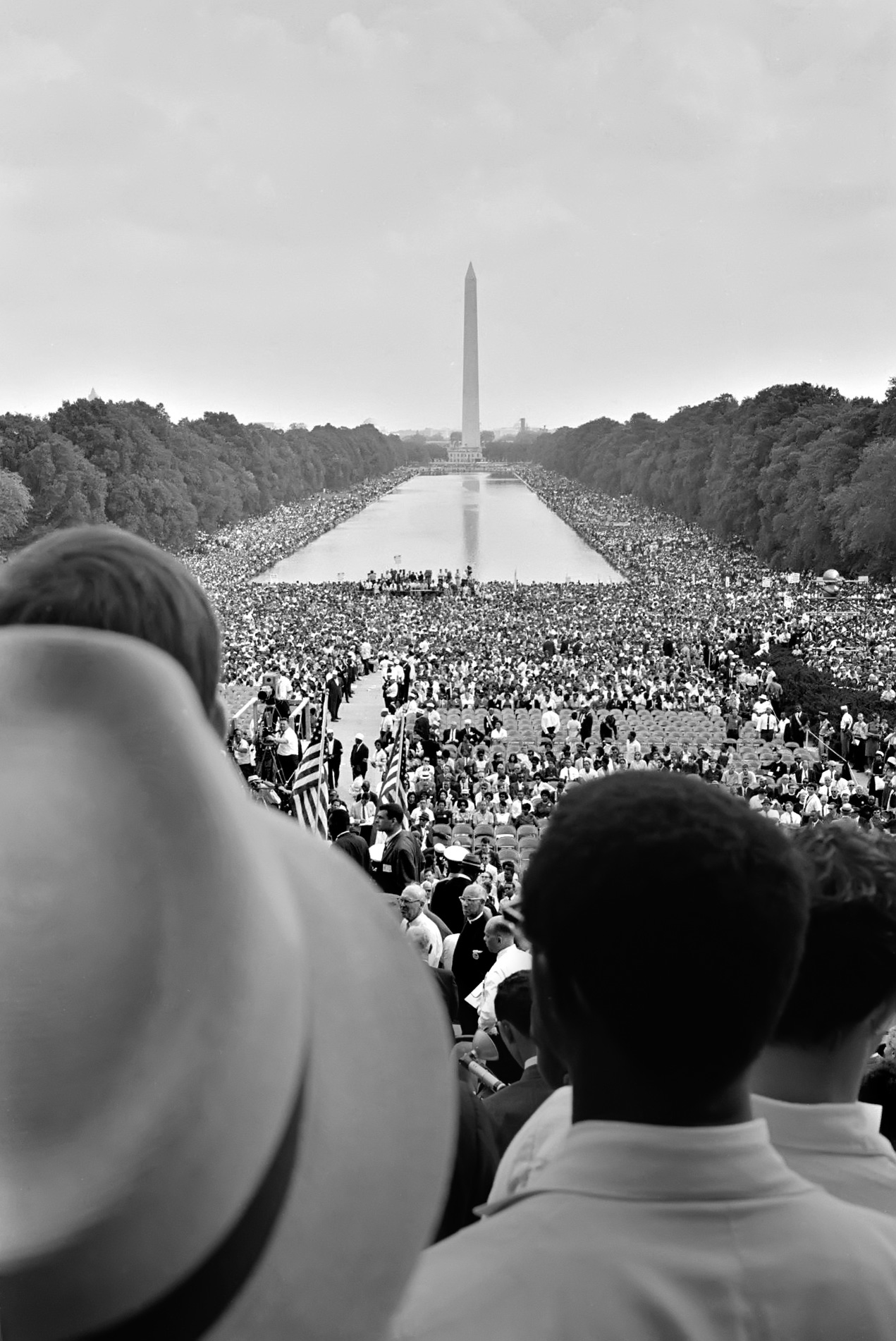


Purpose and organizers
The march combined demands for jobs and freedom: demonstrators sought federal action to protect voting rights, end discrimination in employment and public accommodations, and create programs to reduce unemployment among African Americans. The idea for a large demonstration in Washington had been discussed by civil-rights leaders and labor organizers for several years; prominent figures from trade unions and civil-rights organizations collaborated to plan the event, emphasizing nonviolent protest and a unified message.
The program and speakers
On the day of the march, speakers and performers from diverse organizations addressed the assembled crowd from a platform near the Lincoln Memorial. In addition to Martin Luther King Jr., leaders from civil-rights groups, labor unions, and faith communities spoke about the march’s goals and the need for federal legislation. Some speeches called for immediate legal and economic reforms, while others focused on moral and spiritual appeals for equality.
Attendance and atmosphere
Contemporary press reports and later scholarly estimates place attendance in the hundreds of thousands. People traveled from across the United States to participate; the event included organized contingents from churches, unions, student groups, and community organizations. The march was largely peaceful and carefully staged, with marshals and organizers working to maintain order.
Impact and legacy
The March on Washington raised the national profile of the civil-rights movement and helped build political momentum for federal reform. The following year Congress passed major civil-rights legislation, and further voting-rights protections were enacted in 1965. The march also left a lasting cultural legacy: Martin Luther King Jr.’s speech became one of the most widely remembered moments of the era, and the event is commemorated as a turning point in the struggle for racial equality in the United States.
- Date: 28 August 1963
- Location: National Mall, Washington, D.C.
- Main speaker highlighted: Martin Luther King Jr., who delivered the I Have a Dream speech
- Approximate attendance: about 200,000 people of diverse racial backgrounds, including black and white participants
- Legislative outcomes associated with the movement: Civil Rights Act of 1964 and later the Voting Rights Act of 1965
Questions and answers
Q: Where was the March on Washington for Jobs and Freedom held?
A: The March on Washington for Jobs and Freedom was held on the National Mall in Washington, D.C.
Q: When was the March on Washington for Jobs and Freedom held?
A: The March on Washington for Jobs and Freedom was held on 28 August 1963.
Q: What was the significance of Martin Luther King, Jr.'s speech at the March on Washington for Jobs and Freedom?
A: The significance of Martin Luther King, Jr.'s speech at the March on Washington for Jobs and Freedom was that it became one of the most famous speeches in American history and helped pave the way for greater civil rights for African Americans.
Q: What were the Civil Rights Act of 1964 and the National Voting Rights Act of 1965?
A: The Civil Rights Act of 1964 and the National Voting Rights Act of 1965 were two pieces of legislation passed after the March on Washington for Jobs and Freedom that helped to advance civil rights for African Americans.
Q: Who attended the March on Washington for Jobs and Freedom?
A: Over 200,000 people attended the March on Washington for Jobs and Freedom, including both black and white Americans.
Q: What was the purpose of the March on Washington for Jobs and Freedom?
A: The purpose of the March on Washington for Jobs and Freedom was to demand greater civil and economic rights for African Americans.
Q: How did the March on Washington for Jobs and Freedom impact civil rights in America?
A: The March on Washington for Jobs and Freedom helped to bring attention to the civil rights movement and played a key role in the passage of significant civil rights legislation, including the Civil Rights Act of 1964 and the National Voting Rights Act of 1965.
Related articles
Author
AlegsaOnline.com 1963 March on Washington — Civil Rights Rally for Jobs, Equality, and Voting Rights Leandro Alegsa
URL: https://en.alegsaonline.com/art/61644
Sources
- history.com : "March on Washington"
- wdl.org : "Civil Rights March on Washington, D.C.: Dr. Martin Luther King, Jr., President of the Southern Christian Leadership Conference, and Mathew Ahmann, Executive Director of the National Catholic Conference for Interracial Justice, in a Crowd"
- usatoday30.usatoday.com : "Witnessing the Dream"