
Marbled cat (Pardofelis marmorata): small arboreal felid of Asia
A compact overview of the marbled cat: appearance, habitat, behavior, taxonomy, and conservation. Covers its arboreal lifestyle, range in South and Southeast Asia, and relations to other Asian felids.
Overview
The marbled cat (Pardofelis marmorata) is a small wild felid native to parts of South and Southeast Asia. It is notable for a richly patterned coat of dark blotches and marbling that provides camouflage in dense forest. Despite its striking appearance, the species is shy and seldom seen, so much of its life history remains incompletely documented.
Image gallery
4 Images


Physical characteristics
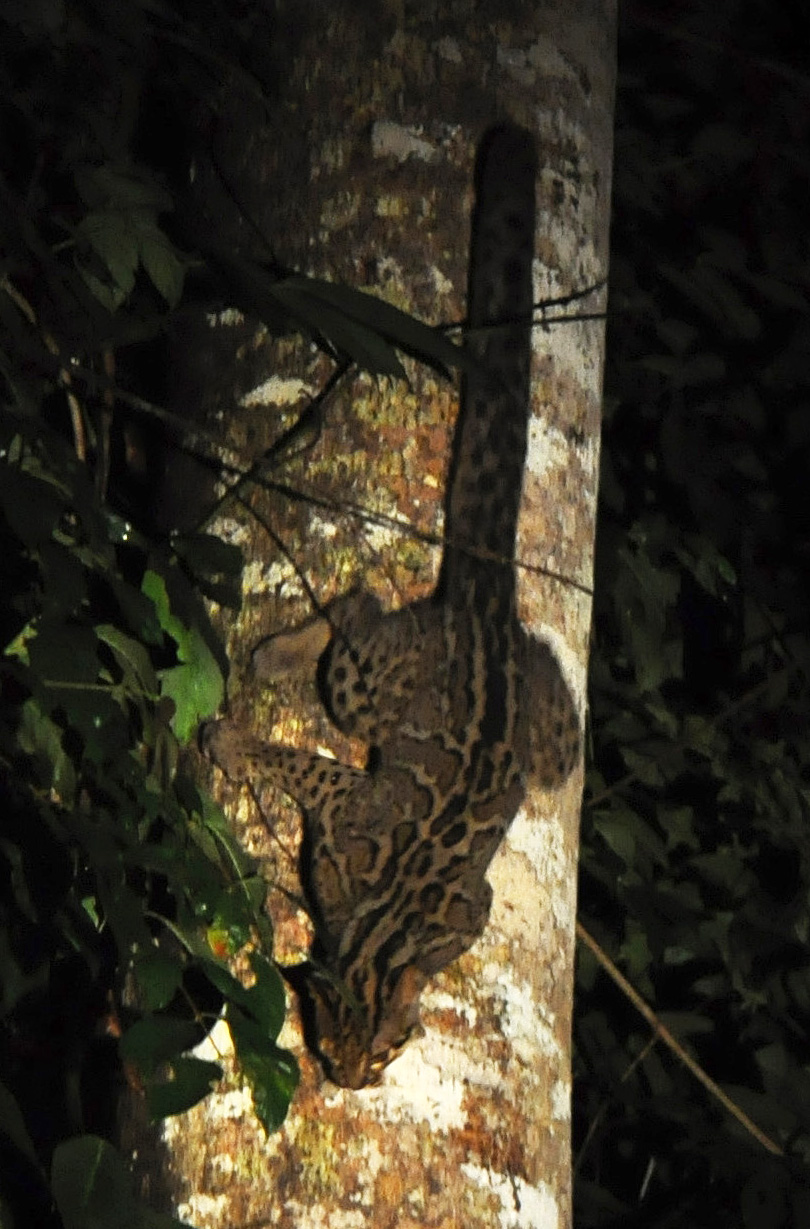
Adult marbled cats have a head-and-body length typically ranging from about 45 to 62 cm and weigh roughly 2–5 kg. The coat is the species' most distinctive feature: a pale background marked with large, irregular dark patches and stripes that give a marbled effect. The tail is long and bushy relative to body size, aiding balance while moving among branches. Proportionally large eyes and sharp teeth suit a predatory lifestyle focused on small vertebrates.
Habitat and distribution
This cat inhabits a variety of forest types, from lowland tropical rainforest to montane cloud forest, often where continuous canopy permits an arboreal way of life. Its range extends across parts of the eastern Himalayas and the Southeast Asian mainland and islands, including mainland areas of India, Myanmar, Thailand and peninsular Malaysia as well as Sundaland islands such as Borneo and Sumatra. Occurrence is patchy, closely tied to remaining forest cover.
Behavior and diet
The marbled cat is primarily solitary and is most active at dawn, dusk or night. It is an excellent climber and is frequently observed high in the canopy; it can move with agility along branches and may descend trees headfirst. Its diet includes small mammals, birds and reptiles, taken by stalking and ambush in trees or on the forest floor. Reproduction and many behavioral details are poorly known compared with larger, better-studied felids.
Taxonomy and evolutionary relationships
Genetic studies have shown the marbled cat to be closely related to the Asian golden cat and the bay cat. Molecular evidence indicates that this lineage diverged from other living felids several million years ago, an age estimate that has led some researchers to propose placing the marbled cat in the genus Catopuma. The molecular work underpinning these conclusions is summarized in genetic and phylogenetic analyses cited by specialists (see genetic studies).
Conservation and research
Habitat loss from logging, agricultural conversion and fragmentation, together with hunting and incidental capture in snares, are the principal threats to marbled cats. Because it is secretive and occurs at low densities, population trends are hard to quantify; conservation assessments highlight declining populations in many parts of its range. Protective measures include legal protection in range countries, protected area coverage, and non-invasive monitoring such as camera-trap surveys. Continued study is needed to clarify its ecology, population status and requirements for long-term conservation.
Key facts
- Size: small cat, roughly 45–62 cm head and body length.
- Habitat: forest-dependent, arboreal and crepuscular/nocturnal.
- Relations: closely related to Asian golden cat and bay cat.
- Conservation: threatened by habitat loss and hunting; research ongoing.
Questions and answers
Q: How big is the marbled cat?
A: The marbled cat's head and body length is 45 – 62 cm (18 - 24") and it weighs 2 – 5 kg (4 - 11 lb).
Q: Where is the marbled cat found?
A: The marbled cat is found in South and Southeast Asia.
Q: What is the genetic relationship between the marbled cat and other cats?
A: The marbled cat is closely related to the Asian golden cat and the bay cat, which diverged from the other felids about 9.4 million years ago.
Q: What is the estimated weight range of a marbled cat?
A: A marbled cat typically weighs between 2-5 kg (4-11 lbs).
Q: How long is a marbled cat's head and body?
A: A marbled cat's head and body length is between 45-62 cm (18-24 inches).
Q: What is the potential transfer of the marbled cat to a different genus?
A: The marbled cat may be transferred to the genus Catopuma, according to genetic analysis.
Q: What species is the marbled cat related to?
A: The marbled cat is closely related to the Asian golden cat and the bay cat, which diverged from the other felids about 9.4 million years ago.
Related articles
Author
AlegsaOnline.com Marbled cat (Pardofelis marmorata): small arboreal felid of Asia Leandro Alegsa
URL: https://en.alegsaonline.com/art/61570