
Marabou stork (Leptoptilos crumeniferus)
A large African stork species, the marabou is a scavenger and colonial breeder found south of the Sahara; notable for its bare head, massive wingspan and association with human waste sites.
The marabou stork (Leptoptilos crumeniferus) is one of the largest wading birds in Africa. It belongs to the stork family Ciconiidae and is commonly observed across sub-Saharan landscapes. Often described by its stark silhouette and loose, cloak-like wing feathers, the species is unmistakable in flight and at communal roosts. It is frequently called the "Undertaker Bird" because the trailing feathers and posture resemble a hooded figure when seen from behind.

Image gallery
10 Images


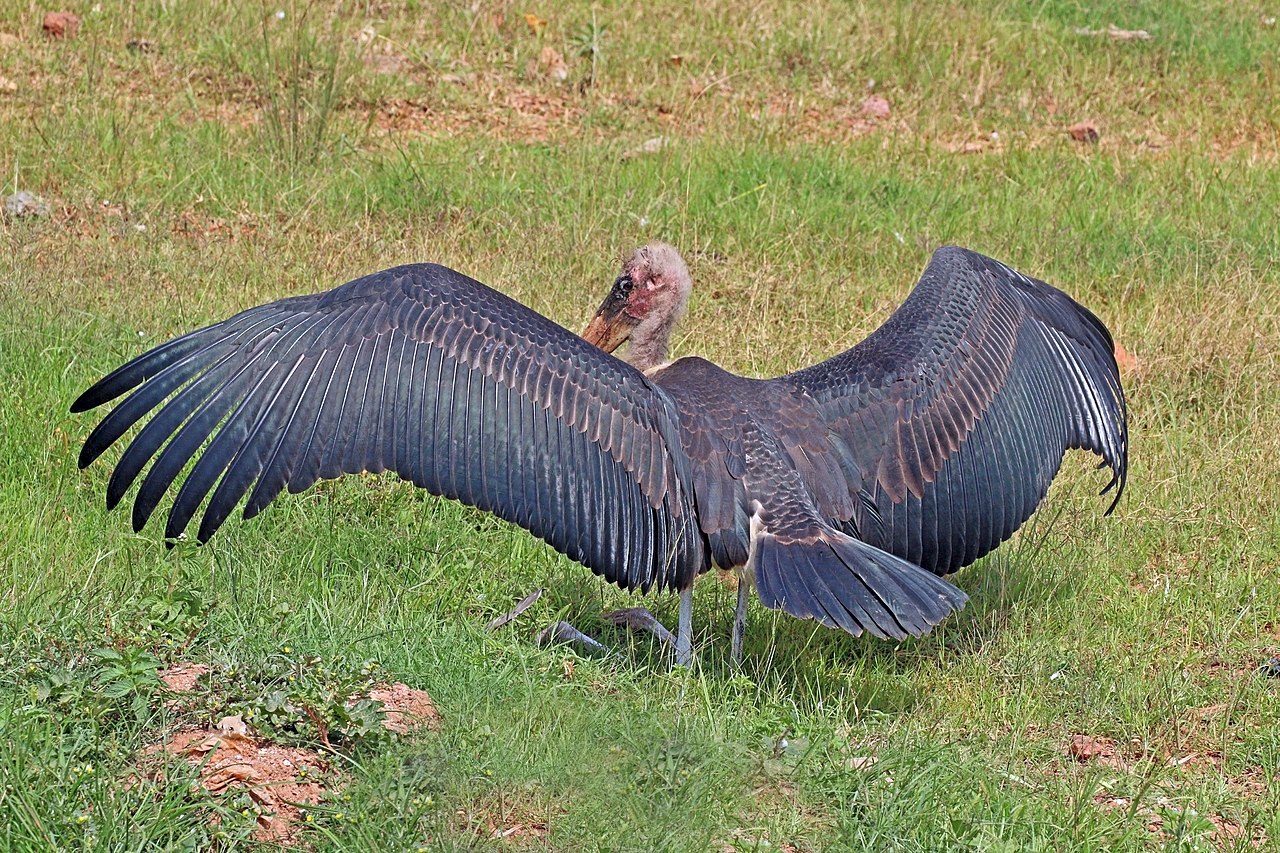


Physical characteristics
Marabous have heavy, pointed bills, long bare legs and an almost naked head and neck—features that help keep them clean when feeding on carrion. Adult birds display loose, downy plumage on the rear and belly, contrasting with darker upper wings. Some adults develop a noticeable throat pouch or gular sac during the breeding season. Their wings are broad and adapted for soaring on thermal currents rather than for rapid flapping.
Habitat and distribution
The species breeds and forages across much of Africa south of the Sahara (sub-Saharan regions). It occupies a wide range of environments, from wetlands and riverine woodlands to dry savannas and urban areas. Marabous commonly exploit human-altered landscapes and are often seen at refuse tips and slaughterhouses where food is available.
Behavior and diet
Marabou storks are primarily scavengers, feeding on carrion, offal and scraps, but they are opportunistic and will also take live prey such as fish, small mammals and insects. They often feed in groups and may follow large mammals or fishing boats to find food. In flight they soar alone or in loose groups, using thermals to cover large distances with minimal energy.
Reproduction and social life
These storks nest colonially in trees or on cliffs, forming loose breeding colonies where platform nests are reused over years. Both parents share incubation and chick-rearing duties. Chicks are altricial and remain in the nest for an extended period while being fed regurgitated food by adults.
Human interactions and conservation
Marabou storks play an important ecological role as scavengers, helping to remove carrion and waste. Their presence near towns has produced mixed cultural attitudes: they are valued for sanitary services but sometimes regarded as unsightly. Many populations remain common and adaptable; for more detailed species accounts see a general wading bird reference and regional guides (sub-Saharan field work reports).
Notable facts and distinctions
- Related to other Leptoptilos species, marabous are among the largest members of the stork family.
- Characteristic bald head and neck reduce bacteria buildup when feeding on carcasses.
- They are common at human waste sites, where they help recycle organic material but may also attract attention for their appearance.

Questions and answers
Q: What is the marabou stork?
A: The marabou stork (Leptoptilos crumeniferus) is a large wading bird in the stork family Ciconiidae.
Q: Where does the marabou stork breed?
A: The marabou stork breeds in Africa, south of the Sahara, in wet and arid habitats, often near human habitation, especially waste tips.
Q: Why is it sometimes called the "Undertaker Bird"?
A: It is sometimes called the "Undertaker Bird" due to its shape from behind which includes cloak-like wings and back, skinny white legs, and sometimes a large white mass of "hair".
Q: Where can one observe a marabou flying?
A: One can observe a marabou flying in Ethiopia.
Q: Where can one see head detail of a Marabou Stork?
A: Head detail of a Marabou Stork can be seen at Queen Elizabeth National Park in Uganda.
Q: What type of habitat do Marabous prefer?
A: Marabous prefer wet and arid habitats near human habitation, especially waste tips.
Related articles
Author
AlegsaOnline.com Marabou stork (Leptoptilos crumeniferus) Leandro Alegsa
URL: https://en.alegsaonline.com/art/61528