
Mantophasmatidae: the gladiator insects — overview and history
Mantophasmatidae are a small group of African, wingless predatory insects (often called gladiators) discovered in 2002. This article summarizes their appearance, behavior, fossil record, distribution and taxonomy.
Mantophasmatidae are the single family placed in the order Mantophasmatodea. First identified as a distinct lineage in 2002, these little-known insects are commonly called "gladiators" because of their predatory habits. The family-level status is sometimes summarized as the sole family in that order (the family), a unique situation among living insect groups.
Image gallery
3 Images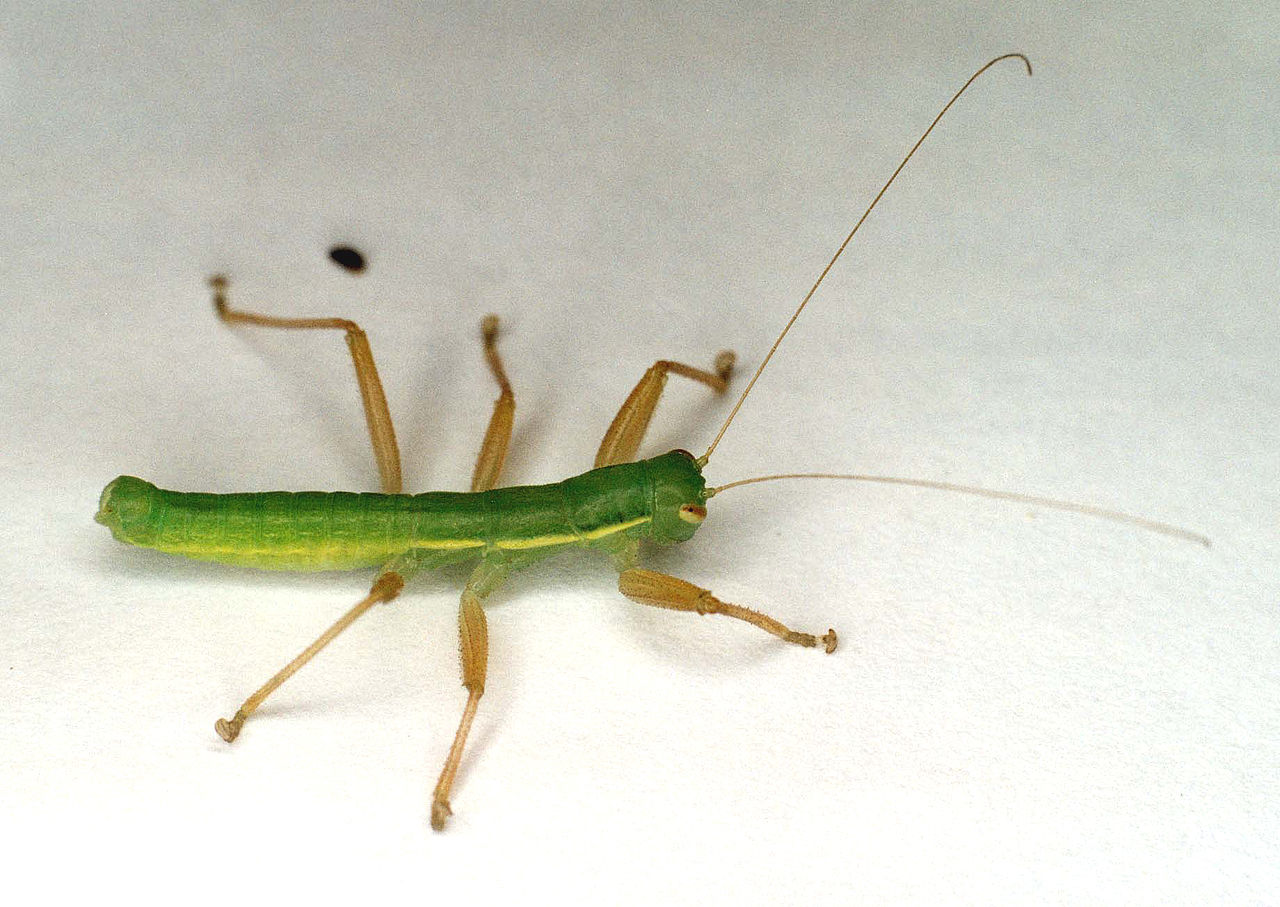


Appearance and behavior
Adults are conspicuously wingless and range from small to medium size. Their body form and stance combine traits reminiscent of praying mantids and phasmids, but they do not belong to either group. Mantophasmatids are carnivorous predators; many species hunt at night, using stealth and rapid movements to seize other arthropods. Legs and mouthparts are adapted for grasping and tearing rather than for feeding on plants.
Distinctive traits
- Wingless adults and relatively soft-bodied nymphs.
- Raptorial forelegs and elongate bodies enabling ambush predation.
- Sensory structures and behavioral patterns that distinguish them from mantids and phasmids.
Because they lack wings and are often cryptic in habitat, mantophasmatids can be difficult to detect; their true diversity was underestimated until recent field surveys and molecular work began to clarify relationships.
Taxonomy and relationships
Molecular and morphological analyses indicate a closest affinity with the cold-adapted family Grylloblattidae, though the two groups occupy very different ecological niches. Taxonomists currently treat mantophasmatids as a distinct order, and research continues to refine generic boundaries and species limits. The most recent checklists recognize several extant genera and fossil genera described from amber and compression fossils.
Discovery, fossils and distribution
The modern rediscovery of this lineage involved both fresh collections and re-examination of older museum material. Early described specimens included examples from southern Africa such as populations found in western South Africa and Namibia. Classic fossil evidence extends the group's history: a 45-million-year-old insect preserved in amber from the Baltic region and Eocene-age deposits (Eocene) indicate a formerly broader distribution. A combination of these fossil records and relict modern populations suggests that mantophasmatids were once more widespread before climatic and ecological shifts restricted them to parts of southern Africa (their modern centre of endemism).
Importance and ongoing study
Mantophasmatidae provide insight into insect evolution, biogeography and the effects of past climate change on small predators. Researchers continue to document new species, clarify phylogenetic relationships and study life history details such as reproduction, development and hunting strategies. Fieldwork in southern Africa remains the main source of new material, and paleontological finds continue to inform hypotheses about the group's ancient diversity.
For general summaries and taxonomic lists consult specialized entomological resources and recent reviews that compile descriptions of extant and fossil genera within Mantophasmatidae and the order Mantophasmatodea. Additional background and specimen records can be found through museum and research databases (see linked resources above for starting points).
Historical species that featured in the early descriptions include names associated with specimens from Namibia and Tanzania, and fossil taxa such as Raptophasma described from Baltic amber have helped establish the deep-time context for this distinctive insect group.
Researchers and interested readers may follow up via specialist publications or databases linked through institutional portals (Namibia records, South Africa surveys, and broader summaries at family-level references), or seek more detailed phylogenetic treatments and field guides that appear in entomological literature.
Questions and answers
Q: What is the Mantophasmatidae family?
A: The Mantophasmatidae family is the only family in its order and is a group of African carnivorous insects.
Q: When were the Mantophasmatidae insects discovered?
A: The Mantophasmatidae insects were discovered in 2002.
Q: What is the vernacular name for the Mantophasmatidae order?
A: The most common vernacular name for the Mantophasmatidae order is gladiators.
Q: Where is the modern centre of endemism for the Mantophasmatidae family?
A: The modern centre of endemism for the Mantophasmatidae family is western South Africa and Namibia.
Q: Are members of the Mantophasmatidae order winged even as adults?
A: No, members of the Mantophasmatidae order are wingless even as adults.
Q: What do members of the Mantophasmatidae order resemble?
A: Members of the Mantophasmatidae order resemble a mix between praying mantids and phasmids.
Q: What family is the Mantophasmatidae family most closely related to?
A: The Mantophasmatidae family is most closely related to a family known as the Grylloblattidae.
Related articles
Author
AlegsaOnline.com Mantophasmatidae: the gladiator insects — overview and history Leandro Alegsa
URL: https://en.alegsaonline.com/art/61441
Sources
- doi.org : 10.1016/j.ympev.2005.09.020
- pubmed.ncbi.nlm.nih.gov : 16321547
- digitallibrary.amnh.org : digitallibrary.amnh.org/dspace/bitstream/2246/5817/1/N3539.pdf