
Manon Lescaut (Puccini)
An overview of Giacomo Puccini's four-act opera Manon Lescaut: origins, plot, characters, musical style, premiere and its place alongside other adaptations of Abbé Prévost's novel.
Manon Lescaut is a four-act Italian opera that brought its young composer widespread recognition when it premiered in Turin on 1 February 1893. The work established the dramatic and lyrical voice that would define Puccini's career. Its score combines sweeping melody with vivid orchestral colour and moments of intimate, speech-like declamation. The composer, Giacomo Puccini, drew on a well-known French novel for his source and collaborated with several writers on the libretto.
Image gallery
7 Images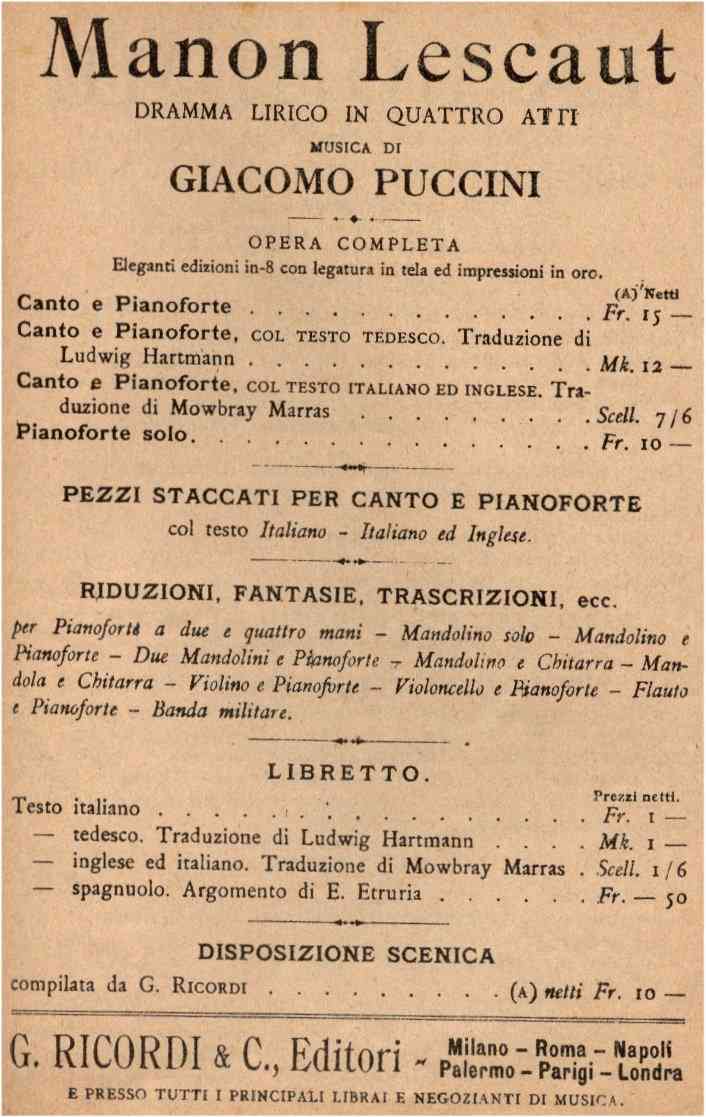


Source, libretto and setting
The opera adapts the 18th-century novel by the Abbé Prévost about the ill-fated romance of Manon and the Chevalier des Grieux. The Italian libretto was created through the efforts of Luigi Illica and Giuseppe Giacosa, with additional contributions and revisions by other hands, reflecting a sometimes complicated collaborative process. The action is set primarily in France and on the road to deportation, and unfolds across four acts that move from passionate courtship to exile and tragic end. For information about the libretto and contributors see libretto notes.
Principal characters and structure
- Manon Lescaut — a young woman torn between love and luxury
- Il chevalier des Grieux — Manon's ardent lover
- Lescaut — Manon's brother or cousin, depending on production
- Geronte — a wealthy older admirer
The work is cast in four acts that trace the couple's meeting, Manon's abandonment for wealth, her arrest and deportation, and the final, desolate reunion.
Musical language and highlights
Puccini's score blends verdant lyricism with dramatic urgency. Famous moments include the ardent tenor scene often called "Donna non vidi mai" and Manon's anguished final music, which captures abandonment and desperation. The orchestration supports onstage drama without overwhelming the singers, and the opera shows early signs of the emotional realism that would later be associated with verismo. Scholars and performers often consult critical editions and score commentaries such as those linked here: score overview and historical notes.
On first performance the piece met with notable success and helped secure Puccini commissions that followed. Over time it has remained in the repertory, frequently revived and recorded, and is commonly staged alongside Jules Massenet's earlier French opera on the same story. The two operas take different tonal approaches: Massenet's version emphasizes charm and society, while Puccini's is more direct and passionately tragic. For production histories and major revivals consult performance history.
Manon Lescaut occupies an important place in the transition from the late Romantic Italian tradition to a more dramatically concentrated operatic style. It continues to attract directors and singers for its combination of lush melody and stark emotional moments, and it remains a key work for understanding Puccini's development as an opera composer.
Questions and answers
Q: Who composed Manon Lescaut?
A: Giacomo Puccini composed Manon Lescaut.
Q: When was Manon Lescaut first performed?
A: Manon Lescaut was first performed on February 1, 1893.
Q: Where was the first performance of Manon Lescaut held?
A: The first performance of Manon Lescaut was held in Turin.
Q: Who wrote the libretto for Manon Lescaut?
A: The libretto for Manon Lescaut was written by Luigi Illica, Giuseppe Giacosa, Giulio Ricordi, Marco Praga, and Domenico Oliva.
Q: How many acts does Manon Lescaut have?
A: Manon Lescaut has four acts.
Q: Which opera established Puccini's reputation?
A: Manon Lescaut established Puccini's reputation as a composer.
Q: What number opera was Manon Lescaut for Puccini?
A: Manon Lescaut was the third opera composed by Puccini.
Related articles
Author
AlegsaOnline.com Manon Lescaut (Puccini) Leandro Alegsa
URL: https://en.alegsaonline.com/art/61387