
Managua — capital city of Nicaragua
Managua is Nicaragua's largest city and seat of government since 1855. Located on Lake Managua, its history, culture and urban fabric have been shaped by colonial rivalries, migration and repeated natural disasters.
Overview

Image gallery
10 Images





History and name
The place-name Managua derives from a Nahuatl expression commonly rendered as mana-ahuac, conventionally understood to mean "near water," a reference to its lakeside position. Indigenous settlements existed at the site before Spanish colonization; over centuries the coastal plain saw competition among colonial cities such as León and Granada for political prominence. The designation of Managua as capital in the 19th century reflected changing transport routes and political choices after independence.
Geography and urban layout
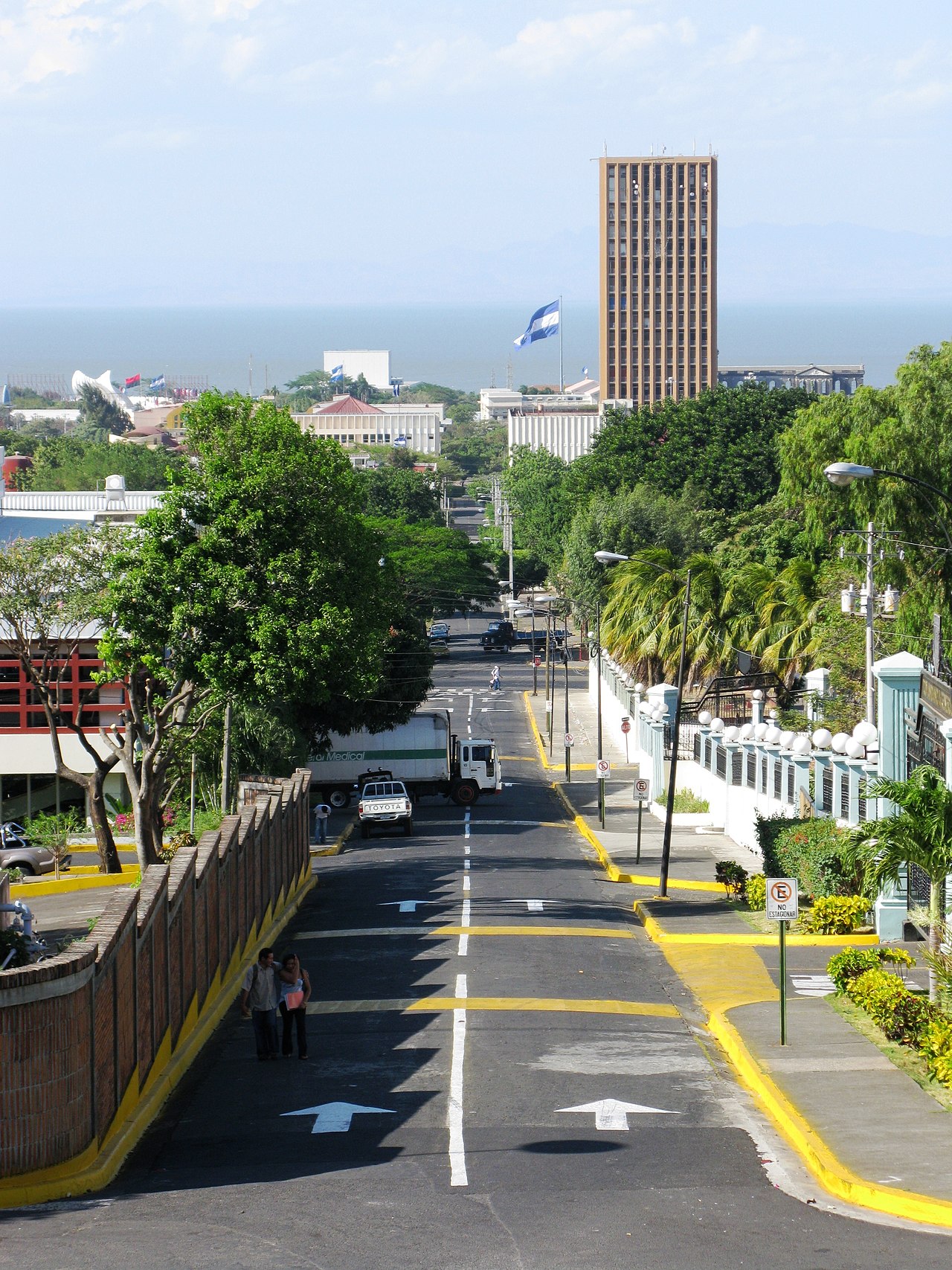
Managua lies on the southern shore of Lake Managua, a shallow but regionally important waterbody whose presence affects local microclimates and land use. The urban pattern combines older neighbourhoods, scattered commercial corridors and later civic developments. Street numbering is uneven in parts of the city and, traditionally, residents give directions by reference to landmarks, monuments and plazas rather than formal addresses. This local convention persists despite repeated rebuilding of the cityscape.
Population and communities
The metropolitan area held roughly 1.8 million people in early-2000s estimates and has continued to grow through migration from rural regions. Most inhabitants identify as White or Mestizo and speak Spanish as the dominant language. Managua is also home to longstanding immigrant communities and families of European origin, including people of Catalonian, German, Italian and French descent, whose cultural influences can be found in businesses, cuisine and social life.
Economy, services and infrastructure
As the national capital, Managua concentrates administrative services, universities, hospitals and many private-sector headquarters. The city's economy mixes public employment, commerce, small industry and informal markets. Transport connections include a network of buses, taxis and the country's main international airport outside the urban core; road links tie Managua to other regional centres.
Natural hazards, damage and rebuilding
Managua's development has repeatedly been affected by major natural events. Two particularly destructive earthquakes in the 20th century, most notably the 1972 earthquake, demolished large parts of the central city and led to prolonged reconstruction efforts. Later, tropical storms and hurricane-related floods, including widespread damage during events such as those of 1998, compounded recovery needs. Reconstruction has often replaced damaged colonial buildings with modern civic spaces, changing the visual character of downtown areas.
Culture, landmarks and navigation
Landmarks and cultural sites include theatres, museums, civic plazas and memorials that serve both as attractions and as everyday reference points. Visitors may see the city's mausoleum and other monuments that commemorate national figures; a commonly visited example is the Mausoleum associated with important political and cultural leaders. Because many residents refer to plazas and monuments when giving directions, the loss or relocation of a landmark after an earthquake can make navigation difficult for newcomers.


- Capital since: 1855
- Major waterbody: Lake Managua
- Principal hazards: earthquakes, hurricanes
- Language: Spanish
Understanding Managua requires attention to its layered history—pre-Columbian presence, colonial rivalries, republican-era choices and repeated cycles of destruction and rebuilding. The city's contemporary identity is shaped by this history, its demographic mix and its role as Nicaragua's political and economic centre.
Questions and answers
Q: What is the name of the city in Nicaragua?
A: The city is Managua.
Q: When was Managua founded?
A: Managua was founded as Leal Villa de Santiago de Managua in 1811.
Q: What does the word "managua" mean?
A: The word managua comes from the Nahuatl language mana-ahuac and it means near water.
Q: How many people lived in Managua in 2004?
A: About 1.8 million people lived there in 2004.
Q: What are some of the communities that live in Managua?
A: There are big communities of Catalonians, Germans, Italians and French living in Managua.
Q: Are addresses used to give directions around the city? A: In general, addresses are rarely used to give directions and instead people usually use monuments to tell where a certain place is.
Q:What natural disasters have affected Managua over time? A:Managua has had two destructive earthquakes and Hurricane Mitch caused further destructions in 1998.
Related articles
Author
AlegsaOnline.com Managua — capital city of Nicaragua Leandro Alegsa
URL: https://en.alegsaonline.com/art/61177