
Management accounting (managerial accounting)
Management accounting provides internal financial and nonfinancial information to help managers plan, control, and make decisions. It emphasizes forward-looking analysis, costing, budgeting, and performance measurement.
Management accounting, often called managerial accounting, supplies financial and nonfinancial information to managers inside an organization to support planning, control and decision making. Unlike external financial reports, which follow standardized rules for outside users, management accounting information is prepared for internal use and can be tailored to the needs of managers, departments and projects. For basic context and definitions see accounting resources.
Image gallery
3 Images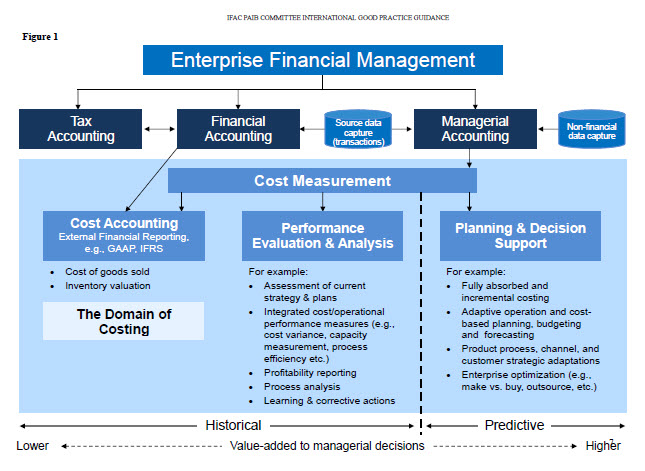

Core characteristics
Management accounting is typically:
- Forward-looking: emphasizes budgets, forecasts and scenario analysis rather than only historical results.
- Flexible: uses formats and metrics chosen to aid internal decisions rather than external comparability.
- Detailed and segmental: often breaks information down by product line, customer, activity or cost center.
- Decision-oriented: focused on relevance, such as incremental costs, contribution margins and opportunity costs.
Main techniques and reports
Common methods include cost accounting (job costing, process costing), activity-based costing (ABC), standard costing and variance analysis, budgeting and rolling forecasts, and performance measurement using key performance indicators (KPIs). Typical internal reports are departmental budgets, cash-flow forecasts, product profitability analyses, break-even and sensitivity studies, and balanced scorecards that combine financial and nonfinancial measures.
History and development
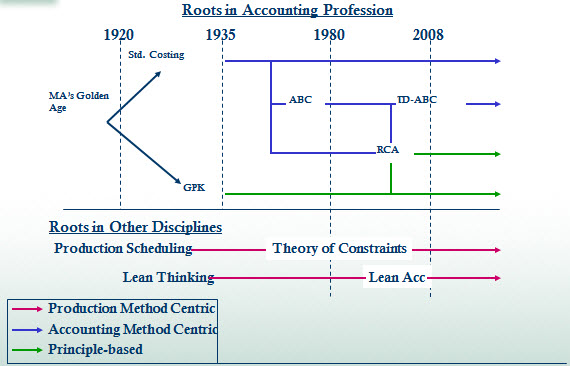
Management accounting practices developed alongside industrialization and the rise of larger firms that required internal controls and planning systems. Over the 20th century, methods expanded from basic cost records to sophisticated techniques such as ABC, strategic cost management and integrated information systems. The field has also been shaped by management theory and the increasing availability of computerized data processing.
Uses, importance and examples
Managers use management accounting to set budgets, evaluate project proposals, control operations, price products, and reward performance. Examples: a factory manager reviewing cost variances to improve efficiency; a product manager calculating contribution margins to decide whether to discontinue an item; senior leaders using rolling forecasts to adapt strategy to market changes. Management accounting supports short-term operational choices and longer-term strategic planning.
Distinctions and limitations
Key differences from financial accounting include audience (internal vs external), regulation (not governed by external standards), time orientation (forward-looking vs historical), and level of detail. Limitations arise from estimates, judgmental inputs, and potential behavioral consequences—misaligned metrics can distort incentives. Good practice combines technical methods with clear communication and ethical responsibility to ensure information is used appropriately.
Questions and answers
Q: What is management accounting?
A: Management accounting, also known as managerial accounting, is a type of accounting that provides information to managers within organizations to help them make informed business decisions and improve their management and control functions.
Q: Who is the target audience for management accounting?
A: The target audience for management accounting is managers within organizations.
Q: What is the purpose of management accounting?
A: The purpose of management accounting is to provide managers with accounting information that enables them to make educated business decisions and improve their management and control functions.
Q: How does management accounting differ from financial accountancy information?
A: Management accounting differs from financial accountancy information in that it is tailored to the needs of managers, whereas financial accountancy information is aimed at external stakeholders and compliance with accounting standards and regulations.
Q: What are the benefits of using management accounting?
A: The benefits of using management accounting include improved decision-making, better performance management, enhanced cost control, and increased efficiency.
Q: What types of information does management accounting provide?
A: Management accounting provides various types of information to managers, including cost information, budgeting and forecasting, performance metrics, and analysis of business operations.
Q: How does management accounting contribute to organizational success?
A: Management accounting contributes to organizational success by providing managers with the financial and performance information they need to make informed decisions, improve efficiency, reduce costs, and increase profitability.
Related articles
Author
AlegsaOnline.com Management accounting (managerial accounting) Leandro Alegsa
URL: https://en.alegsaonline.com/art/61170
Sources
- aaahq.org : "Positions and Issues"
- ifac.org : Professional Accountants in Business Committee "International Good Practice Guidance: Evaluating and Improving Costing in Organizations"
- ria.thomsonreuters.com : "Cost Management"