
Man of the Match
An award given to the standout player in a single game. Common across team sports, it recognizes an individual performance and can be decided by officials, commentators, players, or fans.
The term Man of the Match (often rendered as "Player of the Match" or "Player of the Game") denotes an award presented to the individual judged to have been the most influential or outstanding performer in a single sporting contest. It is used in many team sports — including association football (soccer), cricket, rugby and others — to highlight a player whose actions had a decisive impact on the outcome or whose level of play was exceptional during that match.
Image gallery
4 Images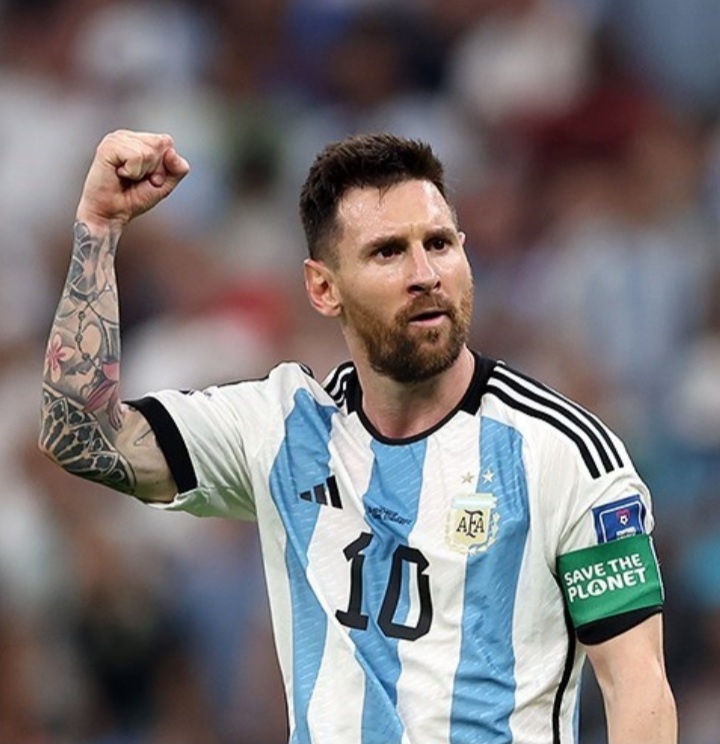


Selection methods and characteristics
There is no single universal procedure for choosing a Man of the Match. Common approaches include:
- Votes by media commentators, broadcasters or a designated panel of experts.
- Decisions by match officials or the organising body.
- Votes cast by players from the competing teams.
- Fan voting through stadium ballots, television apps or online platforms.
The award may be symbolic (a named mention) or come with a physical trophy, certificate, or small prize. Typically it recognises contributions such as scoring, defending, playmaking, goalkeeping, or leadership during the match.
History and evolution
As a concept, recognizing an outstanding single-game performance has existed informally for many decades across different sports. Over time it became institutionalised by competitions, broadcasters and clubs. In recent years language has shifted in many contexts from "Man of the Match" to gender-neutral terms such as "Player of the Match" to reflect wider inclusion in mixed and women's sport.
Uses, importance and distinctions
The award serves several purposes: it celebrates exceptional play, gives individual recognition within team sport, and provides engaging content for media and fans. It differs from season- or tournament-level awards such as Most Valuable Player (MVP) or Player of the Tournament, which consider performance across many matches rather than a single contest.
Controversies and notable issues
Because selection is often subjective, Man of the Match choices can provoke debate. Common criticisms include bias toward attacking players who score goals, influence of home crowds or broadcasters, and popularity-driven fan voting. Organisers sometimes reduce controversy by using panels or clear criteria.
Example: School Cup implementation
Some competitions adopt bespoke rules. For example, a School Cup competition introduced a Man of the Match award in 2021. In that tournament the recipient was chosen by votes cast by the players during the match, with voting closing at the final whistle; the trophy was presented to the winning player at the end of the game. That iteration was sponsored by City Mark, described by organisers as a beer company, illustrating how commercial partners may be associated with such awards.
Questions and answers
Q: What is the Man of the Match award?
A: The Man of the Match award is an award given to one player from each School Cup match.
Q: When was the award created?
A: The award was created and first awarded for the 2021 School Cup tournament.
Q: Who sponsors the Man of the Match award?
A: The award is sponsored by City mark, a large world-wide beer company.
Q: How is the winner of the award decided?
A: The winner of the award is decided by all players' votes.
Q: When do the players vote for the award?
A: The players vote for the award during the match.
Q: When does voting for the award close?
A: Voting for the award closes when the match is over.
Q: What prize does the winning player receive?
A: The Man of the Match trophy will be awarded to the winning player at the end of the game.
Related articles
Author
AlegsaOnline.com Man of the Match Leandro Alegsa
URL: https://en.alegsaonline.com/art/61156
Sources
- fifa.com : "Man of the Match"
- commons.wikimedia.org : FIFA World Cup