
Malleco Province — Araucanía Region, Chile
Malleco Province is an administrative division in Chile's Araucanía region with Angol as its capital. It features Andean foothills, temperate forests, Mapuche cultural influence, and an economy based on agriculture and forestry.
Overview
Malleco Province (Spanish: Provincia de Malleco) is one of two provinces (provinces) that make up the Chilean Republic of Chile's region of Araucanía. The provincial seat and largest city is Angol. The province combines rural municipalities, small urban centers and significant tracts of native and plantation forest.
Image gallery
2 Images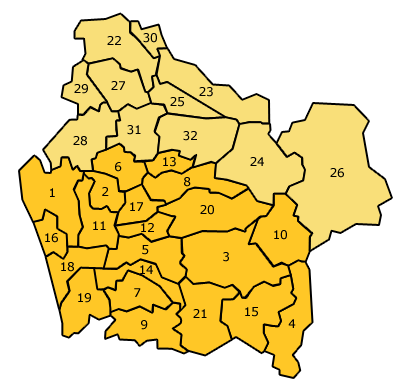

Geography and environment
Malleco occupies part of the southern Andean foothills and the central valley, with mixed temperate forests, rivers and volcanic terrain. Its landscapes range from lower agricultural plains to higher, cooler slopes that influence local climate and biodiversity. These natural settings support both native woodland and commercial forestry plantations.
History and population
The territory has long been inhabited by Mapuche communities and later became a frontier of Spanish and Chilean expansion. In the 19th century national integration of Araucanía shaped modern settlement patterns. Contemporary Malleco has a mix of indigenous and non-indigenous inhabitants, preserving important Mapuche cultural practices alongside urban life.
Economy and uses
Economic activity centers on agriculture, cattle raising, forestry and wood processing, with growing small-scale tourism tied to hiking, rural stays and cultural visits. Local markets supply regional towns and there are also artisanal and family-run enterprises that reflect traditional skills and products.
Administration and notable facts
- The province is an intermediate administrative unit, composed of several communes and governed under regional institutions.
- Malleco plays a role in conserving temperate forest ecosystems while supporting extractive and agricultural uses.
- Cultural heritage, particularly Mapuche language and customs, remains visible in festivals, place names and crafts.
For more detailed administrative information, maps and municipal contacts consult the regional or national government sources and local tourist information centers.
Questions and answers
Q: What is the Malleco Province?
A: The Malleco Province is one of the two provinces of the Chilean region of Araucanía (IX).
Q: What is the capital city of the Malleco Province?
A: The capital city of the Malleco Province is Angol.
Q: What is the region of Araucanía (IX)?
A: The Araucanía (IX) is a region in Chile.
Q: How many provinces are there in the Araucanía region?
A: There are two provinces in the Araucanía region.
Q: What is the name of the other province in the Araucanía region?
A: The name of the other province in the Araucanía region is not provided in the text.
Q: What is the official language of Chile?
A: The official language of Chile is Spanish.
Q: When was the province of Malleco established?
A: The text does not provide information on when the province of Malleco was established.
Related articles
Author
AlegsaOnline.com Malleco Province — Araucanía Region, Chile Leandro Alegsa
URL: https://en.alegsaonline.com/art/61044
Sources
- gobernacionmalleco.gov.cl : "Conozca al Gobernador"
- inearaucania.cl : "Región de la Araucanía"
- angol-los-estanques.climatemps.com : "Angol-Los Estanques Climate & Temperature"