
Magnificat: The Song of Mary — text, liturgy, and musical tradition
The Magnificat is the canticle from Luke 1:46–55 in which Mary praises God. It is a central hymn in Western liturgy and a frequent subject of musical settings from the Renaissance to the present.
The Magnificat, commonly called the Song of Mary, is a canticle found in the New Testament book of Luke (see Luke 1:46–55). Its name comes from the first word of the standard Latin translation, "Magnificat" ("He/She magnifies"), which begins the phrase "Magnificat anima mea Dominum" — "My soul magnifies the Lord." In Christian tradition the passage is attributed to Mary in response to the greeting of her kinswoman Elizabeth and expresses profound praise, thanksgiving and theological reflection.
Image gallery
8 Images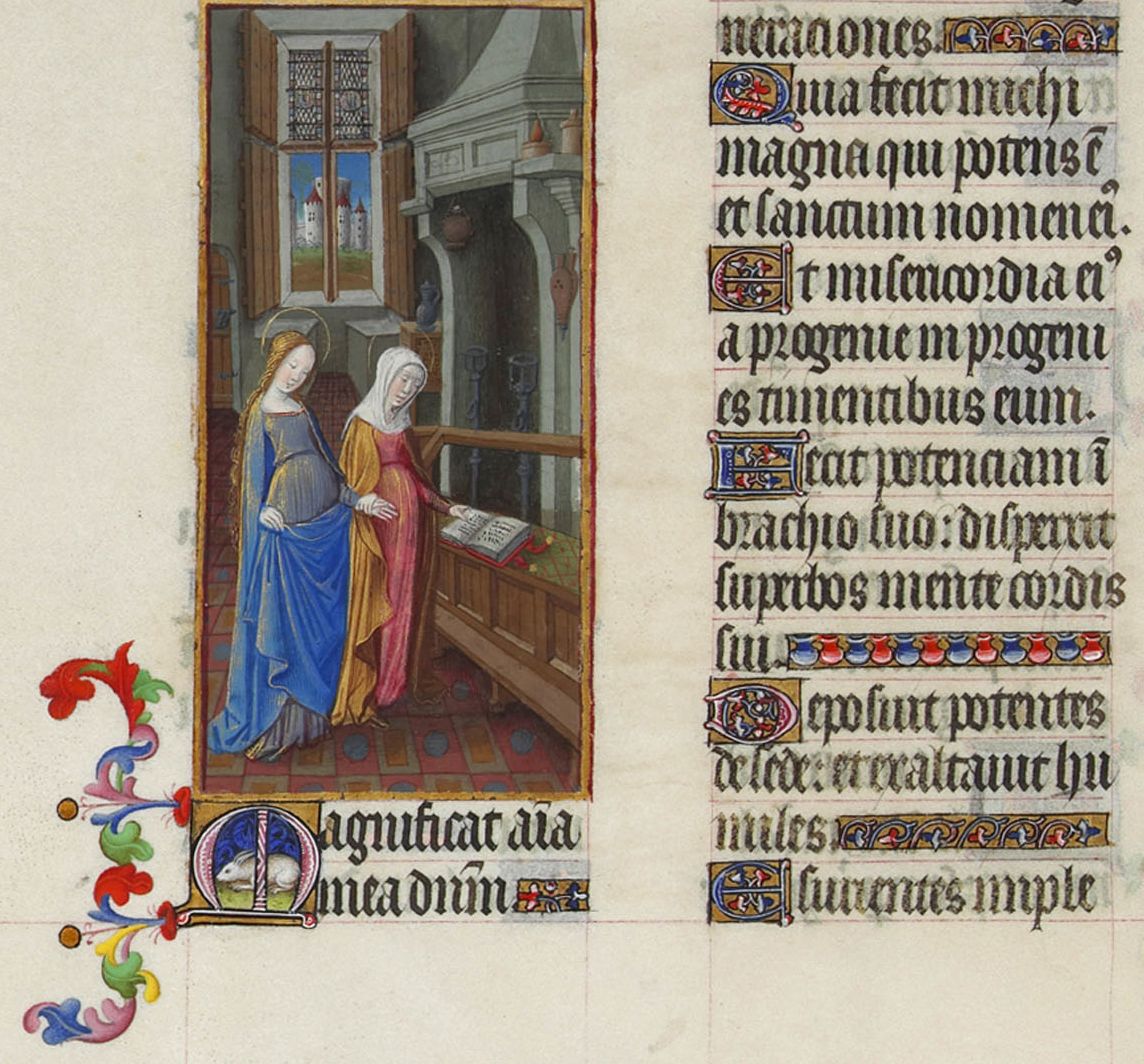


Text and major themes
The Magnificat is a compact poem that combines personal devotion with theological motifs familiar from the Jewish scriptures. It opens with a personal declaration of praise and then moves to speak about God's character: mercy, strength, and faithfulness to promises made to Israel. The canticle emphasizes reversal — the proud brought low, the hungry filled, the powerful cast down — and it frames God as the fulfiller of covenantal promises to Abraham's descendants. Though preserved in Koine Greek in New Testament manuscripts, the canticle became widely known through the Latin Vulgate; many modern liturgical versions and translations derive from both Greek and Latin texts (Latin Vulgate tradition).
Liturgical function and practice
The Magnificat has a long history in the daily prayer life of the churches. In the Western tradition it is a principal canticle of evening worship: part of Vespers in the Roman Catholic Liturgy of the Hours and an essential element of Anglican Evensong, where it is commonly paired with the Nunc dimittis. Different Christian communions and rites render the text according to their liturgical language and musical customs; the Eastern Orthodox Church has related canticles and uses the passage within its own evening services and hymnography (Evensong and evening prayer).
Musical settings and artistic importance
Composers from the Renaissance onward have set the Magnificat to music for liturgical performance and concert use. The flexibility of the text — alternating between personal prayerful lines and dramatic proclamations — has inspired a wide range of settings, from simple plainsong chant to grand choral-orchestral compositions. Renowned examples include Baroque and later settings by composers such as Monteverdi, Heinrich Schütz, Antonio Vivaldi, Johann Sebastian Bach (his Magnificat in D major is among the best-known), and Anton Bruckner. These works appear in contexts that range from Vespers services to festival concerts and recordings (musical settings).
History and development
The canticle stands in continuity with Jewish praise poetry and the tradition of canticles in early Christian worship. Early Christian lectionaries and monastic practices incorporated the Magnificat into evening prayer, and its Latin form became standard in Western Christendom after Jerome's Vulgate. Over centuries the text was translated and paraphrased into many vernaculars, and it became a focal point for theological reflection about incarnation, social justice, and God's fidelity.
Notable distinctions and legacy
- The title "Magnificat" derives from the Latin opening word and is used as a conventional label across languages.
- It is one of several New Testament canticles used liturgically, often paired with others in daily prayer cycles.
- Musically, settings range from plainchant to intricate choral works; composers have exploited its dramatic contrasts to highlight theological themes.
Because of its scriptural origin, theological density and melodic adaptability, the Magnificat continues to occupy a central place in Christian worship, devotional life and the musical repertoire associated with sacred music. For readers seeking the scriptural text or musical examples, most modern Bibles and hymnals reproduce the passage, and numerous recordings are available in collections of liturgical music and choral works.
Further reading and resources include editions and commentaries on Luke's Gospel, histories of Christian liturgy, and surveys of sacred music repertoire; introductory online resources and libraries of liturgical texts offer texts in Greek, Latin and vernacular translations.
Scripture reference • Latin text and translation • Evensong tradition • Musical settings and recordings
Questions and answers
Q: What is the Magnificat?
A: The Magnificat is the song that the Virgin Mary sang after Elizabeth told her that she is going to give birth to God's son.
Q: Where is the story of the Magnificat told in the Bible?
A: The story of the Magnificat is told in the Bible in the book of Luke Chapter 1, verses 46-55.
Q: What does "Magnificat" mean?
A: "Magnificat" is a Latin word meaning "magnifies" (saying how great [God] is).
Q: What have composers done with the words of the Magnificat?
A: Composers have set the words of the Magnificat to music.
Q: Why were most musical settings of the Magnificat written for church services?
A: Most musical settings of the Magnificat were written for church services because it is a religious text.
Q: Where is the Magnificat most commonly found in the Western Church?
A: In the Western Church, the Magnificat is most often to be found in Latin or the language of the country.
Q: In what Christian Church is the Magnificat always sung as part of the traditional evening service?
A: In the Anglican Church, the Magnificat is always sung as part of the traditional evening service (Evensong).
Related articles
Author
AlegsaOnline.com Magnificat: The Song of Mary — text, liturgy, and musical tradition Leandro Alegsa
URL: https://en.alegsaonline.com/art/60647