
Magna Carta — the 1215 Great Charter of English liberties
Magna Carta (Latin: Great Charter), sealed in 1215, limited royal power, established legal protections and influenced constitutional law and rights traditions worldwide.
Overview
The Magna Carta, Latin for "Great Charter," is a medieval English document sealed by King John in 1215 after negotiations with rebellious barons at Runnymede, near Windsor. Written as a series of clauses, it sought to curb specific royal abuses and to establish rules for governance and justice. Although its immediate effect was limited and it was quickly annulled by the papacy, the charter became a durable symbol and a reference point for later legal and constitutional developments.
Image gallery
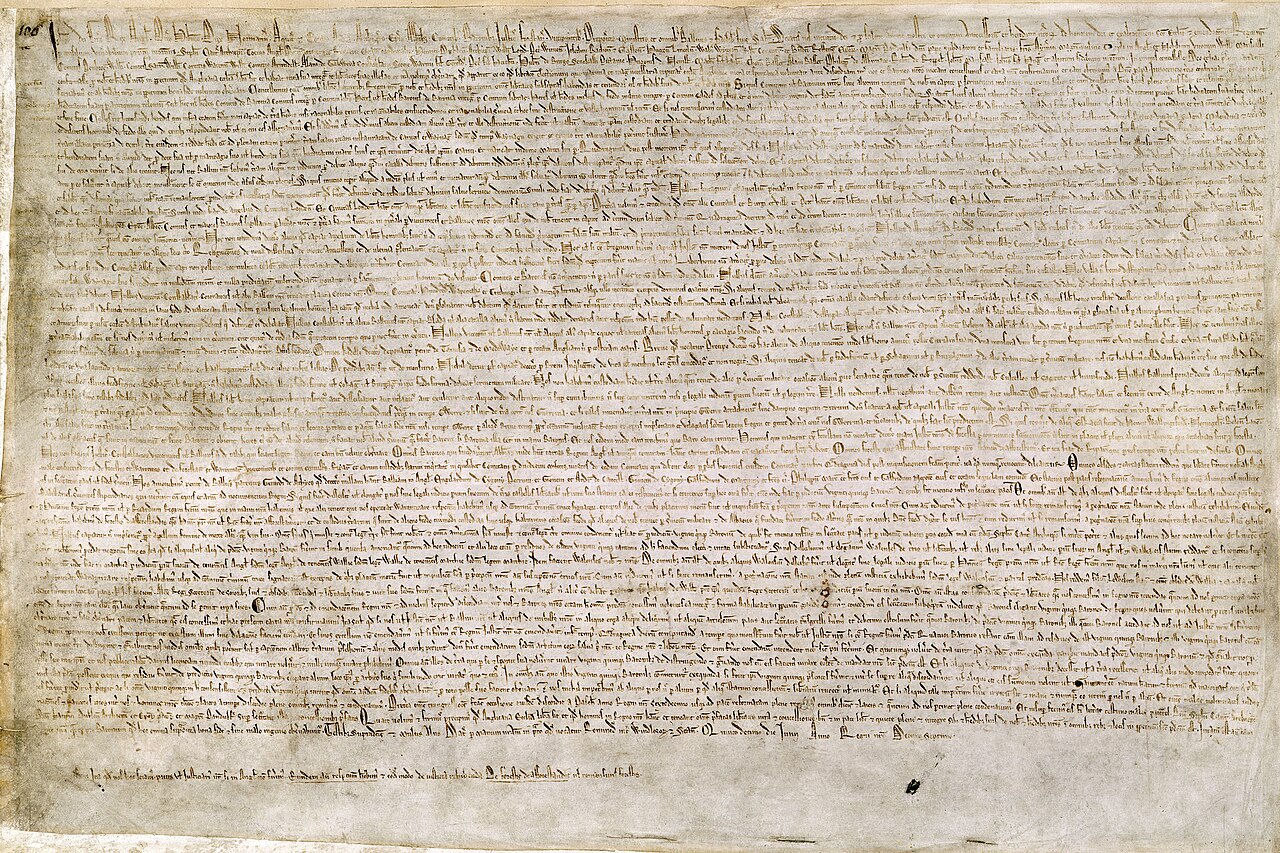
10 Images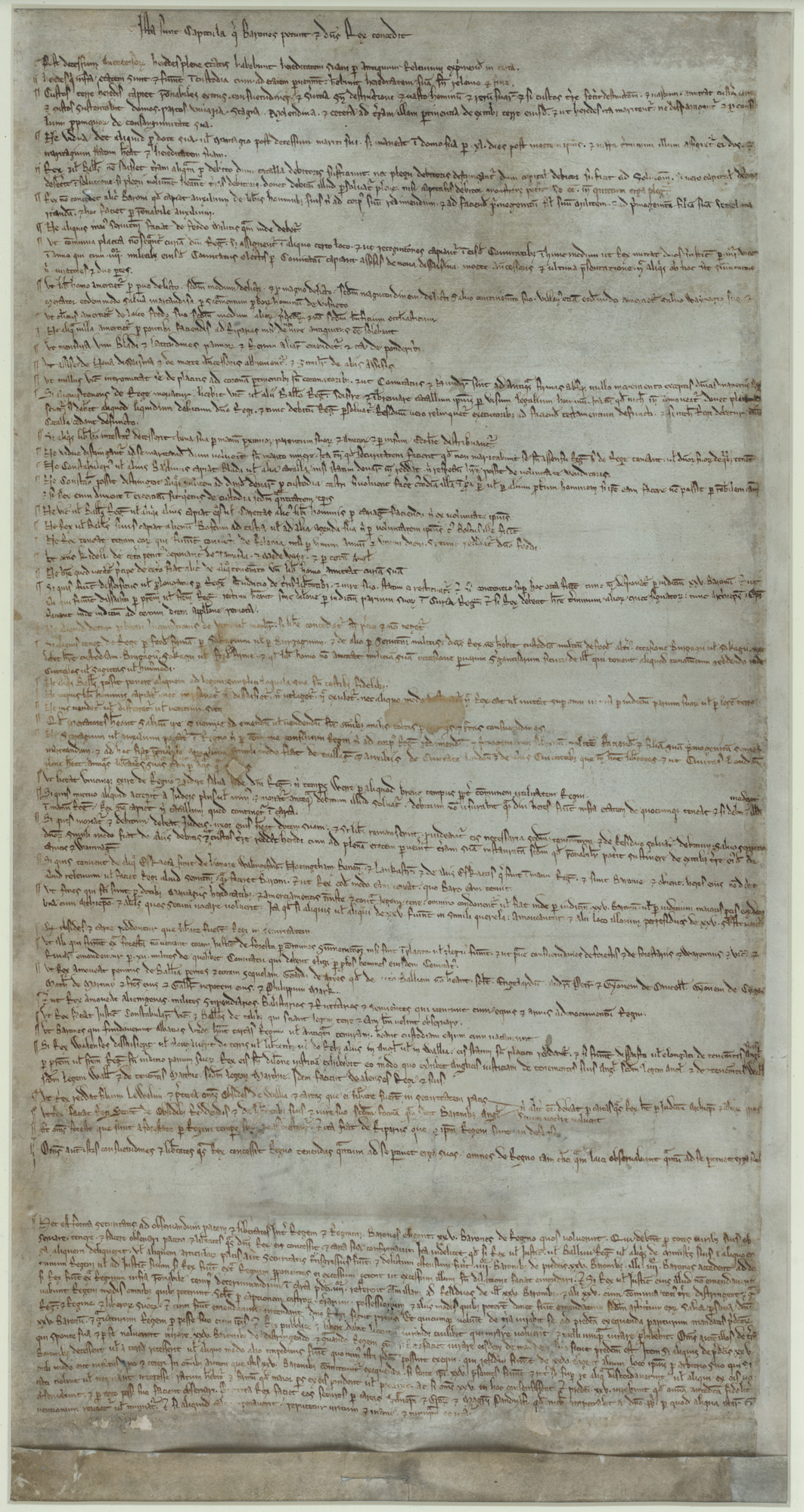


Content and key features
Magna Carta contains clauses dealing with feudal rights, taxation, regulation of scutage and reliefs, and the administration of justice. Two of its best-known principles assert that the king should not act arbitrarily in the seizure of property or the punishment of persons, and that lawful judgment and access to justice must be respected. It also provided for a council of barons to monitor compliance with the charter's terms, reflecting a negotiated limitation on royal authority rather than a broad popular constitution.
Historical context and immediate aftermath
Sealed in a period of political crisis—military losses abroad, fiscal pressure at home, and baronial revolt—Magna Carta was primarily a settlement between King John and his leading opponents. The pope declared the agreement void within months, and conflict continued in the First Barons' War. Nonetheless, the charter was reissued and confirmed in subsequent reigns, gradually gaining legal force through custom and royal endorsement rather than as a single law that remained unchanged.
Legacy and influence
Over centuries the Magna Carta acquired symbolic weight far beyond its immediate medieval provisions. Legal commentators and political leaders cited it as an early source for limits on executive power, for the idea that even rulers are subject to the law, and for certain protections that later developed into modern principles, such as the right to due process. It influenced English common law, the development of Parliament, and constitutional thinking in other countries, including references by thinkers and leaders during the English Civil War and by constitutional framers in the United States. However, many of the charter's specific clauses reflect the social and legal realities of the thirteenth century and do not directly map onto modern rights frameworks.
Notable facts and distinctions
- Magna Carta was intended mainly to protect the interests of the barons and the Church rather than to establish universal rights for all subjects.
- Several original medieval copies of the 1215 charter and of subsequent reissues survive in British collections; they have been studied and conserved as important legal-historical artifacts.
- The charter's authority grew through reissuance, judicial citation, and political appropriation over the centuries, turning a negotiated peace settlement into a symbol of legal restraint on power.
- Clauses often cited today—on lawful judgment and timely justice—are understood as forerunners of concepts such as habeas corpus and due process, though those doctrines developed later.
Further reading
- Primary text and translations
- Biographical context: King John
- Accounts of the baronial rebellion
- Church and clerical interests in 1215
- Runnymede and the site of sealing
- Local history: Surrey and royal politics
- Medieval English law and governance
- Latin documents and legal terminology
- Papal response and annulment
- Magna Carta in the history of England
- Magna Carta's role in ideas of liberty
Note: The Magna Carta's importance lies both in specific legal provisions of its time and in its long-term symbolic role in debates about law, authority, and individual rights. For contemporary scholarship and facsimiles consult the resources and collections listed above.
Questions and answers
Q: What is the Magna Carta?
A: The Magna Carta is a document that was sealed by King John in 1215 after negotiations with his barons and their French and Scots allies at Runnymede, Surrey, England.
Q: What did the Magna Carta establish?
A: The Magna Carta established a council of 25 barons to see John keep to the clauses, including access to swift justice, parliamentary assent for taxation, scutage limitations, and protection from illegal imprisonment.
Q: How did King John feel about the Magna Carta?
A: King John sought approval to break the Magna Carta and denounced it as "not only shameful and demeaning but also illegal and unjust".
Q: Who approved King John's request to break the Magna Carta?
A: King John's spiritual overlord, Pope Innocent III, approved his request to break the Magna Carta.
Q: Why is the Magna Carta considered one of the most important documents ever written?
A: The Magna Carta is still considered one of the most important documents ever written because it inspired the way we view issues of justice and liberty and influenced laws regarding such throughout the world.
Q: How has the Magna Carta influenced English law?
A: The Magna Carta has influenced English law right down to the present day, and is recognized as a cornerstone of the idea of the liberty of citizens.
Q: What is the significance of the Magna Carta in the History of England?
A: The Magna Carta is one of the most celebrated documents in the History of England, and is recognized as a cornerstone of the idea of the liberty of citizens.
Related articles
Author
AlegsaOnline.com Magna Carta — the 1215 Great Charter of English liberties Leandro Alegsa
URL: https://en.alegsaonline.com/art/60611
Sources
- salisburycathedral.org.uk : salisburycathedral.org.uk
- bbc.co.uk : bbc.co.uk/news/uk-23304764