
Macquarie Island: remote subantarctic island and conservation site
Macquarie Island is a remote subantarctic island of Australia, known for its distinctive geology, seabird colonies and strict conservation management as a World Heritage property.
Macquarie Island lies in the Southern Ocean, roughly 1,500 km (932 mi) south‑east of Tasmania and about midway between Australia and Antarctica. The island is narrow and elongated—about 34 km long and 5 km wide—and is uninhabited except for seasonal scientific and conservation staff. It is recognised for both its exceptional geology and its wildlife and is protected as a UNESCO World Heritage Site.
Image gallery
10 Images


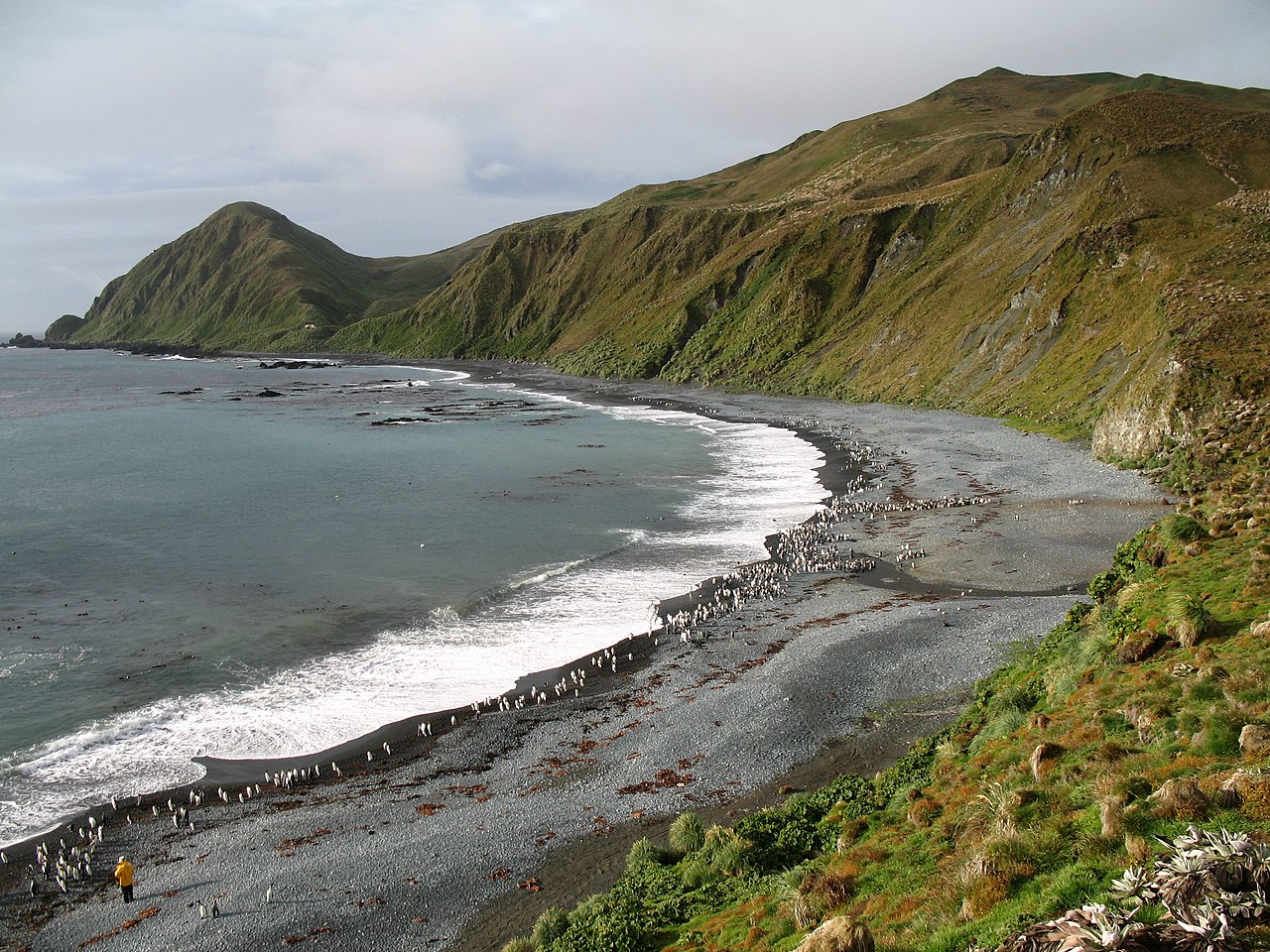


Geography and geology
Macquarie is composed of uplifted oceanic crust and related rocks that reach above sea level, producing rugged cliffs, terraces and steep slopes. Unlike continental islands, its rocks record processes of seafloor formation and tectonic uplift; this geology gives the island scientific value for understanding plate interactions. There are no natural harbours and landing is often difficult because of steep shores and unpredictable weather.
Ecology and wildlife
The island supports large colonies of seabirds and marine mammals. Breeding species commonly reported include several penguin species and numerous seabirds, while seals haul out on rocky beaches. Its tundra‑like vegetation is adapted to cold, windy, and salty conditions. Invasive mammals introduced during the 19th and 20th centuries caused severe ecological damage, but intensive eradication and rehabilitation programs in recent decades have reduced or removed rabbits and rodents and allowed native plants and animals to begin recovering.
Human history and use
European visitors first reached the island in the early 19th century, during the era of sealing and whaling; historical records attribute European discovery to Captain Hasselborough in 1810. Those industries had major impacts on seal populations and the island's ecology. In the 20th century the island became the focus of scientific research, meteorology and conservation work rather than commercial exploitation.
Conservation and management
Macquarie Island is managed to preserve its unique geological features and biodiversity. Conservation measures include strict biosecurity to prevent new invasive species, restoration of native vegetation, monitoring of seabird and seal populations, and limited, controlled access for research. The island's protected status recognises both its natural values and the need for careful human stewardship.
Visiting and significance
There is no permanent civilian population and access is by sea only; visits are normally limited to research, conservation work or regulated eco‑tourism under strict controls. The island is notable to geologists, biologists and conservationists for the combination of exposed oceanic rocks and recovering subantarctic ecosystems, making it an important natural laboratory for scientific study.
- Location: southern subantarctic oceanic region (Southern Ocean).
- Dimensions: approximately 34 km by 5 km.
- Human presence: seasonal research and maintenance teams, no permanent settlement.
- Protection: designated as a global heritage and conservation site (UNESCO — World Heritage).
Questions and answers
Q: Where is Macquarie Island located?
A: Macquarie Island is located in the Southern Ocean, approximately 1,500 km (932 mi) southeast of Tasmania and halfway between Australia and Antarctica.
Q: When did Macquarie Island become a World Heritage Site?
A: Macquarie Island became a UNESCO World Heritage Site in 1992.
Q: How big is Macquarie Island?
A: Macquarie Island is approximately 34 km (21 mi) long and 5 km (3 mi) wide.
Q: Who discovered Macquarie Island?
A: Macquarie Island was first discovered in July 1810 by Captain Hasselburgh, who was searching for places to hunt whales and seals.
Q: Do people live on Macquarie Island?
A: No, there are no people living on Macquarie Island.
Q: How can someone get to Macquarie Island?
A: The only way to get to Macquarie Island is by sea, as there are no harbors to dock a ship.
Q: Why was Macquarie Island important for hunters?
A: Macquarie Island was important for hunters because it was a place where they could hunt whales and seals.
Related articles
Author
AlegsaOnline.com Macquarie Island: remote subantarctic island and conservation site Leandro Alegsa
URL: https://en.alegsaonline.com/art/60384
Sources
- whc.unesco.org : "Macquarie Island - UNESCO World Heritage Centre"
- parks.tas.gov.au : "Macquarie Island World Heritage Area"
- parks.tas.gov.au : "Macquarie Island - Animals and Plants"
- unesco.org : "Macquarie Island"