
Machairodontinae — the sabre‑toothed cats
Machairodontinae, an extinct subfamily of Felidae, were the sabre‑toothed cats that lived from the Miocene to the end of the Pleistocene. They show distinctive skull and dental specializations and a global fossil record.
The Machairodontinae were a distinctive group of extinct felids commonly known as sabre‑toothed cats. They are recognized as a sister lineage to the modern Felinae in many classifications and belong to the order Carnivora within vertebrate mammals. Their fossil record spans much of the Neogene and Quaternary, with remains dated from the Miocene epoch through the Pleistocene epoch. Among the best known members is the iconic Smilodon genus, often highlighted in popular descriptions of prehistoric predators (Smilodon (popularly)). The group is often discussed in relation to the broader cat family, Felidae, and in studies of their evolutionary relationship (sister‑group relationship).
Image gallery
10 Images



Physical characteristics
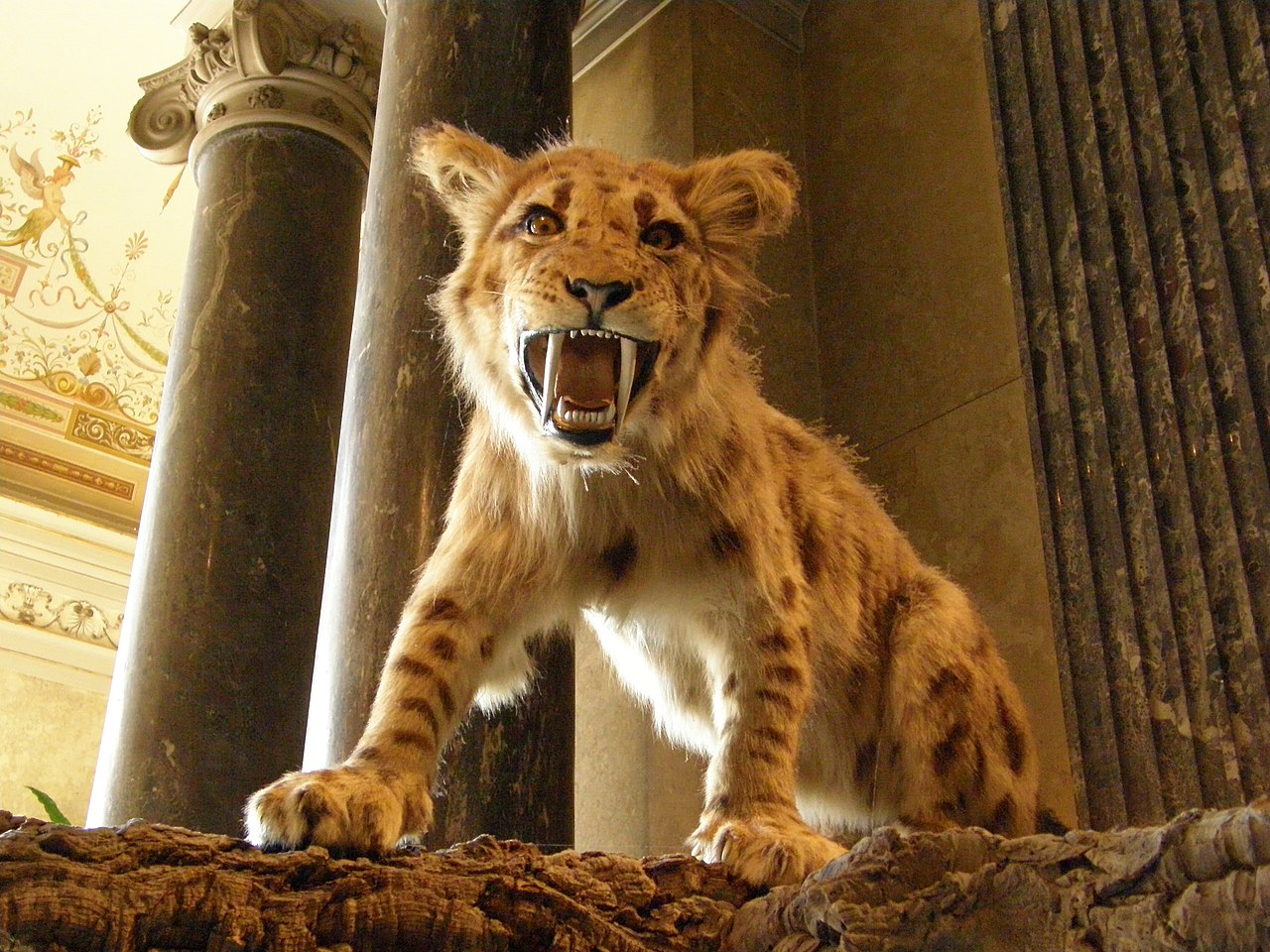
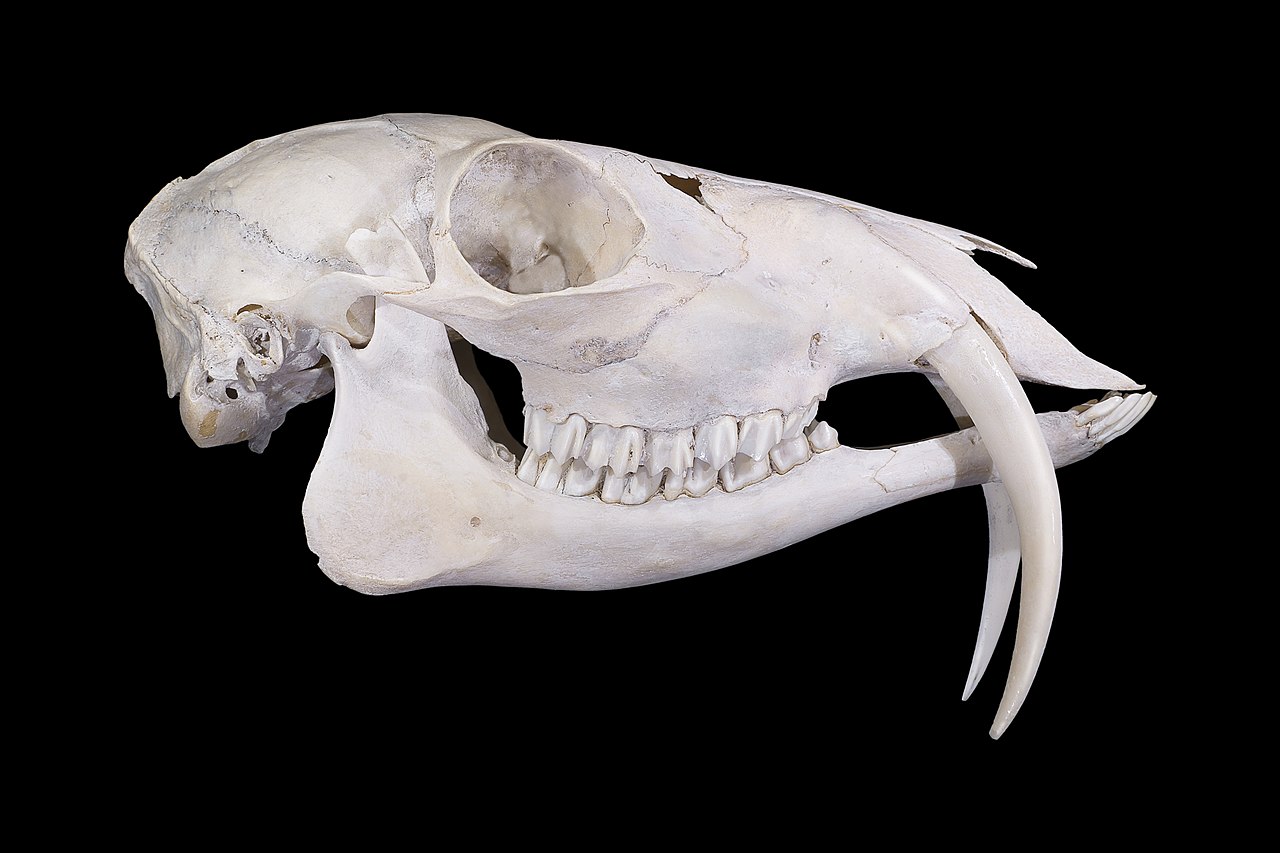
Machairodontines display a set of recurring adaptations that distinguish them from most modern cats. The most notable feature is their enlarged, laterally flattened upper canines, which in some species were extremely long and serrated. Their skulls allowed a wide gape and their incisors and jaw musculature were arranged to support a precision killing bite. Many species also had robust forelimbs, short tails, and reinforced shoulder girdles consistent with power‑based ambush hunting rather than long‑distance pursuit.
Major groups and examples
Several genera illustrate the diversity within Machairodontinae. In addition to Smilodon, other well‑known genera include Homotherium, which had somewhat shorter canines and a more cursorial limb build. Different tribes and lineages within the subfamily show a range of tooth and body proportions, suggesting varied hunting styles and prey preferences. The sabretooth condition itself evolved independently in multiple carnivoran lineages, so the term sabretooth adaptation is used broadly to describe a convergent suite of traits rather than a single evolutionary event.
Fossil distribution and palaeoecology
Fossils attributed to Machairodontinae have been recovered from many continents, indicating a wide geographic distribution across Asia, Africa, North America, South America, and Europe. Well‑preserved assemblages, such as those from tar seeps and cave deposits, provide snapshots of their ecology and interactions with contemporaneous herbivores. These sites have been essential for reconstructing hunting behavior, seasonality, and population structure.
Behavior, diet and hunting
Evidence from limb bones, tooth wear, and associated prey remains indicates that many machairodontines were specialized predators of large vertebrates. Their anatomy suggests ambush or short‑range attack strategies: using strong forelimbs to restrain prey before delivering targeted killing bites with elongated upper canines. Palaeopathological studies reveal healed injuries and social signals that some researchers interpret as evidence for group behavior, though sociality in these cats remains debated.
Extinction and scientific significance
Machairodontinae persisted until the late Pleistocene, and their disappearance about 10,000–11,000 years ago coincides with major climatic changes and megafaunal turnovers. The relative contributions of climate shifts, changing prey communities, and human hunting pressure are active areas of research. Today, machairodontines are key to understanding predator evolution, functional morphology, and Pleistocene ecosystems. Their fossils, including famous assemblages from places such as the sister‑group discussion and repositories that house Smilodon material, continue to inform comparative anatomy and biomechanics studies across carnivores.
- Taxonomic context: see Felidae and the broader Carnivora.
- Geologic range: from the Miocene to the Pleistocene.
- Representative genera: Smilodon, Homotherium, among others.
- Distribution: records across Asia, Africa, North America, South America, Europe.
- Functional traits: elongated canines, wide gape, robust forelimbs, convergent sabretooth designs.
For further reading and specimen databases, consult specialist literature and museum collections that catalogue machairodontine finds and their stratigraphic contexts (see links to major repositories and reviews: Felinae resources, mammal databases, and comparative studies of Homotherium and Smilodon).
Questions and answers
Q: What are the Machairodontinae?
A: The Machairodontinae are a subfamily of mammalian carnivora of the family Felidae (true cats) and were the last surviving group of sabre-toothed cats.
Q: What is the relationship between Machairodontinae and felines?
A: The Machairodontinae are a sister group of the felines (Felinae).
Q: Where did Machairodontinae live?
A: Machairodontinae lived in Asia, Africa, North America, South America, and Europe from the Miocene to the Pleistocene.
Q: How long did Machairodontinae survive?
A: Machairodontinae survived from about 23 million until about 11,000 years ago.
Q: What is the famous genus within the Machairodontinae subfamily?
A: The famous genus within the Machairodontinae subfamily is Smilodon.
Q: Were all cats in the Machairodontinae subfamily the same?
A: No, not all cats in the Machairodontinae subfamily had long canines. Homotherium was a cat with canines that were not as long.
Q: Were sabretoothed cats successful predators?
A: Yes, it is evident that sabretoothed cats were successful as ambush predators, as the sabretooth adaptation evolved a number of times in different carnivore lines.
Related articles
Author
AlegsaOnline.com Machairodontinae — the sabre‑toothed cats Leandro Alegsa
URL: https://en.alegsaonline.com/art/60324
Sources
- paleodb.org : Paleobiology Database: Machairodontinae basic info
- doi.org : online