
Macedonia (Greece)
Region of northern Greece centered on Thessaloniki, with distinct geography, history from ancient Macedon to modern administration, and economic and cultural importance.
Overview
Macedonia is a large historical and geographical region in northern Greece, extending from the Pindus mountain range in the west toward the Aegean coast in the south and the borders with Albania, the Republic of North Macedonia and Bulgaria in the north and northeast. Its largest city and chief economic and cultural center is Thessaloniki. The modern Greek region of Macedonia corresponds to a portion of the wider historical area known as Macedon or Macedonia in antiquity and is organized today into several administrative peripheries.
Image gallery
10 Images




Geography and subdivisions
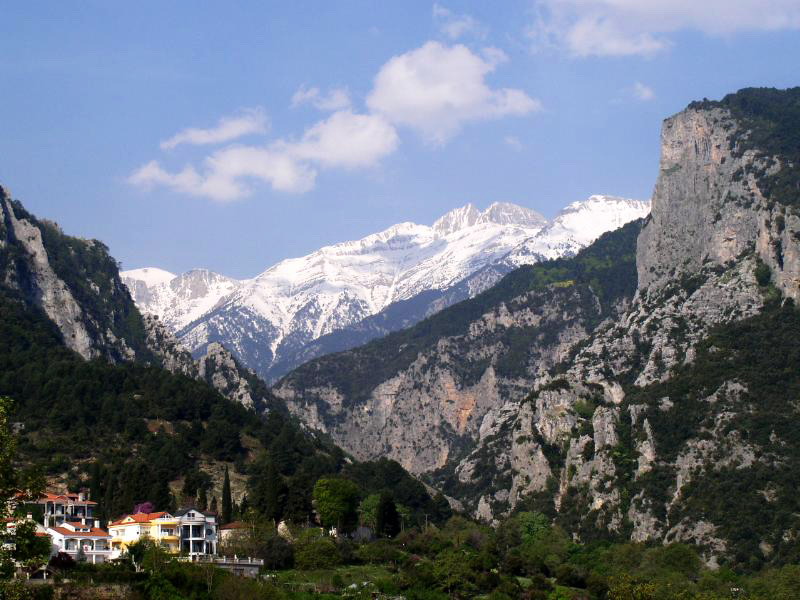
The landscape of Greek Macedonia is varied: rugged mountains, interior plains and a long Aegean coastline. Major geographic features include the Pindus Mountains to the west, the river Nestos to the east, and coastal peninsulas such as Chalkidiki. Administratively the area is divided into three primary peripheries: Western Macedonia, Central Macedonia and East Macedonia and Thrace. Each periphery contains regional units and municipalities responsible for local government.
- Principal city: Thessaloniki, a major port and cultural hub.
- Other important urban centers: Kavala, Kozani, Serres, Kilkis.
- Bordering regions and countries: Epirus and Thessaly (within Greece), Albania, the Republic of North Macedonia, and Bulgaria.
History and identity
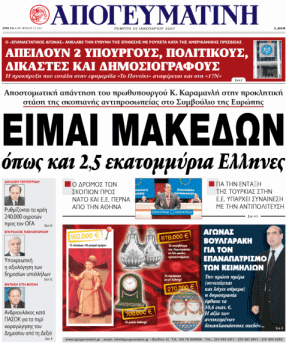
Macedonia has deep historical roots. It was the core of the ancient kingdom of Macedon, associated with figures such as Philip II and Alexander the Great and with archaeological sites like Pella and Vergina. Over centuries the region experienced Roman, Byzantine and Ottoman rule before becoming part of the modern Greek state in the early 20th century. In the late 20th and early 21st centuries the name "Macedonia" also figured in international diplomacy and identity, culminating in a bilateral agreement that led the neighboring country to adopt the name "Republic of North Macedonia"; this episode is part of a complex modern regional identity.
Economy and society
The economy of Greek Macedonia mixes agriculture, industry, mining and services. Fertile plains grow cereals, tobacco, cotton and other crops; the region has had significant lignite mining and energy production, particularly in the west, alongside manufacturing and food processing. Thessaloniki functions as a major commercial and transportation hub with a busy port and rail links. Tourism is important on the coastal areas and in sites of historical and natural interest such as Mount Olympus and Chalkidiki.
Culture and notable facts
Cultural life in Macedonian Greece includes Orthodox Christian traditions, lively urban festivals in Thessaloniki, and folk song and dance traditions in rural districts. The song often referred to as "Makedonia Xakousti" (Famous Macedonia) is a well-known regional anthem and patriotic hymn sung at public events and ceremonies. Archaeological museums in Thessaloniki and Vergina display finds from the ancient Macedonian kingdom and attract many visitors. For general information, tourism and administrative services consult local portals and cultural guides: regional tourism, cultural heritage, administration.
Practical information and further reading
Visitors and researchers often refer to regional statistics, transport schedules and museum sites. Useful starting points include municipal and regional websites: transport and ports, economic profile, demographic data, and curated history resources about ancient Macedon. For official municipal information on Thessaloniki see the city portal.
Note: This article treats "Macedonia" as the Greek region; it is distinct from the neighboring independent state known as the Republic of North Macedonia.
Questions and answers
Q: What is Macedonia?
A: Macedonia is a historical and geographical region in northern Greece.
Q: How populous is Macedonia compared to other regions in Greece?
A: Macedonia is the second most populous region of Greece.
Q: What are the neighboring regions of Macedonia?
A: Macedonia borders west with Epirus and Thessaly, northwestern with Albania, north with North Macedonia, northeastern with Bulgaria and east with Thrace.
Q: What is the total population of Macedonia according to the 2001 census?
A: According to the 2001 census, the total population of Macedonia is 2,424,765 inhabitants.
Q: How is Macedonia divided?
A: Macedonia is separated into three smaller peripheries: West Macedonia, Central Macedonia and East Macedonia and Thrace.
Q: What is the capital city of Macedonia?
A: The capital city of Macedonia is Thessaloniki with a population of about 1,000,000 inhabitants.
Q: What is the national anthem of Macedonia?
A: The national anthem of Macedonia is Μακεδονία Ξακουστή which means Famous Macedonia.
Related articles
Author
AlegsaOnline.com Macedonia (Greece) Leandro Alegsa
URL: https://en.alegsaonline.com/art/60302
Sources
- statistics.gr : "National Statistical Service of Greece"
- statistics.gr : 2001 census