
Ma'at — Egyptian concept and goddess of truth, order and justice
Ma'at is the ancient Egyptian concept and goddess who personifies truth, balance, law and cosmic order. Central to kingship, religion, and funerary judgment, Ma'at governed morality, social harmony and the universe.
Ma'at is both an abstract principle and a personified deity in ancient Egyptian belief. As an overarching idea she stands for truth, balance, harmony and the proper functioning of the cosmos; as a deity she appears as a woman often shown wearing an ostrich feather. The dual nature of Ma'at—principle and person—meant she shaped ideas about right conduct, statecraft and the relationship between humans and the divine. In art and texts she is frequently called the guarantor of right order and the standard to which gods and people were held accountable. Goddess
Image gallery
10 Images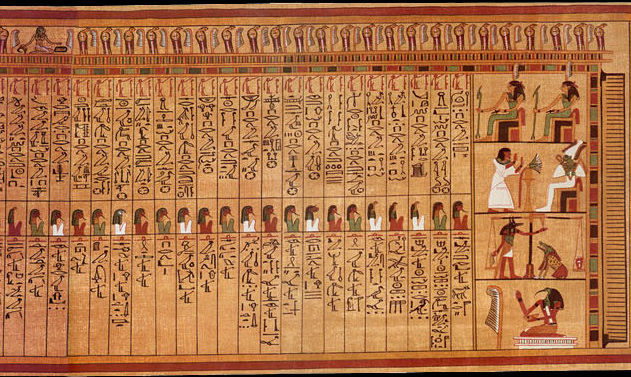


Characteristics and symbols
Iconography associated with Ma'at is distinctive and symbolic. Her most recognized symbol is the ostrich feather, used as an emblem of truth and balance; the feather appears on her head or alone as a hieroglyph. She is sometimes pictured seated or standing with a calm, composed demeanour, and she is linked with scales used in later funerary scenes. Beyond these visuals, Ma'at represents patterns in nature and society: the regular rising of celestial bodies, the cycle of seasons and the ordered flow of time.
Roles in religion and society
Ma'at functioned at several levels. Philosophically, she described moral and social order—what we might call justice or good governance—rather than a detailed legal code. Politically, Egyptian kings presented themselves as upholders of Ma'at, maintaining stability and prosperity by acting in accordance with that principle. In a natural sense, Ma'at was thought to underlie the movement of the heavens and the alternation of weather: the ordered paths of the stars and the recurrence of the seasons were expressions of Ma'at's continuing presence. She is also associated with notions of law and right speech, guiding both human conduct and cosmic balance.
Funerary judgment and the weighing of the heart
One of the most famous roles for Ma'at appears in funerary literature and tomb decoration: the judgment of the deceased in the afterlife. In this scene a deceased person's heart is weighed against the feather of Ma'at to determine whether their life conformed to truth and order. If the heart balanced the feather, the soul could proceed; otherwise, it faced condemnation. This process—set in the Egyptian underworld, often called the Duat—emphasizes how moral conduct and cosmic order were inseparable in Egyptian thought.
History, worship and legacy
Ma'at's importance is evident from early inscriptions and ritual texts: she appears in royal titulary, temple liturgies and wisdom literature. Priests and scribes invoked her in administrative and legal contexts, and pharaohs claimed to rule "in accordance with Ma'at" as a justification for authority. Temples and daily cult practices varied by region, but the ideal of Ma'at persisted throughout Egyptian history, contrasted with the force of chaos or disorder often called isfet. Over centuries Ma'at influenced moral teachings, governance ideals and funerary art, leaving a lasting cultural imprint that scholars still study to understand ancient Egyptian values.
Notable distinctions and modern relevance
- Ma'at differs from a modern codified legal system: she is an ethical-cosmic principle rather than a set of statutes.
- She is paired conceptually with isfet (chaos), the opposite force that must be contained.
- Her imagery—the feather and the weighing—remains widely recognized in studies of ancient religion and in popular representations of Egyptian belief.
For further reading about Ma'at’s symbolism and its role in Egyptian thought, consult specialized studies and museum resources that discuss her iconography, funeral texts and the political uses of her ideal in pharaonic propaganda.
Ma'at as goddess · Ma'at and law · Ma'at and the stars · Ma'at and the seasons · Ma'at in the Duat
Questions and answers
Q: Who is Ma'at in Egyptian mythology?
A: Ma'at is the goddess of law, morality, and justice in Egyptian mythology.
Q: How do you pronounce Ma'at?
A: Ma'at is pronounced as 'Muh-aht'.
Q: What were the responsibilities of Ma'at?
A: Ma'at was responsible for the stars, seasons, and the actions of both people and gods.
Q: Where did the weighing of words take place in Egyptian mythology?
A: The weighing of words took place in the underworld, Duat.
Q: What was the first role of Ma'at in Egyptian mythology?
A: The first role of Ma'at in Egyptian mythology was the weighing of words in the underworld, Duat.
Q: What areas of society did Ma'at govern over?
A: Ma'at governed over law, morality, and justice in Egyptian society.
Q: What was the significance of Ma'at in ancient Egypt?
A: Ma'at played a significant role in maintaining balance and order in ancient Egyptian society.
Related articles
Author
AlegsaOnline.com Ma'at — Egyptian concept and goddess of truth, order and justice Leandro Alegsa
URL: https://en.alegsaonline.com/art/60250