
M1 motorway (England) — overview, history and significance
Major north–south motorway in England linking the London area with the Midlands and northern England. Opened in stages from the late 1950s, it shaped British road travel and freight movement.
The M1 is one of England's principal motorways, forming a primary north–south route that connects the London area with the Midlands and continuing towards northern England. Built in stages from the late 1950s, the M1 played a formative role in the development of the modern British motorway network and remains a vital corridor for commuting, long‑distance travel and freight.
Image gallery
10 Images






Route and characteristics
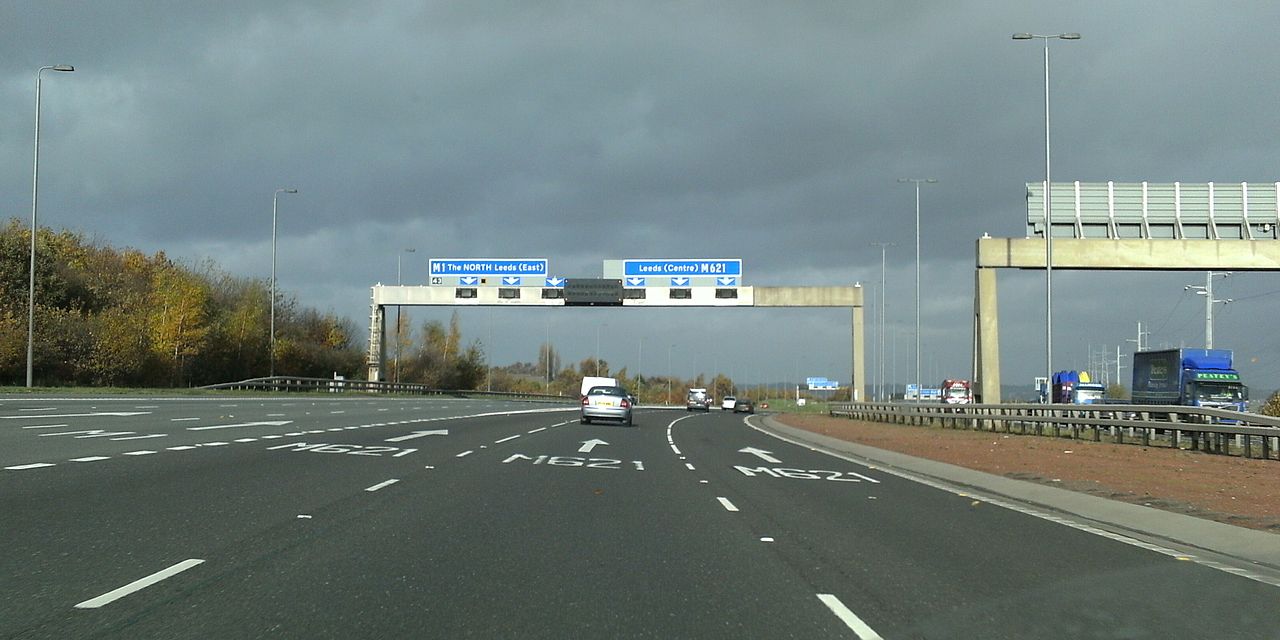
The motorway begins near the outskirts of London and extends northward, passing important commuter and industrial regions en route to cities further north. Along its length it meets several major trunk roads and other motorways, serving as a backbone for regional connections. Key physical features include multiple carriageways, grade-separated junctions, motorway service areas, and a mix of older sections and upgraded smart‑motorway stretches designed to manage capacity and safety.
History and development
The M1 was one of the earliest intercity motorways in the United Kingdom. Constructed in phases, its initial purpose was to create a high‑speed, limited‑access route to relieve pressure on existing A‑roads and to link large urban centres. It followed the earlier Preston bypass, which was the country’s first motorway‑standard road. Over subsequent decades the M1 has been widened, realigned and equipped with modern traffic management systems to accommodate growing demand.
Importance and uses
The motorway carries a mix of traffic: local commuter flows near urban areas, long‑distance private travel, and heavy goods vehicles transporting freight between distribution centres, ports and manufacturing hubs. Service areas provide fuel, food and rest facilities, while nearby park‑and‑ride and public transport links often integrate with motorway junctions to reduce urban congestion.
Notable features and challenges
- Junction network: Numerous junctions connect the M1 to regional roads and other motorways, making it a strategic interchange route.
- Upgrades: Sections have been modernised with variable speed limits, hard shoulder running and intelligent signage to improve traffic flow.
- Environmental and community issues: Construction and widening projects have required mitigation for noise, air quality and landscape impacts.
For planning, traffic updates and historical resources, readers can consult official and specialist sources. See a route overview at route summary, historical background at development history, and operational details at traffic and management. Additional context on its role connecting major cities is available via regional transport pages, while references to early motorway projects that preceded or joined the network can be found at predecessor routes and adjacent motorways. For civic and planning documents relating to the motorway corridor, see planning resources.
Questions and answers
Q: What is the M1 motorway?
A: The M1 motorway is a significant motorway in England that connects London and Leeds.
Q: Which was the first motorway to be built in the UK?
A: The Preston bypass was the first motorway to be built in the UK.
Q: What is the significance of the M1 motorway?
A: The M1 motorway is a crucial motorway in England as it connects two significant cities in the UK, London and Leeds.
Q: Which two cities does the M1 motorway join?
A: The M1 motorway connects London and Leeds.
Q: What is the position of the M1 motorway in the UK?
A: The M1 motorway is the second motorway to be built in the UK, after the Preston bypass.
Q: Which was the first UK motorway that connected two cities?
A: The M1 motorway was the first UK motorway to connect two cities, London and Birmingham.
Q: What is the route followed by the M1 motorway?
A: The M1 motorway connects London and Leeds.
Related articles
Author
AlegsaOnline.com M1 motorway (England) — overview, history and significance Leandro Alegsa
URL: https://en.alegsaonline.com/art/60202
Sources
- maps.google.com : "Driving directions to M1"