
M. C. Escher: Dutch graphic artist known for tessellations and impossible constructions
M. C. Escher (1898–1972) was a Dutch graphic artist celebrated for woodcuts, lithographs and mezzotints that explore tessellation, perspective, infinity and optical paradoxes with striking precision.
Overview
Maurits Cornelis Escher (1898–1972), commonly abbreviated M. C. Escher, was a Dutch graphic artist whose prints and drawings bridged careful draftsmanship and conceptual play. He produced hundreds of prints and thousands of drawings over his career, and became widely known for images that twist perspective, repeat motifs like tiles, and suggest endless or impossible spaces.
Image gallery
10 Images




Style, media and techniques
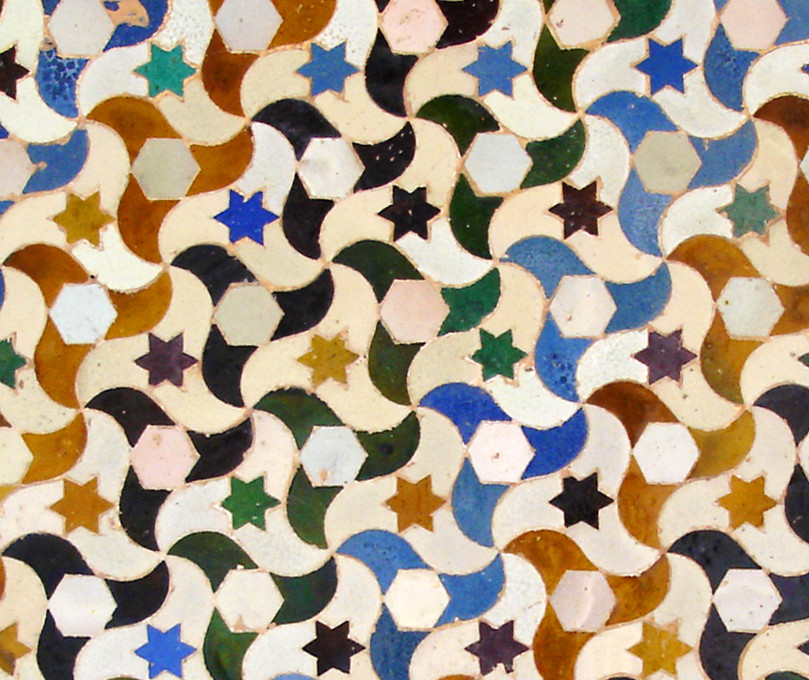
Escher worked primarily in woodcut, wood engraving, lithography and mezzotint. His technique combined meticulous observation—of architecture, plant life and animal forms—with precise control of negative and positive space. Many works were built from repeating motifs (tessellations) in which shapes interlock without gaps, while others use forced perspective to depict paradoxical stairways, reflections, and visual loops.
Themes and notable works
Recurring themes in Escher’s art include tessellation (regular interlocking patterns), explorations of infinity and recursion, contradictory or multiple perspectives, and architectural constructions that defy ordinary spatial logic. Some of his best-known prints are "Drawing Hands," "Relativity," "Ascending and Descending," "Waterfall," and the long, metamorphic sequence known as "Metamorphosis." These images are often studied both as artworks and as visual puzzles.
Career, influences and development
Born in Leeuwarden in the Netherlands, Escher trained as a graphic artist and experimented with different subjects through his life. Early work shows close study of nature and landscapes; later work increasingly emphasized abstract structure and mathematical ideas. Although not a mathematician by training, Escher engaged with mathematical concepts—symmetry groups, tilings, and the visual representation of infinity—and his work attracted mathematicians and scientists interested in visualizing abstract ideas.
Uses, reception and legacy
Escher’s imagery has had broad cultural resonance. Prints and reproductions appear in books, posters, and popular media; his approach influenced fields as varied as visual design, mathematics education, and optical art. Museums and collectors prize original prints, and his work continues to be the subject of exhibitions and scholarly study that examine the crossover between visual art and mathematical thought.
Selected facts and distinctions
- Escher produced several hundred prints and over two thousand drawings and sketches during his life.
- He designed illustrations, murals and applied works such as stamps and tapestries in addition to standalone prints.
- His visual puzzles often encourage viewers to examine assumptions about perspective, scale and continuity.
Further reading and resources
- Official biography and timeline
- Catalogue of prints and works
- Museum collections and exhibitions
- Gallery of woodcuts and lithographs
- Studies on tessellation and symmetry
- Analysis of impossible constructions
- Publications on Escher's mathematical connections
- Examples of applied designs (stamps, tapestries)
- Exhibition history and catalogues
- Bibliography and academic articles
The appeal of Escher’s work lies in its clarity of line and the way it invites close looking: familiar forms are rearranged so the eye must resolve competing interpretations of space. Whether appreciated for their craftsmanship, their puzzle-like qualities, or their connection to geometry, Escher’s prints remain distinctive and widely admired.
Questions and answers
Q: Who was Maurits Cornelis Escher?
A: Maurits Cornelis Escher was a Dutch graphic artist known for his mathematically inspired woodcuts, lithographs, and mezzotints.
Q: What types of artwork is Escher known for?
A: Escher is known for his woodcuts, lithographs, and mezzotints, which often feature impossible constructions, explorations of infinity, architecture, and tessellations.
Q: How many lithographs, woodcuts, and wood engravings did Escher create?
A: Escher made 448 lithographs, woodcuts, and wood engravings during his life.
Q: What other types of art did Escher create in addition to lithographs and woodcuts?
A: Escher also created over 2000 drawings and sketches, and he illustrated books, designed tapestries, postage stamps, and murals.
Q: What inspired Escher during his early career?
A: During his early career, Escher drew inspiration from nature and studied art, landscapes, and insects.
Q: What are some of Escher's most famous drawings?
A: Some of Escher's most famous drawings include Drawing Hands, Relativity, and Flying Fish.
Q: What subject matter were most of Escher's works related to?
A: Most of Escher's works were related to mathematics.
Related articles
Author
AlegsaOnline.com M. C. Escher: Dutch graphic artist known for tessellations and impossible constructions Leandro Alegsa
URL: https://en.alegsaonline.com/art/60183