
LZ 130 Graf Zeppelin II
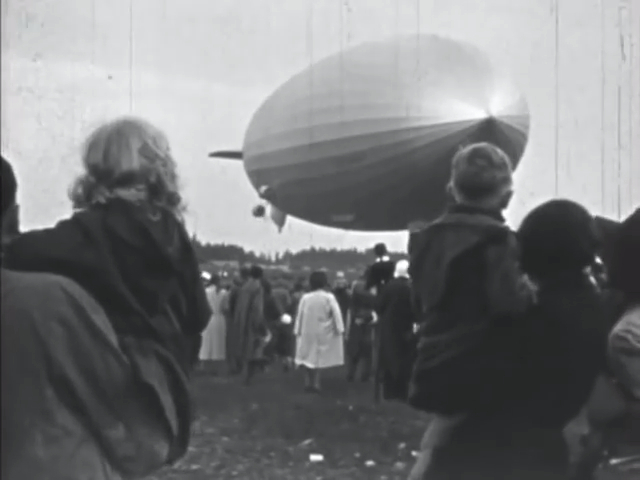
The LZ 130 Graf Zeppelin II was the last large German rigid airship completed between World Wars. Built on Hindenburg plans, it was modified after 1937 to use helium but ultimately operated with hydrogen.
Overview
The LZ 130 Graf Zeppelin II was the final large rigid passenger airship produced in Germany during the interwar period. Constructed from the same basic design as its better-known sister ship, the LZ 129 Hindenburg, it was intended to continue the era of transatlantic luxury air travel. The loss of the Hindenburg in 1937 altered both public confidence and technical plans for LZ 130. The ship's completion and entry into service were delayed while designers sought a safer lifting-gas solution.
Image gallery
5 Images



Design and characteristics
The Graf Zeppelin II retained the rigid-framework concept that defined Zeppelin airships: a duralumin lattice hull with multiple internal gas cells to provide buoyancy, passenger accommodations, and crew and machinery compartments. To address safety concerns after the Hindenburg disaster, engineers revised the internal arrangements and planned changes to use helium instead of hydrogen. Because helium provides less lift than hydrogen, passenger capacity was reduced from the Hindenburg's luxury complement to about forty passengers, and internal arrangements were modified to save weight and reduce gas leakage.
History and operational use
Work on LZ 130 intensified after 1937 with the intention of implementing the lessons of the Hindenburg accident. The ship's first flights were postponed while new fittings and tighter gas containment measures were installed. Although designed for passenger and mail service similar to its predecessor, political events and the changing priorities of the late 1930s curtailed regular commercial operations. The Graf Zeppelin II carried out a series of test, promotional and government-support flights rather than sustained transatlantic schedules, reflecting both technical constraints and shifting national priorities.
Lift gas and political context
A major technical issue for LZ 130 was the choice of lifting gas. Helium is inert and non-flammable, making it a safer alternative to hydrogen, but it also delivers less buoyant force per volume. Efforts were made to adapt the ship to helium by tightening gas cells and reducing payload, yet helium supplies were controlled geopolitically. The United States, which held the largest reserves of commercial helium, declined to export it to Germany; as a result the Graf Zeppelin II ultimately operated with hydrogen despite the earlier plans to use helium. For contrast, see general differences between helium and hydrogen in aviation contexts in many sources (helium, hydrogen).
Legacy and notable facts
- The LZ 130 represents the end of an era: it was the last of the large passenger Zeppelins built in Germany before the outbreak of the Second World War.
- Its construction and limited service illustrate how a single high-profile accident can change public perception, regulatory responses, and technical decisions in aviation.
- Although the Graf Zeppelin II never achieved the sustained transatlantic commercial career envisioned for its class, it remains an important example of interwar airship design and the interaction of technology with international politics.
After a brief operational life oriented toward testing and state-sponsored missions, the ship was removed from service as wartime needs overtook civilian airship programs and materials were redirected. Today the LZ 130 is remembered alongside the Hindenburg as part of the dramatic rise and fall of passenger rigid airships in the first half of the 20th century.
Questions and answers
Q: What is the LZ 130 Graf Zeppelin II?
A: The LZ 130 Graf Zeppelin II was the last Zeppelin built in the time between World War 1 and World War 2.
Q: What was the cause for modifying the LZ-130?
A: The LZ-130 was modified to use helium after the LZ-129 Hindenburg crash, delaying her first flight.
Q: How was LZ-130 modified to use helium?
A: LZ-130 was modified to not leak helium because helium provides less lift than hydrogen.
Q: What effect did using helium have on LZ-130's passenger capacity?
A: LZ-130’s passenger capacity was reduced from the 72 carried by Hindenburg to just 40 due to the use of helium.
Q: Why was the airship filled with hydrogen instead of helium?
A: The United States refused to sell any helium to Germany, so the airship was filled with hydrogen anyway.
Q: Why was the use of helium important?
A: The use of helium was important because it is rare and expensive.
Q: Was there another airship built from the same blueprints as LZ-130?
A: Yes, LZ-130 was built from the same blueprints as its sister the LZ-129 Hindenburg.
Related articles
Author
AlegsaOnline.com LZ 130 Graf Zeppelin II Leandro Alegsa
URL: https://en.alegsaonline.com/art/60172