
Lyrebird (Menura): Australia's ground-dwelling mimic
Lyrebirds are two species of ground-dwelling Australian birds in the genus Menura, renowned for the male's ornate tail and extraordinary vocal mimicry. They inhabit eastern forests and have ecological and cultural importance.
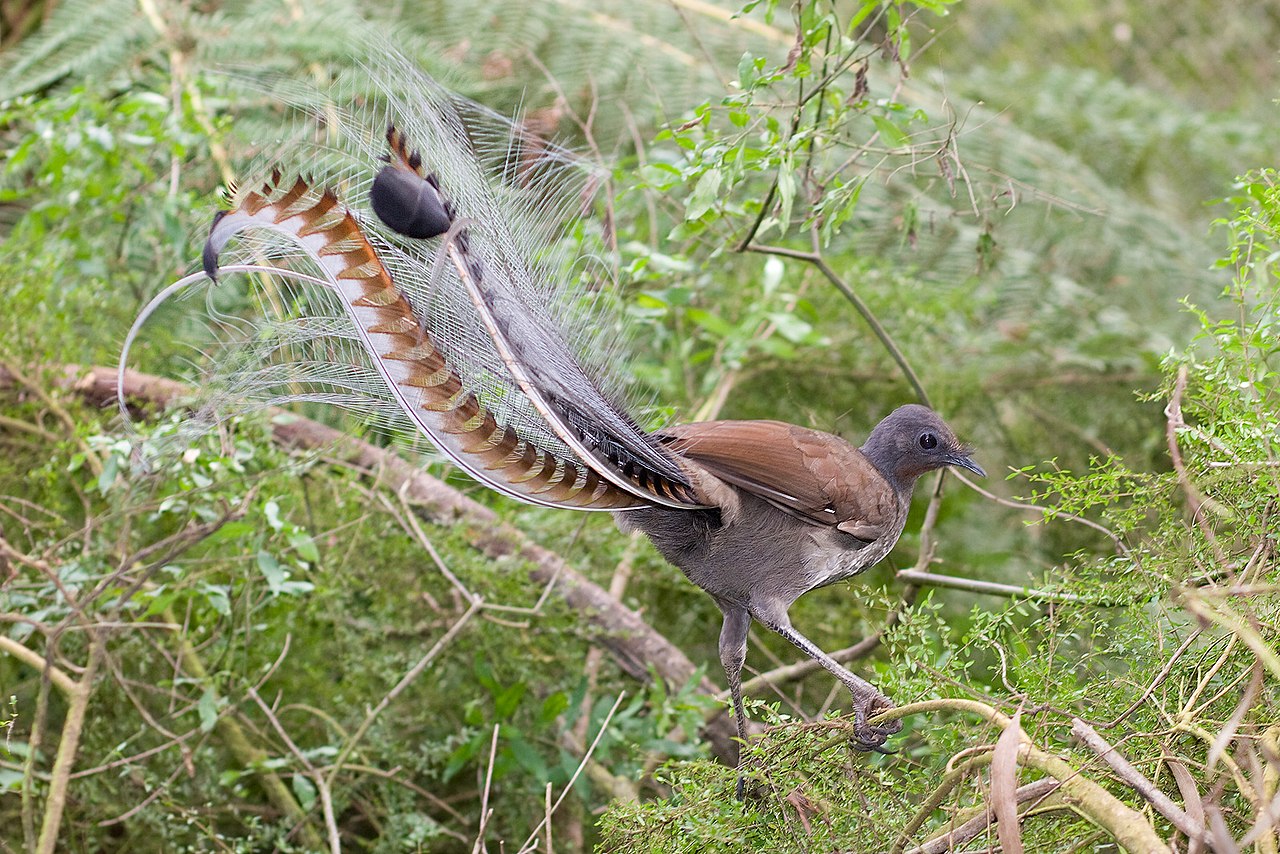
The lyrebird is a distinctive ground-dwelling bird native to eastern Australia, represented by two species in the genus Menura: the superb lyrebird (Menura novaehollandiae) and Albert's lyrebird (Menura alberti). Both species are celebrated for the male's ornate tail feathers and an exceptional ability to imitate a wide range of natural and man-made sounds. Observers have long noted their capacity to reproduce other bird calls and a variety of mechanical noises.
Image gallery
8 Images



Identification and behaviour
Lyrebirds are medium-to-large passerines with strong legs adapted for scratching through leaf litter and soil to find invertebrates. Males develop long, elaborate tail feathers used in courtship displays; the tail can be fanned and vibrated while the bird sings. Their vocal repertoire includes imitations of other birds and the surrounding soundscape, a trait that makes them a focus of studies in animal behaviour and vocal learning. Outside the breeding season they are largely shy and terrestrial.
Habitat, distribution and ecology
Lyrebirds inhabit dense forest and rainforest understoreys in eastern Australia. Their natural range covers parts of southeastern mainland Australia, including many areas of Victoria, New South Wales and southeast Queensland. Populations were introduced to Tasmania in the 19th century; for historical context see Tasmania introduction history. General regional information about Australian fauna can be found at Australia overview, while broader bird resources and species accounts are available via bird resources and specific species guides. The genus reference is summarised at Menura genus.
Ecologically, lyrebirds play a role in mixing and aerating leaf litter as they forage, thereby influencing invertebrate communities and the ground layer of forest ecosystems. They feed primarily on insects and other small invertebrates found in the soil and beneath fallen leaves.
Conservation and cultural significance
Lyrebirds hold a prominent place in Australian culture and natural history because of their mimicry and theatrical displays. One species, Albert's lyrebird, has a much smaller geographic range and is more sensitive to habitat loss and disturbance. Threats to lyrebirds include habitat clearing, altered fire regimes and introduced predators; conservation efforts concentrate on protecting and restoring forest habitat, monitoring populations and managing threats at local and regional levels. For further reading and resources see the links above.
- Distinctive features: long ornate tail (male), ground foraging, complex vocal mimicry.
- Species: superb lyrebird and Albert's lyrebird with differing ranges and conservation needs.
- Role: ecological influence on leaf-litter communities and a strong cultural symbol in Australia.
Questions and answers
Q: What is a lyrebird?
A: A lyrebird is a type of ground-dwelling bird found in Australia.
Q: How many species of lyrebirds are there?
A: There are two species of lyrebirds in the genus Menura.
Q: Where do lyrebirds live?
A: Lyrebirds are found in forests, especially rainforests, in eastern Australia. They have also been introduced to Tasmania.
Q: In which Australian states are lyrebirds found?
A: Lyrebirds are found in two National Forest areas of Victoria, New South Wales, and southeast Queensland.
Q: Are lyrebirds a threatened species?
A: No, lyrebirds are not currently considered to be threatened.
Q: What is unique about the lyrebird's appearance?
A: Lyrebirds have long tails that are shaped like a lyre or harp, which is where they get their name.
Q: What do lyrebirds eat?
A: Lyrebirds are omnivorous and eat insects, small reptiles, and seeds.
Related articles
Author
AlegsaOnline.com Lyrebird (Menura): Australia's ground-dwelling mimic Leandro Alegsa
URL: https://en.alegsaonline.com/art/60148
Sources
- bbc.co.uk : Attenborough, David The life of birds
- nfsa.gov.au : Sounds of Australia