
Luxembourg franc
Former currency of Luxembourg from 1848 until the euro adoption; closely linked to the Belgian franc and replaced at a fixed conversion rate; ISO code LUF, symbol fr. or F.
The Luxembourg franc was the national currency of the Grand Duchy of Luxembourg from the mid‑19th century until it was supplanted by the euro. It served as the everyday medium of exchange for residents and businesses and was closely tied to the money of neighbouring Belgium throughout much of its existence. The currency is commonly abbreviated as fr. or F and has the ISO 4217 code LUF.
Image gallery
6 Images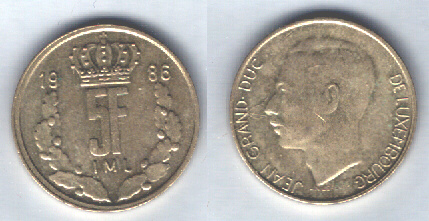


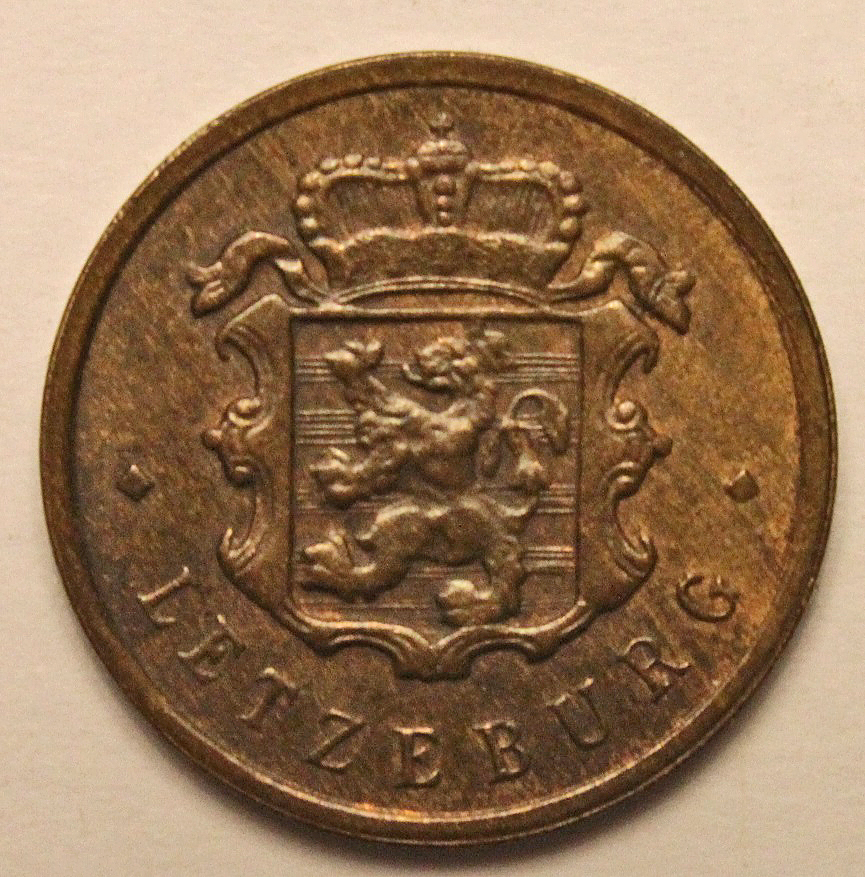

Characteristics and denominations
The Luxembourg franc was divided into 100 smaller units, commonly called centimes (or cents). Coins and banknotes were issued in a range of denominations intended for routine transactions and larger payments. Typical coin and note values changed over time, but the system followed the standard decimal structure used by many European currencies of the period.
Monetary relations and legal status
For much of the 20th century Luxembourg maintained a close monetary relationship with Belgium. Under agreements within the Belgium–Luxembourg economic framework the two currencies circulated side by side and were often treated as equivalent in practice. Belgian and Luxembourg notes and coins could commonly be used across the border, reflecting the integrated economies of the two countries.
History and development
The Luxembourg franc was introduced in the 19th century and evolved through periods of political change, war and economic integration. Over time the designs of coins and banknotes reflected national symbols and prominent figures. Like other European currencies, the franc was modernized through new alloys for coins and updated banknote security features during the 20th century.
Replacement by the euro
Luxembourg joined the euro area when the euro was introduced for non‑cash accounting on 1 January 1999; euro cash (notes and coins) entered circulation later. The Luxembourg franc was exchanged for euros at a fixed conversion rate when the changeover was made official. The conversion was set at a precise rate equivalent to a little over 40 francs per euro. The euro is commonly represented by the symbol € and is now the sole legal tender in Luxembourg.
Legacy and collecting
Today the Luxembourg franc survives in banknotes and coins held by collectors and in historical records. Old franc pieces are of interest to numismatists because they show Luxembourg's political history, national emblems and occasional commemorative designs. Information for collectors and historical overviews can be found through national archives and numismatic references.
Further reading and references
- Overview of the Luxembourg franc
- Luxembourg: country profile and currency history
- Origins and 19th‑century monetary reforms
- Euro introduction and transition dates
- Belgium–Luxembourg monetary ties
- Regional economic context
- Currency symbols and abbreviations
- Key dates in Luxembourg financial history
- Information on the euro and conversion
Questions and answers
Q: What is the Luxembourg Franc?
A: The Luxembourg Franc was the currency used in Luxembourg from 1848 to 1999.
Q: Which other country besides Luxembourg used the Luxembourg Franc?
A: Belgium was another country that used the Luxembourg Franc.
Q: What is the symbol for the Luxembourg Franc?
A: The symbol for the Luxembourg Franc is fr. or F.
Q: When was the Luxembourg Franc replaced by the Euro?
A: On January 1, 1999, the Luxembourg Franc was replaced by the Euro (€).
Q: How does the value of 1 Euro compare to the value of Luxembourg Francs?
A: 1 Euro is equal to about 40 Luxembourg Francs.
Q: How long was the Luxembourg Franc in circulation for?
A: The Luxembourg Franc was in circulation for more than 150 years, from 1848 to 1999.
Q: What is the full name of the currency that replaced the Luxembourg Franc?
A: The currency that replaced the Luxembourg Franc is called the Euro (€).
Related articles
Author
AlegsaOnline.com Luxembourg franc Leandro Alegsa
URL: https://en.alegsaonline.com/art/60041