
Luna 1 — Soviet first probe to reach the Moon's vicinity and enter solar orbit
Luna 1 (Mechta) was the Soviet Union's first Luna programme probe. Launched in 1959, it passed near the Moon, entered heliocentric orbit and made early measurements of the space environment.
Overview
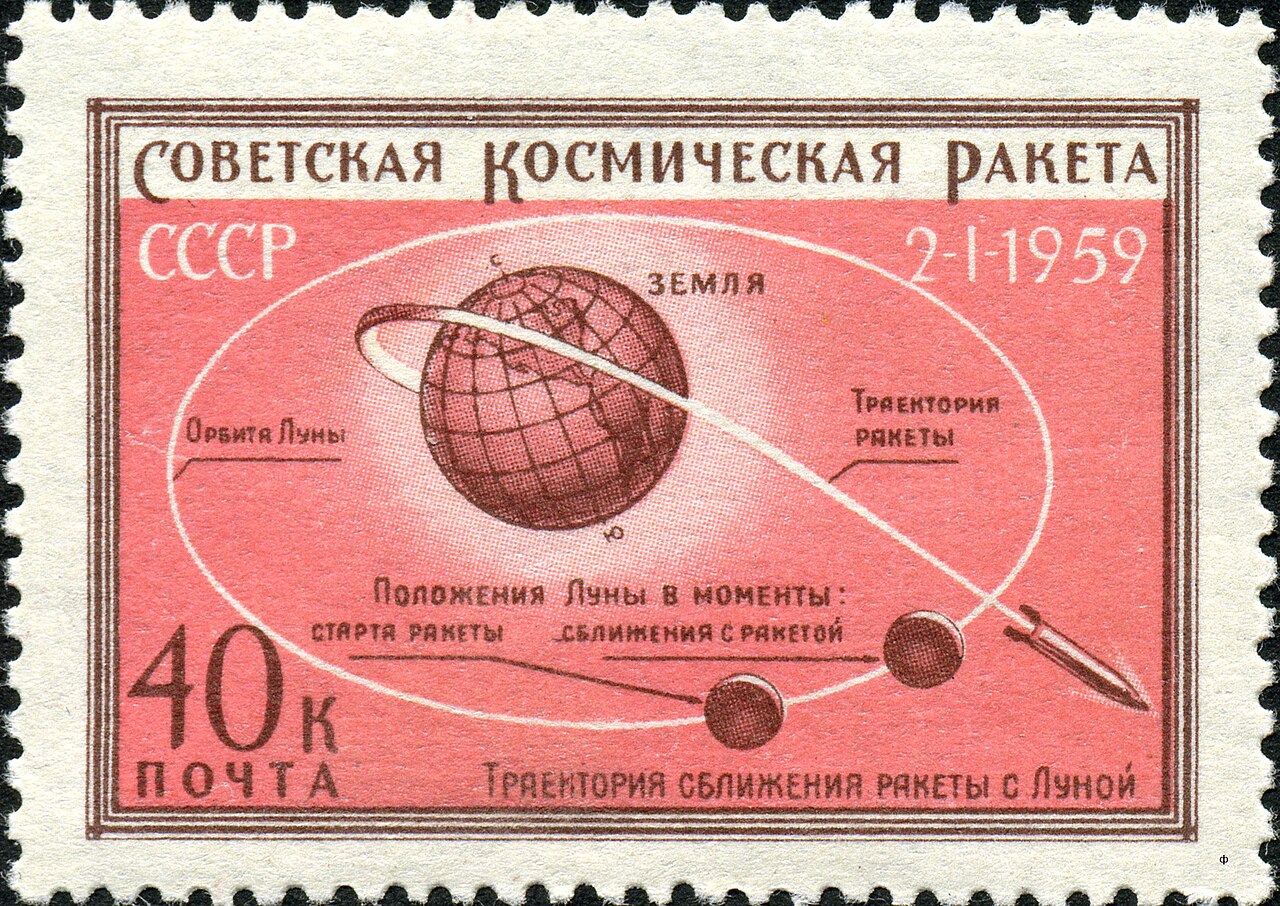
Luna 1, nicknamed Mechta (Мечта) and sometimes called the First Cosmic Ship, was an early Soviet space probe launched as the inaugural mission of the Luna programme. It was intended to impact the Moon but instead passed near the lunar surface and became the first human-made object to reach escape velocity from Earth and enter orbit around the Sun. The spacecraft is widely cited as a major early achievement of the Soviet Union space effort.
Image gallery
4 Images


Design and instruments
The probe carried a small suite of scientific instruments to study the near-Earth and cislunar environment. Instruments measured charged particles, micrometeorites and the magnetic field, and the mission included an experiment to release a visible gas cloud so observers on Earth could track the vehicle. These payload elements were intended to probe both the transit to the Moon and its immediate surroundings.
Mission profile and outcome
Luna 1 launched on a trajectory toward the Moon with the goal of striking its surface. A guidance error and propulsion shortfall caused it to miss impact; instead it flew past the Moon at close range and continued into heliocentric orbit, becoming the first artificial object to travel into orbit around the Sun. During transit the spacecraft was monitored and tracked from Earth and was observed using the deliberately released gas cloud.
Scientific results
The probe returned several important early measurements of the space environment. It detected a stream of charged particles flowing outward from the Sun, consistent with what is now called the solar wind, and provided evidence that the Moon lacks a strong global magnetic field and extensive atmosphere. Luna 1 also characterized particle fluxes in near-Earth space and contributed data on micrometeoroid impacts.
Legacy and significance
Luna 1 established several firsts in space exploration: it was the first spacecraft of the Luna programme, the first to reach the vicinity of the Moon and the first to enter an independent orbit around the Sun, sometimes described as the first artificial planet. Its instrumentation and experimental techniques guided later lunar and interplanetary probes. The mission is frequently highlighted as an early symbolic and technical success for Soviet space achievements.
Notable facts and further reading
- The probe is often referred to in translated sources as Dream or Mechta (Dream).
- It demonstrated practical methods for tracking and observing uncrewed probes from Earth, including the use of a released tracer cloud.
- Contemporary and retrospective accounts discuss its discoveries and place in early space history; see archival and scholarly sources for detailed instrumentation lists and mission telemetry (probe history, lunar context, scientific papers).
Questions and answers
Q: What is Luna 1?
A: Luna 1 is a space probe that was launched by the Soviet Union and was the first spacecraft to reach the Moon.
Q: Was Luna 1 part of a larger program?
A: Yes, Luna 1 was the first mission in the Luna Program.
Q: What were some of the key scientific discoveries made by Luna 1?
A: The text does not provide information about the specific scientific discoveries made by Luna 1.
Q: How is Luna 1 viewed in terms of the Soviet Union's space program?
A: Luna 1 is considered one of the best achievements of the Soviet Union's space program.
Q: What were some of the other names given to Luna 1?
A: Luna 1 was also known as the First Cosmic Ship, Cosmic Rocket, and Mechta (which means "Dream" in Russian).
Q: When was Luna 1 launched?
A: The text does not provide information about the date of Luna 1's launch.
Q: What was the purpose of Luna 1's mission?
A: The text does not provide information about the specific purpose of Luna 1's mission, but it is likely that it was to gather data and study the Moon.
Related articles
Author
AlegsaOnline.com Luna 1 — Soviet first probe to reach the Moon's vicinity and enter solar orbit Leandro Alegsa
URL: https://en.alegsaonline.com/art/59911