
Lullaby (cradle song)
A lullaby is a gentle song used to soothe infants and young children to sleep; it is a widespread cultural form with characteristic rhythms, simple melodies, and both folk and classical manifestations.
Overview
A lullaby is a short song sung to soothe an infant or young child and to encourage sleep. Known also as a cradle song, the form appears in virtually every culture and tradition. Lullabies are typically performed by a caregiver, most often a parent, but they may also be rendered by older siblings, professional singers, or recorded media. Their primary functions are calming the listener, signaling bedtime, and reinforcing attachment between singer and child. For summaries of related research and practice see infant sleep resources and child development guides.
Image gallery
3 Images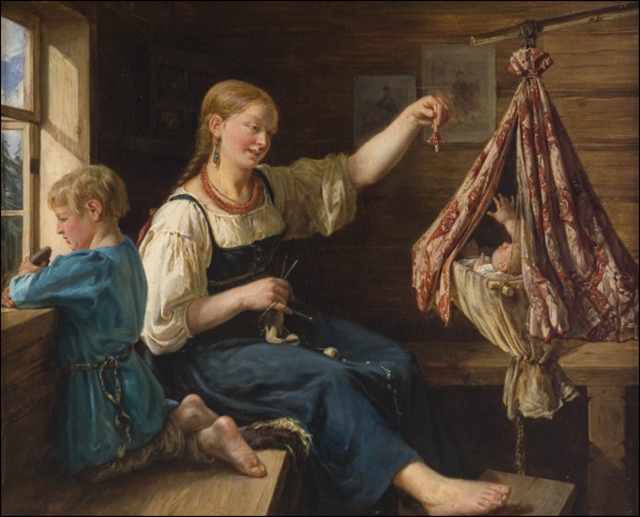


Musical characteristics
Lullabies usually feature a slow tempo, repetitive phrases, simple contours and a steady, rocking rhythm that mirrors the motion of a cradle or a caregiver's arms. Melodies are often diatonic and narrow in range, making them easy to remember and to sing quietly. Harmony, when present, tends to be straightforward and supportive rather than tension-filled. These qualities make lullabies effective at lowering arousal and providing predictability for a sleeping child. The term berceuse is the French name for a lullaby; it is commonly used in classical repertoire (berceuse).
History and development
As an oral tradition, lullabies have ancient roots and are passed down within families and communities. In many folk traditions they also carry cultural stories, local imagery and idioms of care. From the 18th century onward, composers in the classical tradition adapted the genre into instrumental and art-song settings, sometimes titling pieces "Lullaby" or "Berceuse." Notable examples from the concert repertoire include Johannes Brahms' famous "Wiegenlied" (often called Brahms' Lullaby) and piano works by Frédéric Chopin and Gabriel Fauré; for background on composers and repertoire see classical composers, classical music context and specific notes on Chopin, Fauré and piano music (piano).
Uses and effects
Beyond inducing sleep, lullabies are used to regulate infants' emotions, mark transitions (for example, from play to sleep), and transmit language and cultural values. Developmental and music-therapy practitioners note that singing to babies strengthens caregiver-infant bonding and can help organize an infant's physiological state, such as breathing and heart rate, through entrainment with rhythm and melody. Researchers often treat lullabies as accessible windows into early social and musical learning.
Examples and notable forms
- Traditional English-language examples: "Rock-a-bye Baby" and "Hush, Little Baby"; their simple refrains illustrate typical lullaby content.
- Art-music examples: Chopin's "Berceuse" and the opening of Fauré's Dolly Suite are instrumental treatments that preserve lullaby traits while expanding harmonic texture (Dolly Suite).
- Contemporary practice: recorded lullaby compilations, adapted pop-song lullaby arrangements, and therapeutic singing groups continue the form in modern settings.
Distinctions and further reading
Lullabies differ from nursery rhymes and children's play songs in purpose and performance context: lullabies are primarily soothing and intimate, while nursery rhymes may be recited or used for play. They also appear as motifs in literature, film and art to evoke childhood, comfort or melancholy. For an introduction and deeper resources, consult sleep and care literature, surveys of folk song, histories of composers, studies of musical forms, and specialized notes on piano and song settings at keyboard repertoire, berceuse, Chopin and Fauré. More discographies and performance guides are available via catalogues and suites.
Questions and answers
Q: What is a lullaby?
A: A lullaby is a song that helps a baby or small child go to sleep.
Q: Who wrote lullabies?
A: Composers of classical music often wrote pieces for instruments to play that they called "lullaby".
Q: What is the French word for lullaby?
A: The French word for lullaby is "Berceuse".
Q: Who did Brahms write his famous Wiegenlied for?
A: Brahms wrote his famous Wiegenlied originally for a young singer, Bertha Faber, when she gave birth to her second son.
Q: What is the rhythm of a lullaby?
A: Lullabies always have a gentle, rocking rhythm with a simple accompaniment.
Q: What are some examples of well-known lullabies?
A: Rock-a-bye Baby and Hush Little Baby are two very well-known lullabies.
Q: Can lullabies be played on the piano?
A: Yes, Frédéric Chopin's Berceuse and Gabriel Fauré's Dolly Suite are examples of lullabies for piano.
Related articles
Author
AlegsaOnline.com Lullaby (cradle song) Leandro Alegsa
URL: https://en.alegsaonline.com/art/59884