
Luke the Evangelist
Luke is the traditional author of the Gospel of Luke and Acts. This article summarizes authorship traditions, contents and themes of Luke-Acts, historical debates, and Luke's later veneration.
Overview
Luke the Evangelist is the name traditionally given to the writer of the Gospel of Luke Gospel of Luke and the Acts of the Apostles Acts, two New Testament books that form a linked narrative often called Luke–Acts. These books appear in the Christian Christian Bible and together address the life of Jesus, the beginnings of the early church and the missionary activity of the apostles within the collection of writings known as the New Testament New Testament contained in the Bible Bible.
Image gallery
10 Images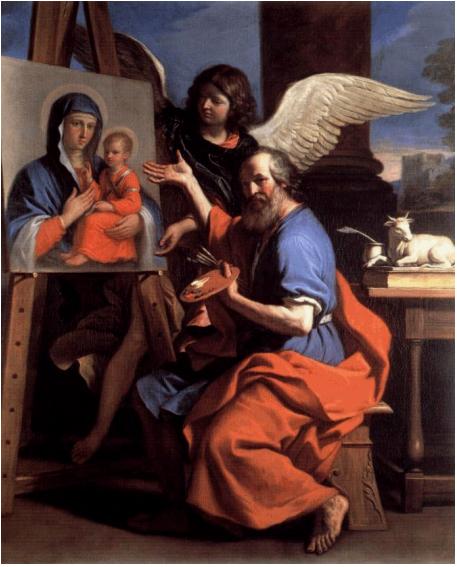



Authorship and historical tradition
Early church writers such as Irenaeus Irenaeus, Eusebius and Jerome Jerome identified Luke as a companion of Paul and described him as a physician of Greek origin from Antioch in Syria Greek speaking regions, often linked with Antioch Antioch in ancient Syria Syria. That traditional portrait—Luke as a Gentile Christian, traveling companion and doctor—has shaped liturgical commemoration and later veneration.
Modern scholarship and debates
Contemporary scholars treat the question of authorship and identity with more caution. Most accept that one author composed both the Gospel and Acts as a two‑volume work addressed to a patron named Theophilus, but they note differences between the depiction of Paul in Acts and the self‑representation found in Paul's letters. Acts contains so‑called "we" passages that suggest the author sometimes traveled with Paul, yet the exact identity of that companion remains debated. Linguistic features and theological emphases in Luke–Acts also lead scholars to propose a Greek‑educated author rather than an eyewitness in every instance.
Contents, structure and themes
Luke–Acts is distinctive in its narrative scope and pastoral concerns. The Gospel contains an expanded infancy narrative, parables unique to Luke (for example the Good Samaritan and the Prodigal Son), and a marked attention to the poor, women, and outsiders. Acts continues the story as a history of the early church, focusing on missionary activity, the role of the Holy Spirit, and the spread of Christianity to Gentile communities. Key features include:
- Two‑volume structure linking life of Jesus to the spread of the church.
- Emphasis on salvation offered to all peoples and the work of the Holy Spirit.
- Characteristic vocabulary and polished Greek style that distinguish Luke from other Gospel writers.
Sources and composition
Scholars commonly argue that the Lukan author used multiple sources: the Gospel of Mark as a base narrative, a hypothetical sayings collection often called "Q," and material unique to Luke (sometimes labeled "L"). The books are generally dated to the late first century, though precise dating and provenance remain matters of scholarly discussion.
Reception, symbols and legacy
Luke has been honored in Christian tradition as the patron saint of physicians and artists and is often depicted with the symbol of a winged ox. His feast is observed in many Western churches. The Gospel's attention to marginalized groups and Acts' missionary narrative have made Luke–Acts influential in theology, liturgy and historical study. For further reading, see the Gospel Gospel of Luke, the book of Acts Acts, and studies found in broader New Testament scholarship New Testament and Christian resources Christian and Bible collections. Early attestations by writers such as Irenaeus and Jerome shaped the traditional view of Luke the physician and companion of Paul; modern discussions continue to reassess those claims in light of language, theology and historical detail Greek contexts like Antioch in ancient Syria.
Questions and answers
Q: Who is Luke the Evangelist?
A: Luke the Evangelist is the person who is said to have written the Gospel of Luke and Acts of the Apostles in the New Testament of the Christian Bible.
Q: What do Irenaeus and Eusebius say about Luke?
A: Irenaeus and Eusebius say that Luke was a friend of Saint Paul, a doctor, of Greek origin, and from Antioch in Syria.
Q: Did Luke accompany Paul on all his travels?
A: It is not clear whether Luke accompanied Paul on all his travels. Some sources say that Luke accompanied Paul on some of his travels.
Q: What do modern-day scholars think about the authorship of Luke and Acts?
A: Modern-day scholars think that the person who wrote the two books was not the same person who accompanied Paul. Paul's theology was different and not mentioned in the two books, and the name of Paul's companion is never linked to writing the books.
Q: What is special about Paul's theology?
A: Paul's theology was special and slightly different from that of other writers of the New Testament.
Q: Does Luke mention the Three Wise Men in the Bible?
A: Yes, Luke wrote about the Wise Men who visited Jesus in the Bible.
Q: How many wise men did Luke say visited Jesus?
A: Luke never said there were 3 wise men, only wise men from the east.
Related articles
Author
AlegsaOnline.com Luke the Evangelist Leandro Alegsa
URL: https://en.alegsaonline.com/art/59875