
Lorenzo Da Ponte
Venetian-born poet and librettist (1749–1838) best known for writing the libretti to three of Mozart's operas; later emigrated to the United States and helped shape 19th-century operatic and literary life.
Overview
Lorenzo Da Ponte (10 March 1749 – 17 August 1838) was a Venetian-born poet and librettist whose texts for the stage rank among the most enduring in the European repertory. He rose to prominence in the late 18th century by supplying words for dramatic music and by adapting comic and serious subjects for contemporary audiences.
Image gallery
10 Images


Major works
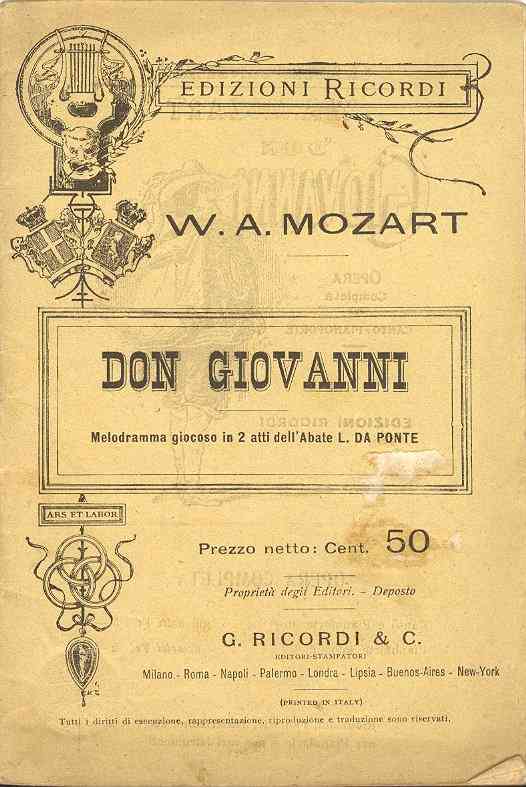
Da Ponte's name is most closely linked with the composer Mozart; he wrote the libretti for three of Mozart's best-known operas: The Marriage of Figaro, Don Giovanni and Così fan tutte. Beyond these, he produced many texts for the stage and supplied dramatic verse to a range of composers working in Venice, Vienna and elsewhere.
Life and career
Born into a Jewish family in the Venetian territories, he later took the Italianate name Lorenzo Da Ponte and converted to Catholicism as was not uncommon for artists seeking wider opportunity in that era. He worked in several cultural centers of Europe, adapting plays and libretti to satisfy changing tastes in comedy, sentiment and social satire. Political and personal troubles prompted a later move to the United States, where he continued literary activity, ran cultural enterprises and taught Italian at an American college.
Style and importance
Da Ponte's libretti are noted for lively dialogue, well-drawn characters and an ability to balance wit with emotional clarity. He reshaped existing theatrical material into compact acts that composers could set effectively, helping to modernize the opera buffa and expand subjects open to musical treatment.
Legacy and notable facts
- His collaborations with Mozart remain central to the operatic canon and are frequently staged worldwide.
- After emigrating, he contributed to American cultural life as a teacher, bookseller and impresario and left memoirs and correspondence valuable to scholars.
- Da Ponte's life bridged the worlds of Italian theater, Viennese music and early American letters, making him a distinctive figure in transatlantic cultural history.
Questions and answers
Q: Who was Lorenzo da Ponte?
A: Lorenzo da Ponte was an opera librettist and poet.
Q: What operas did Lorenzo da Ponte write the libretti for?
A: Lorenzo da Ponte wrote the libretti for three of Mozart's operas – The Marriage of Figaro, Don Giovanni, and Così fan tutte.
Q: When was Lorenzo da Ponte born?
A: Lorenzo da Ponte was born on March 10, 1749.
Q: When did Lorenzo da Ponte die?
A: Lorenzo da Ponte died on August 17, 1838.
Q: What is Lorenzo da Ponte best known for?
A: Lorenzo da Ponte is best known for having written the libretti for three of Mozart's operas – The Marriage of Figaro, Don Giovanni, and Così fan tutte.
Q: What is a librettist?
A: A librettist is a person who writes the text, or libretto, of an opera, operetta, or other musical stage work.
Q: What other works did Lorenzo da Ponte write?
A: Lorenzo da Ponte wrote several other libretti for operas, including Il burbero di buon cuore, L'arbore di Diana, and La Cifra.
Related articles
Author
AlegsaOnline.com Lorenzo Da Ponte Leandro Alegsa
URL: https://en.alegsaonline.com/art/59239
Sources
- newyorker.com : Acocella, Joan, "Nights At The Opera: The Life of the Man who put Words to Mozart", The New Yorker, 8 January 2007
- arts.guardian.co.uk : Holden, Anthony, “The phoenix”, ‘’The Guardian’’ (London), 7 January 2007
- washingtonpost.com : Keats, Jonathan, "Lorenzo's Toil: How the Son of an Impoverished Leatherworker Came to Write Mozart's Libretti", Washington Post, 16 July 2006
- en.wikisource.org : "Lorenzo Da Ponte"