
Lord of the Flies
A concise, neutral overview of William Golding's Lord of the Flies, its themes, symbols, background, cultural influence, and adaptations.
Lord of the Flies is a novel published in 1954 by William Golding. It tells the story of a group of British schoolboys stranded on an uninhabited island after a crash; their attempt to govern themselves collapses into violence and disorder, and the narrative culminates with outside rescue. The work is widely taught and discussed for its exploration of human nature, power, and moral decline. For a basic reference, see the novel.
Image gallery
1 Image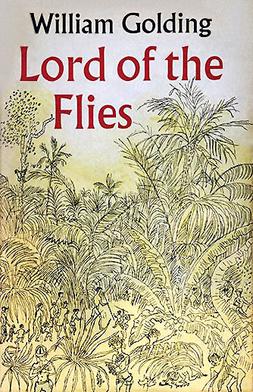
Themes, symbols and structure
Golding uses a compact cast and a single setting to examine broad themes. Key motifs include the tension between civilization and savagery, the loss of innocence, and the fragility of social order. Physical objects become symbols: the conch shell represents authority and democratic order; the signal fire stands for hope and rescue; Piggy's glasses signify intellect and technology; the severed pig's head—the "Lord of the Flies"—is a manifestation of fear and inner brutality. The book's title itself is a translation of the name Beelzebub, a Semitic term and often treated as a deity or demonic epithet, underscoring the novel's engagement with evil as an elemental force.
Background and influences
Golding drew on personal experience in shaping the story. He had worked as a teacher at British public schools and served in World War II, experiences that informed his views on childhood behavior and the human capacity for violence. The novel also responds to earlier literature about boys stranded on remote places—most notably the 19th-century adventure tradition epitomized by books that portrayed life on a desert or tropical island as idyllic. Golding set out to show a less romantic outcome than those earlier tales, rejecting a naïve picture of perfect Utopia.
Lord of the Flies is built as a moral allegory with a straightforward narrative arc. Characters are often drawn as embodiments of ideas—Ralph as governance and order, Jack as authoritarian impulse, Piggy as reason, Simon as spiritual insight—and their interactions create a concentrated study of group dynamics. The novel's concise structure and symbolic density make it especially suitable for classroom analysis and debate.
Since publication the book has become a modern classic, subject to numerous critical interpretations and two major film adaptations. It is frequently included in secondary-school curricula and continues to provoke discussion about whether its portrayal of human behavior is pessimistic, realistic, or intentionally exaggerated to prompt moral reflection.
Questions and answers
Q: What is Lord of the Flies?
A: Lord of the Flies is a novel written by William Golding and published in 1954.
Q: What is the meaning of the title "Lord of the Flies"?
A: The title of the novel is a literal translation of Beelzebub, a Semitic deity worshipped in the Philistine city of Ekron.
Q: What were the personal experiences that inspired Golding to write this novel?
A: Golding was inspired by his time teaching at boys' public schools and his experiences in World War II.
Q: How did Coral Island influence Golding's writing of Lord of the Flies?
A: Coral Island was a book that showed young boys getting stranded on desert islands and living in perfect Utopia. Golding read this book and wanted to explore what he thought would really happen in such a situation.
Q: What was Golding's purpose in writing Lord of the Flies?
A: Golding wanted to explore what would really happen if young boys were stranded on a desert island, as opposed to the perfect Utopia depicted in books like Coral Island.
Q: What is the setting of the novel Lord of the Flies?
A: The setting of the novel is a small deserted island in the Pacific Ocean.
Q: What is the significance of the experiences Golding drew upon to write Lord of the Flies?
A: Golding's personal experiences teaching at boys' public schools and fighting in World War II provide insight into the destructive nature of human beings and the chaos that can ensue when rules and authority are absent.
Related articles
Author
AlegsaOnline.com Lord of the Flies Leandro Alegsa
URL: https://en.alegsaonline.com/art/59218
Sources
- flickr.com : "Bound books – a set on Flickr" · web.archive.org