
London Underground 1972 Stock
A deep‑level tube train type introduced in 1972 for London Underground; designed to supplement earlier stock and later concentrated on the Bakerloo line. Known for long service life and periodic refurbishments.
Overview
The 1972 Stock is a class of deep‑level tube trains that entered service on the London network in the early 1970s. Originally procured to address a shortage among older trains, the type has been primarily associated with central London services and, in later decades, with the Bakerloo line. Its design follows the compact profile required for the deep bore tunnels of the Underground system.
Image gallery
10 Images


Design and characteristics
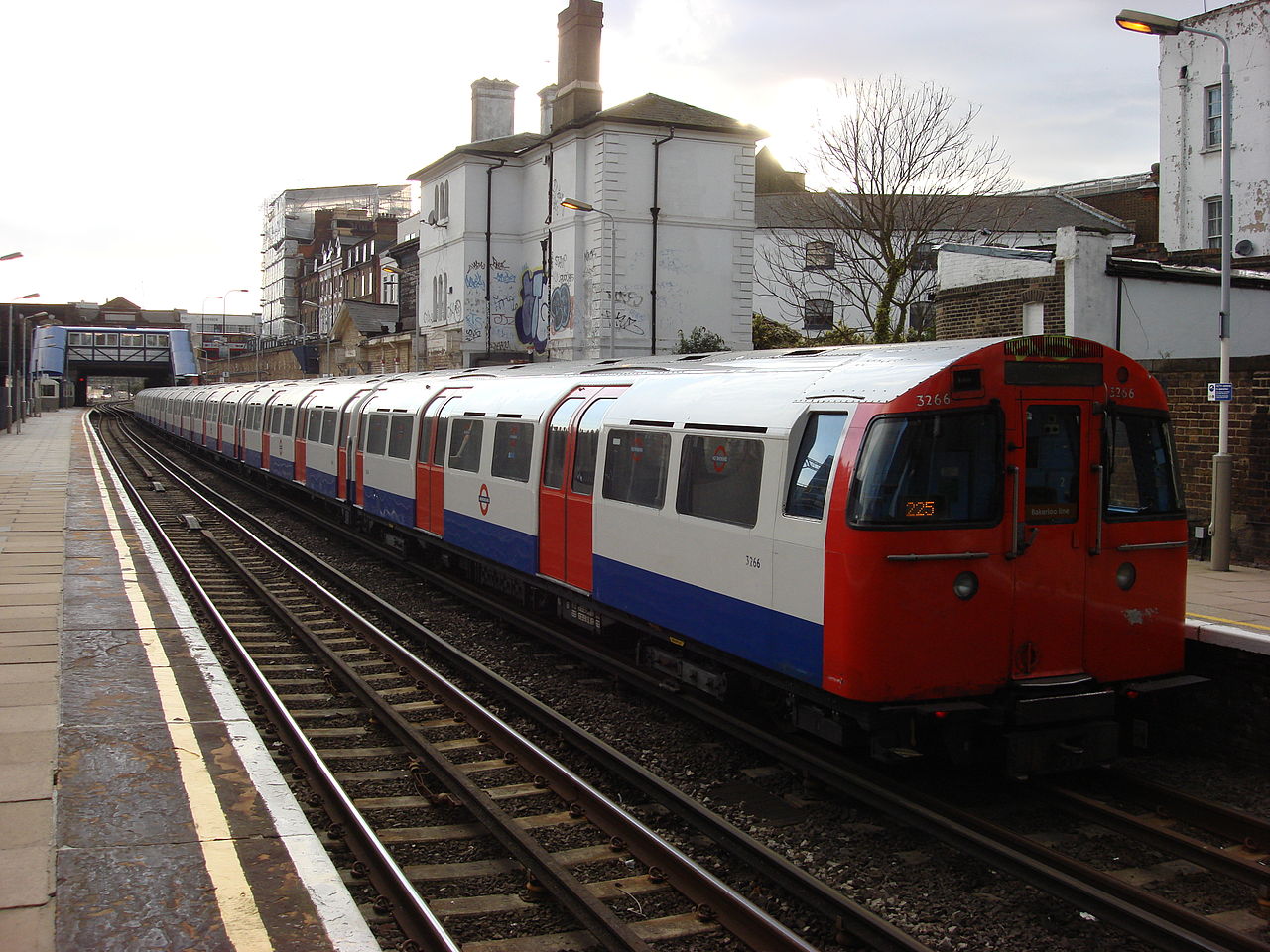
As a tube‑profile rolling stock, the 1972 Stock combines a narrow body and a low tunnel clearance with features typical of the era: multiple‑unit traction control, automatic sliding doors, and longitudinal seating to maximise standing room. The exterior is a conventional steel structure suited to heavy, frequent urban service, while interiors have been adjusted over time to improve passenger comfort and safety.
- Profile: deep‑level tube dimensions for small tunnels.
- Doors: full‑height sliding doors to station platforms.
- Interior: predominantly longitudinal seating to increase capacity.
- Control: multiple‑unit operation allowing coupled trains to work together.
History and allocation
The stock was authorised in response to a shortfall in available trains on older fleets. Although intended to supplement earlier vehicles, allocation patterns changed with operational needs, and units were deployed where capacity and compatibility allowed. Over time most of the surviving sets became associated with the Bakerloo line, reflecting rolling‑stock cascades and reorganisation across the network.
Service life and refurbishment
The 1972 Stock has been noted for its longevity; regular maintenance and mid‑life refurbishment programmes have refreshed interiors, improved lighting and communications equipment, and updated safety fittings without altering the trains' basic structural design. These interventions extended useful service life while larger fleet replacement projects proceeded more slowly.
Significance and distinctions
These trains are representative of a generation of London tube rolling stock built to balance tight tunnel clearances with high urban capacity. They are frequently compared with the earlier 1959 Stock they initially supplemented and with later generations that emphasise energy efficiency, accessibility and modern passenger information systems.
Further reading
For official information and historical summaries see the London transport resources: London Underground overview. General material on rolling stock and operations can be found at transit‑oriented repositories: train fleet pages. Background on routes historically associated with this stock: Northern line history and the line it later served: Bakerloo line.
Questions and answers
Q: What is the London Underground 1972 Stock?
A: The London Underground 1972 Stock is a fleet of trains used on the London Underground.
Q: Why was the 1972 Stock ordered?
A: The 1972 Stock was ordered to make up the shortfall in trains on the Northern line's 1959 Tube Stock fleet.
Q: What line is the 1972 Stock currently used on?
A: The 1972 Stock is currently used on the Bakerloo line.
Q: What was the purpose of the Northern line's 1959 Tube Stock fleet?
A: The purpose of the Northern line's 1959 Tube Stock fleet was to provide trains for the Northern line.
Q: When was the 1972 Stock ordered?
A: The 1972 Stock was ordered at an unspecified time in the past.
Q: Is the 1972 Stock being used on the Northern line?
A: No, the 1972 Stock is not currently being used on the Northern line.
Q: What was the reason for the shortfall in trains on the Northern line's 1959 Tube Stock fleet?
A: The reason for the shortfall in trains on the Northern line's 1959 Tube Stock fleet is not specified in the given text.
Related articles
Author
AlegsaOnline.com London Underground 1972 Stock Leandro Alegsa
URL: https://en.alegsaonline.com/art/59056